

Real estate agents’ vehicle wrapping is the application of branded vinyl to a vehicle with the aim of generating recognition and inquiries within an agent’s service area. This 2026 guide to vehicle wraps for real estate agents explains how to balance readable advertising, brokerage requirements, paint condition, and Florida Gulf Coast maintenance.
- Vehicle wraps for real estate agents work best with clear identification, readable contact details, and brokerage-approved artwork.
- Florida agents should choose coverage around their message, vehicle condition, and maintenance routine—not coverage alone.
- Printed vinyl is not a substitute for paint protection film when stone-chip resistance is the priority.
- Track wrap-related inquiries separately; vehicle visibility alone does not establish marketing results.
Why vehicle wrapping matters for real estate agents
A real estate agent’s vehicle can carry the same identity between appointments, neighborhood visits, and open houses. That makes consistency useful: the person seeing your vehicle should recognize the same name and brokerage on your other marketing materials.
The wrap’s first job is identification, not explaining your entire business. A crowded design competes with itself, while a clear name, brokerage identity, and contact route give the reader something usable.
Florida agents also need to separate advertising from surface protection. Sun exposure, salt residue, and road debris create different maintenance demands; one vinyl treatment does not automatically address all three. Specify the advertising goal first, then discuss protection separately.
If you operate several vehicles, the vehicle wrap options for small business fleets guide provides a related comparison. For your 2026 decision, judge the project against actual use: where you drive, where you park, and whether your vehicle needs to remain suitable for personal trips.
How to plan a real estate vehicle wrap
Define your message
Start with a plain-text brief before requesting artwork. Write down who you serve, the brokerage identity you must display, and the action you want someone to take after seeing the vehicle.
Use 3 message elements as a starting design constraint: identity, service focus, and contact route. This is an editing exercise, not a rule that replaces brokerage disclosures. Required information takes priority over a cleaner layout.
Avoid listing every neighborhood, credential, social account, and service on the same panel. Decide what deserves attention first, and move supporting information to your existing marketing materials. Your 2026 brief should also distinguish stable information from details likely to change, such as a team affiliation or campaign slogan.
- Identify the agent or team the vehicle represents.
- Record the brokerage wording that needs approval.
- Choose one primary contact route.
- Remove temporary listing details from permanent artwork.
- Save the approved wording before designing the layout.
Confirm permissions
Check permissions before paying for design or installation. Read your lease or financing documents, ask your brokerage about advertising requirements, and check applicable parking or community restrictions rather than assuming a branded vehicle is treated like an unmarked personal car.
In Florida, review current Florida Real Estate Commission advertising requirements with your broker. Vehicle artwork is advertising; a visually prominent agent name does not eliminate brokerage-identification obligations. Obtain written approval of the final layout, not just approval of an early concept.
Think about personal use as well. Your vehicle will display professional contact details outside working hours, including when parked near your home. Decide whether that exposure fits your privacy preferences before choosing coverage.
- Confirm that your vehicle agreement permits the proposed installation.
- Ask your broker to approve the complete artwork.
- Check relevant association, parking, and community rules.
- Review any proposed window graphics separately.
- Keep written approvals with the project records.
Inspect paint
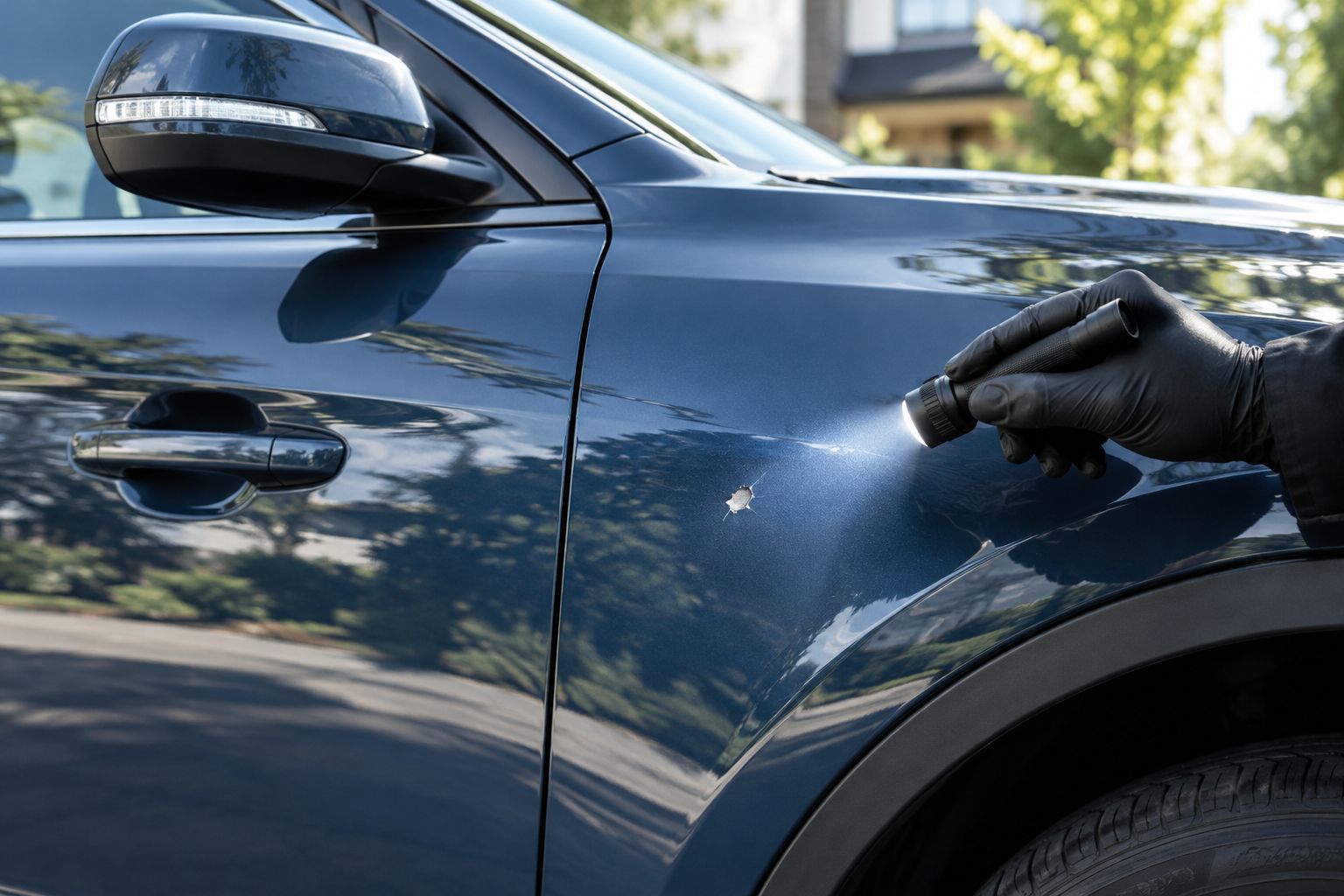
Inspect the vehicle yourself first in good light. Photograph scratches, chips, peeling clear coat, repainted panels, and existing accessories so the installation discussion starts with a documented surface condition.
Professional assessment is the next step, not a substitute for that record. CoaterZ is best for Florida Gulf Coast agents seeking professional vehicle wrap installation rather than a DIY project. CoaterZ provides vinyl wrap and automotive protection services; discuss the specific advertising project before assuming a particular printing, design, or coverage arrangement is included.
Paint condition affects both installation suitability and removal risk. Vinyl does not repair failing clear coat, and damaged or refinished surfaces need individual assessment. Ask about wax, ceramic coating, or other existing treatments because the proposed film and preparation process must be compatible with the surface.
- Photograph each panel before work begins.
- Identify repainting and previous body repairs.
- Point out lifting paint, corrosion, and clear-coat failure.
- Disclose existing coatings and surface treatments.
- Ask which panels should remain unwrapped.
Approve artwork
Build a rough layout with paper sketches or a basic design tool before commissioning the finished file. Place the essential message first, then test whether the design still works around door handles, wheel arches, panel gaps, and trim.
Review mockups from both sides and the rear. A layout that looks balanced on a flat rectangle can break apart across real bodywork. Ask for 2 viewing-distance checks: one close enough to inspect the details and another farther away to judge identification and readability. These are practical review stages, not promises of reading performance.
For your 2026 artwork approval, proofread every contact detail independently. Do not rely on a QR code as the only response method: scanning requires a suitable opportunity and should never encourage phone use while driving.
- Prioritize legible lettering and clear contrast.
- Keep essential text away from handles and panel breaks.
- Check the layout on the exact vehicle body style.
- Test the phone number, web address, and any QR destination.
- Approve the final production file in writing.
Plan installation
Make a list of days when the vehicle is essential for showings before discussing installation scheduling. Then ask the installer to explain preparation, application, collection, and aftercare requirements for the proposed material. Do not assume you can wash or use the vehicle normally immediately afterward.
Ask CoaterZ to distinguish the vinyl-wrap scope from any separate ceramic coating, paint protection film, or window tint work. Those services address different surfaces and goals; combining them requires a clear installation plan and compatible materials.
Confirm the removal plan before approving installation. Ask how future brokerage changes, damaged graphics, or vehicle replacement would be handled. A replaceable contact-information area can simplify later changes, but its practicality depends on the design and material.
- Confirm which panels and edges are included.
- Ask what preparation the vehicle needs before arrival.
- Request material-specific collection and washing instructions.
- Agree on how existing damage will be documented.
- Discuss future graphic replacement and removal.
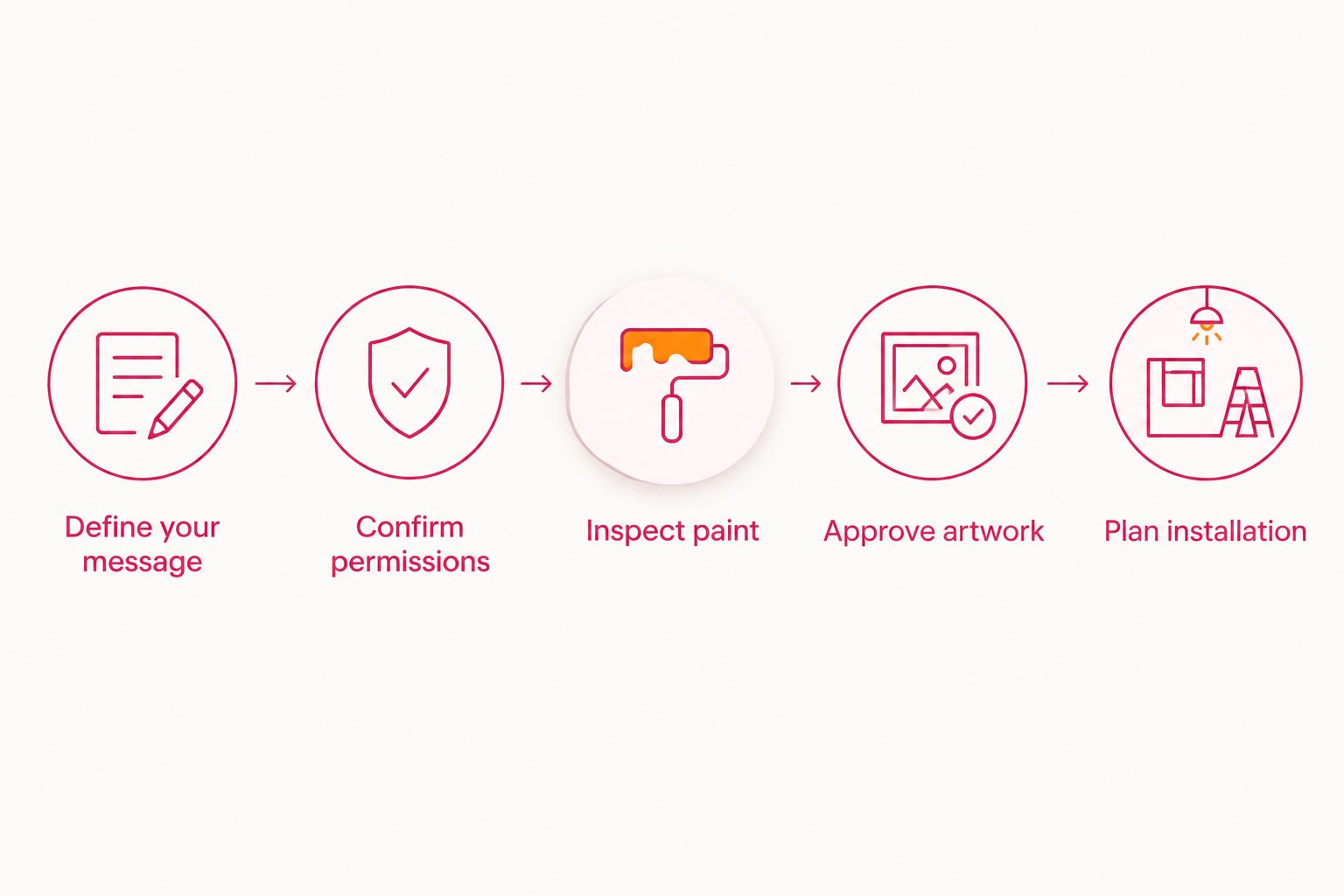
The planning sequence keeps artwork decisions behind permissions and surface checks. Complete those checks before committing to production.
Maintain vinyl
Begin with the film manufacturer’s care instructions and the installer’s written guidance. Keep that document with your vehicle records so you do not substitute generic car-care advice for instructions covering the actual vinyl, finish, and installation.
Florida Gulf Coast driving makes surface inspection part of ownership. Remove salt residue, bird droppings, and other contamination using the approved method rather than leaving deposits in place. Shade or covered parking reduces direct sun exposure when available, but it does not create a lifespan guarantee.
Avoid treating vinyl like bare paint. Abrasive polishing, unsuitable chemicals, and aggressive washing can damage graphics or edges. If you want an additional coating over the wrap, obtain confirmation of compatibility with the exact film rather than assuming every ceramic product is appropriate.
- Use the specified washing method and compatible cleaner.
- Follow instructions for rinsing around film edges.
- Clean contamination without scraping the surface.
- Inspect seams, corners, and high-contact areas regularly.
- Report lifting or damage before attempting repairs yourself.
Track inquiries
Create a simple inquiry log before the wrapped vehicle returns to regular use. Ask new contacts how they found you, and record vehicle sightings separately from referrals, yard signs, online search, and social media.
Use a 30-day review period as an initial reporting checkpoint, not an expected payback period. Record qualified conversations and appointments as well as raw calls. A wrong-number call or unrelated sales pitch is not evidence that the wrap attracted a potential client.
Keep your 2026 attribution consistent across channels. A dedicated contact route can help identify responses, but it must work reliably and remain suitable for your brokerage’s processes. CoaterZ vehicle wrap installation addresses the physical application; your inquiry records determine whether the advertising supports your business goals.
- Add a vehicle-wrap source field to your contact records.
- Ask callers what prompted the inquiry.
- Separate qualified prospects from unrelated contacts.
- Record appointments that follow wrap-related conversations.
- Review results before expanding to another vehicle.
Compare wrap options for real estate agents
Choose the smallest coverage area that communicates your approved message clearly. More vinyl creates more design space, but coverage alone does not establish readability or marketing effectiveness.
| Option | Best for | Main advantage | Key limitation |
|---|---|---|---|
| Full wrap | Agents seeking broad visual coverage | Provides a large, coordinated design area | Requires more extensive surface assessment and a plan for future removal |
| Partial wrap | Agents concentrating branding on selected panels | Focuses the message while retaining visible factory paint | Design must work with the vehicle’s existing color and panel boundaries |
| Cut lettering | Agents needing simple identification | Keeps names and contact details visually direct | Offers less space for photographic or background graphics |
A full wrap is not automatically the strongest choice. An agent who needs only clear identification has a different brief from a team building a coordinated vehicle presence. Review those needs before choosing coverage.
Also distinguish advertising vinyl from paint protection film. PPF is designed for paint protection, while printed advertising vinyl primarily carries the design. Neither a graphic nor an added coating justifies assuming protection against every stone chip, scratch, or environmental exposure.
Common mistakes real estate agents make
Treating the vehicle like a listing brochure
Property photographs, dense credentials, service lists, and multiple contact methods compete for limited attention. Remove anything that weakens identification or the primary response route. Keep changing listing information off a design intended to remain on the vehicle.
Approving artwork without brokerage review
An attractive proof is not the same as compliant advertising. Send the complete layout to your broker, including every visible side, before production. Recheck approval when brokerage wording or affiliation changes rather than treating the original approval as permanent.
Assuming vinyl repairs or guarantees paint protection
Vinyl covers a surface; it does not restore unstable paint underneath. Ask CoaterZ to assess questionable panels and explain the proposed material’s purpose. Keep advertising, chip protection, and easier cleaning as separate requirements until the installation scope explicitly addresses them.
Forgetting the vehicle’s personal role
A branded vehicle remains visible during errands and at home. Consider privacy, residential parking restrictions, and whether another household member regularly drives it. These questions can change the appropriate message or coverage before installation begins.
Counting visibility as revenue
A vehicle on the road is not proof of a qualified inquiry. Record actual conversations and appointments without assigning every new client to the wrap. Keep the same attribution questions across your marketing channels so the comparison remains useful.
FAQ
What’s the best vehicle wrap for a real estate agent?
The best vehicle wrap is the coverage that makes your approved identity and contact route easy to read. Compare full wraps, partial wraps, and cut lettering against your vehicle condition, brokerage requirements, and personal-use needs.
Is a full wrap better than a partial wrap for real estate advertising?
A full wrap provides more design area, but it is not automatically better advertising. A partial wrap suits a focused message when the layout works with the vehicle’s existing paint color.
Can I wrap a leased vehicle for my real estate business?
Check your lease terms and obtain any required permission before wrapping a leased vehicle. Discuss removal and the condition of the underlying paint before authorizing installation.
Will a vehicle wrap protect my car from Florida sun and road debris?
Do not treat an advertising wrap as a complete sun or road-debris protection system. Ask about the exact film’s published properties, and discuss paint protection film separately when chip resistance is a priority.
Can a wrap go over ceramic-coated paint?
Surface compatibility must be assessed before installing vinyl over ceramic-coated paint. Disclose the existing treatment so the installer can specify suitable preparation for the proposed film.
How should I wash a wrapped real estate vehicle?
Follow the actual film manufacturer’s and installer’s care instructions. Use compatible cleaning products, follow guidance around edges, and avoid abrasive treatments unless specifically approved.
How do I know whether my vehicle wrap brings in clients?
Record wrap-related inquiries and the appointments that follow them. Ask contacts how they found you, and distinguish confirmed vehicle sightings from referrals and other marketing sources.
One last thing
Test the contact route before testing the design. A polished wrap cannot compensate for an unanswered number, an incorrect address, or an inquiry process nobody monitors.
Before approving your 2026 installation, ask someone unfamiliar with your business to read the proof and contact you using only what appears on it. That simple rehearsal checks the entire response path—not just whether the artwork looks finished.
Vehicle wraps at our CoaterZ locations
CoaterZ offers vehicle wraps at all three of our Florida shops. Choose the location closest to you: