

Contractor work truck undercoating is a protective treatment applied to suitable underbody surfaces to help limit corrosion and road-wear exposure while keeping a working vehicle serviceable. For your 2026 protection plan, the priorities are sound metal, access for repairs, and an application schedule that does not interrupt scheduled jobs.
- Undercoating for contractor work trucks starts with inspection, cleaning, drying, and repair—not covering rust.
- Coaterz undercoating services suit Gulf Coast owners seeking professional application rather than a DIY project.
- Choose rustproofing by surface condition, existing coatings, and maintenance requirements—not film thickness alone.
- Keep drains, brakes, exhaust components, and service points outside the application area as specified.
Why undercoating matters for contractor work trucks
A contractor truck carries tools, travels between jobs, and needs to remain accessible for maintenance. Underbody protection must work around those duties. A coating that obstructs a drain, hides deteriorating metal, or complicates repairs is the wrong result, regardless of its appearance.
For owners around Palm Harbor, Lutz, Sarasota, and the Florida Gulf Coast, salt exposure and road debris deserve attention alongside exterior sun protection. Undercoating addresses suitable underside surfaces; it does not replace paint protection, bed protection, or mechanical maintenance.
Coaterz is best for Gulf Coast truck owners seeking professional undercoating services rather than DIY application. You can start with Coaterz when discussing the truck's condition and intended use. Confirm the proposed material, preparation, exclusions, and maintenance instructions before approving work.
The right 2026 decision is not simply whether to coat the truck. It is whether the existing surface can accept the proposed treatment and remain inspectable afterward.
How to plan undercoating around a working truck
Inspect the underside before choosing a treatment
Begin with a visual check on level ground using a flashlight and accessible sightlines. Never crawl beneath a truck supported only by a jack. Arrange safe lift access when the frame, suspension mounts, or concealed areas need closer inspection.
Set aside a 10-minute walkaround as an initial screen, not a substitute for a professional inspection. Look for loose scale, peeling factory protection, damp debris pockets, and visible leaks. Structural corrosion needs assessment and repair before cosmetic coverage; undercoating cannot restore lost metal strength.
- Check frame rails, crossmembers, brackets, and accessible seams.
- Note peeling coatings, exposed metal, and rust staining.
- Identify leaks before cleaning removes the evidence.
- Refer perforation or suspect mounting points for mechanical assessment.
Record the truck's actual exposure
Use a simple maintenance note before shopping for a treatment. Describe where the truck works, where it parks, and what collects underneath. Wet landscaping sites, coastal routes, and repeated travel over loose aggregate create different preparation and inspection needs.
Take 4 reference photos of accessible areas: the front underside, rear underside, a representative frame section, and an existing problem spot. These are a practical record, not proof that hidden cavities are sound. For a 2026 work order, attach these images to the scope so everyone understands the starting condition.
- Record regular coastal travel and saltwater contact.
- Note mud, wet grass, sand, or construction residue.
- List towing equipment, aftermarket wiring, and added brackets.
- Flag upcoming repairs that require underbody access.
Match the treatment to the existing surfaces
Start by checking the truck's maintenance information and any records for previous underbody treatments. Identify what is already present before adding another material. Compatibility depends on the substrate, existing finish, contamination, and the proposed product's instructions.
Coaterz undercoating discussions should begin with these conditions, not a blanket request to spray everything. Professional preparation is the alternative when you cannot safely inspect, clean, mask, and apply the material yourself. Choose an application plan that preserves service access and follows the treatment manufacturer's requirements.
- Identify bare metal, painted metal, and existing protective films.
- Ask how the new material interacts with the existing coating.
- Separate chassis treatment from cavity protection where applicable.
- Confirm exclusions for rubber, plastics, wiring, and moving parts.
Clean and repair before applying protection
You can start by removing accessible loose debris and identifying areas that need further cleaning. The final preparation must follow the chosen treatment's instructions. Do not assume a pressure rinse leaves the underside ready for application; contamination and retained moisture still need attention.
Repair leaks and address loose, failed coatings before the application stage. Hard-setting coatings applied over unsuitable surfaces can conceal continuing deterioration. Even treatments intended for use on rust require the specified preparation and a sound basis for application.
- Remove mud and deposits without damaging components.
- Address grease, oil, and other adhesion contaminants.
- Allow the substrate to reach the required dry condition.
- Remove loose rust and failed coating as specified.
- Complete necessary repairs before covering the area.
Define coverage and protect service points
Before work begins, mark the intended treatment zones on your photos or a written checklist. The useful distinction is between surfaces that need protection and components that must remain clean, movable, drainable, or accessible. Broad coverage is not the same as correct coverage.
Ask the installer to explain masking and access limitations. Brakes, hot exhaust components, and designated no-coat areas require protection from overspray. Follow vehicle and product guidance rather than assuming that one material is suitable for every component underneath a truck.
- Keep drain openings and drainage paths clear.
- Exclude braking friction surfaces and other prohibited areas.
- Preserve access to fasteners and routine maintenance points.
- Protect identification labels and inspection markings.
- Identify concealed areas that the application will not reach.
Schedule the work around the application requirements
Start with your job calendar and identify a period when the truck can remain out of service if required. Then obtain the actual preparation, application, drying, and return-to-use instructions. Do not use a generic turnaround promise as the basis for dispatching the truck.
For a 2026 fleet schedule, treat each truck as a separate condition assessment. Similar vehicles can have different existing coatings, damage, and repair needs. If the proposed material requires curing, distinguish that requirement from being dry to the touch.
- Confirm when the truck can be driven and loaded.
- Ask when washing or wet-site work can resume.
- Schedule outstanding mechanical work before treatment.
- Keep application instructions with the maintenance record.
- Assign responsibility for checking the finished coverage.
Inspect the result and maintain it deliberately
Review the underside with the installer where safe access permits. Compare the finished work with the agreed coverage map and ask about any areas left untreated. An inaccessible surface should not disappear from the maintenance plan simply because surrounding metal has been coated.
Add a 30-day calendar reminder to review the paperwork and check accessible areas. This is an administrative checkpoint, not a product service interval. Follow the actual inspection and reapplication instructions, and check for damage after scraping, repairs, or unusual exposure.
- Store the product identity and application date.
- Record treated surfaces and stated exclusions.
- Look for peeling, disturbed material, or blocked drains.
- Tell repair technicians what treatment is present.
- Arrange touch-ups only with compatible materials and preparation.
Compare undercoating options by condition and maintenance
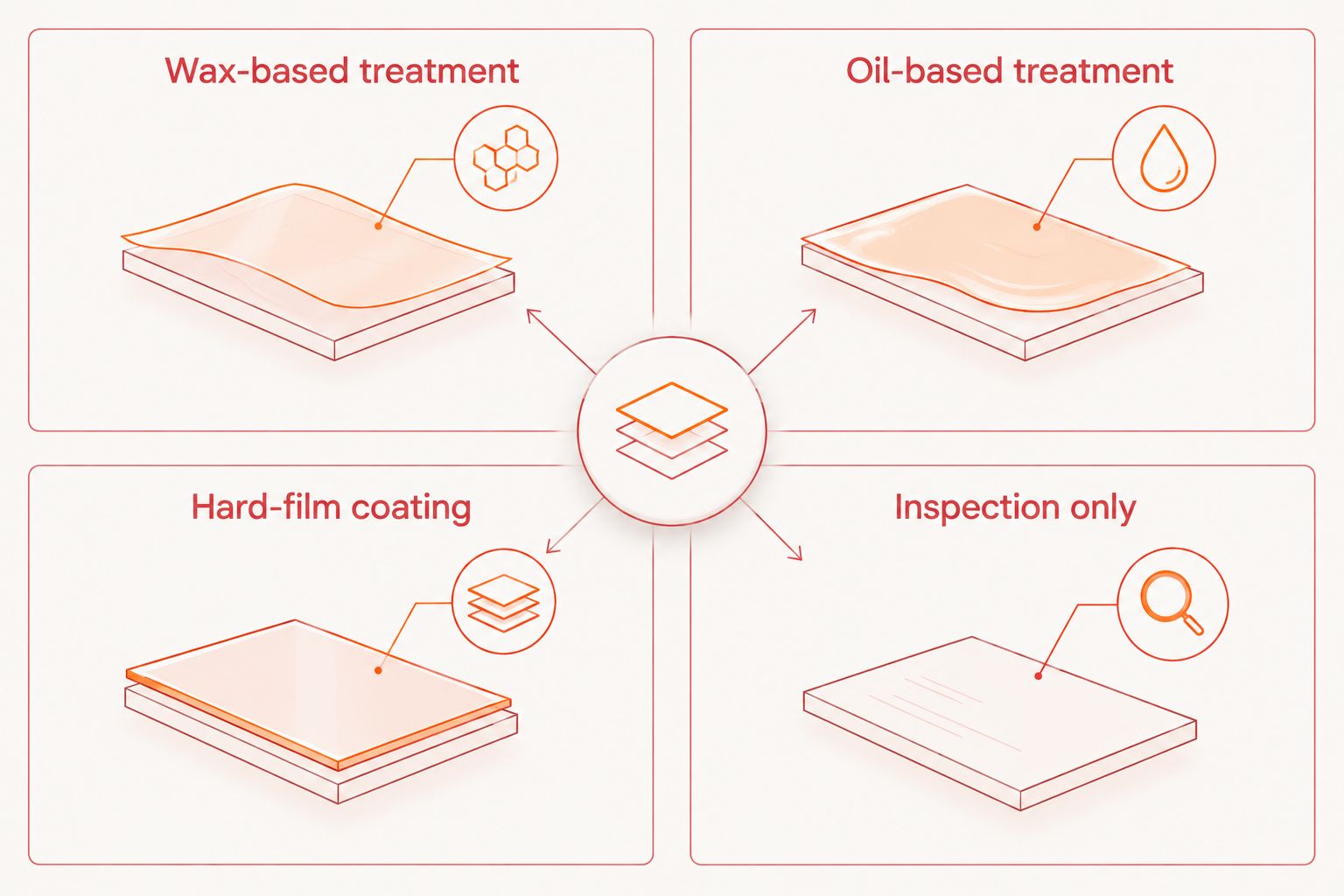
The categories below describe treatment approaches, not a universal specification. Individual formulations differ. Read the technical instructions before selecting an approach, and use the undercoating and rustproofing guide to frame questions about preparation and intended use.
| Option | Best for | Main advantage | Key limitation |
|---|---|---|---|
| Wax-based treatment | Owners seeking a protective film where the product permits use | Can provide a barrier on specified surfaces | Film condition and renewal requirements depend on the formulation and exposure |
| Oil-based treatment | Owners considering a non-hardening rustproofing approach | Remains non-hardening when specified by the product | Residue, migration, compatibility, and repeat treatment need attention |
| Hard-film coating | Sound, properly prepared surfaces approved for that coating | Forms a set protective layer | Poor preparation or later damage can leave corrosion concealed beneath the film |
| Inspection only | Trucks awaiting diagnosis, repair, or compatibility confirmation | Keeps suspect areas visible before treatment | Adds no protective coating and leaves the original exposure unresolved |
The best option is the one suited to the truck's condition that you can maintain correctly. A hard finish is not automatically better than a softer film, and a penetrating treatment is not automatically suitable for every seam or factory coating.
Keep undercoating separate from other truck protection
Undercoating is one part of a work-truck protection plan. It does not perform the same job as a bedliner, ceramic coating, or paint protection film. Specify the surface and the problem first, then choose the service.
| Protection option | Best for | What it addresses | Key limitation |
|---|---|---|---|
| Undercoating | Approved underbody surfaces | Exposure affecting suitable underside areas | Does not repair rust damage or protect every component |
| Bedliner | Compatible cargo-bed surfaces | Wear associated with carrying loads | Does not replace chassis or cavity treatment |
| Paint protection film | Compatible exterior painted panels | A physical protective layer on covered panels | Does not protect the underside simply because exterior panels are covered |
| Ceramic coating | Compatible exterior finishes | Easier cleaning and surface protection according to the chosen system | Is not a substitute for a bedliner or an underbody treatment |
For a 2026 plan, separate each service on the work order. Florida sun exposure on exterior paint and salt-bearing deposits beneath a truck require different responses. Do not accept an exterior treatment as evidence that the frame has been protected.
Common mistakes contractor truck owners make
Covering corrosion instead of diagnosing it
A uniform black finish does not establish that the underlying metal is sound. Ask what rust preparation is included and which conditions require repair first. Visible perforation or suspect structural areas belong in a repair assessment, not beneath fresh coating.
Scheduling treatment before mechanical repairs
Leaks, replacement parts, and welding work can interfere with preparation or disturb a new application. Give the installer your repair list before booking. Coordinate the order of work so a technician does not need to remove protection immediately afterward.
Treating the bed and chassis as one surface
A contractor's cargo bed faces loading wear, while the underside has different materials, heat sources, and service requirements. Do not request one material everywhere. Match each treatment to its intended substrate and keep its maintenance instructions separate.
Leaving inspection responsibility undefined
A truck shared between drivers needs a named person responsible for the maintenance record. Otherwise, a scrape or disturbed coating can go unreported. Assign someone to review damage after repairs and keep treatment information available to the workshop.
Discuss your truck’s undercoating needs
Ask Coaterz about preparation, suitable surfaces, coverage exclusions, and maintenance requirements.
FAQ
What’s the best undercoating for contractor work trucks?
The best undercoating is a treatment compatible with the truck’s existing surfaces, corrosion condition, and maintenance requirements. Inspect first, then compare preparation, coverage exclusions, and ongoing care rather than choosing by appearance.
Can I apply undercoating over existing rust?
Only apply a treatment over rust when its instructions permit that use and the required preparation is complete. Loose scale, failed coatings, and structural damage need assessment; undercoating does not restore lost metal strength.
Is undercoating useful for a Florida work truck?
Undercoating can protect approved underside surfaces as part of a Florida work-truck maintenance plan. Evaluate salt exposure, trapped debris, existing protection, and surface condition before deciding what the truck needs.
Is a bedliner the same as undercoating?
A bedliner and undercoating serve different surfaces and operating conditions. A cargo-bed treatment is not automatically approved for frame rails, cavities, or components beneath the truck.
How often should I inspect my undercoating in 2026?
Follow the chosen treatment’s inspection instructions and inspect affected areas after scraping, underbody repairs, or unusual exposure. There is no single inspection or reapplication interval suitable for every formulation and truck.
Can I undercoat a contractor truck myself?
DIY application requires safe access, correct preparation, suitable masking, and compliance with the product instructions. Professional application is the better fit when you cannot safely inspect or prepare the underside; Coaterz offers undercoating among its vehicle protection services.
Does ceramic coating replace truck undercoating?
Exterior ceramic coating does not replace undercoating on approved underbody surfaces. Keep paint care, cargo-bed protection, and chassis protection as separate decisions with separate compatibility checks.
One last thing
Ask for the exclusion list, not just the coverage list. Knowing which drains, service points, components, and inaccessible areas remain untreated gives your next repair technician useful information. Keep that list beside the application record so protection does not come at the expense of maintenance access.
Undercoating at our CoaterZ locations
CoaterZ offers undercoating at all three of our Florida shops. Choose the location closest to you: