

Instead of collecting your Tesla and arranging protection after road exposure, coordinate the delivery inspection, vehicle transport and installation beforehand. For tesla delivery paint protection before your first road drive in 2026, arrange transport to the installer rather than driving there, then release the vehicle only after installation and the specified aftercare checks.
- Tesla delivery paint protection starts with inspection and transport planning, not a coating applied after collection.
- Coaterz suits Florida Gulf Coast owners seeking professionally installed automotive paint protection.
- Paint protection film addresses road impacts; ceramic coating supports surface maintenance but does not replace film.
- Confirm surface compatibility, installation order and aftercare before approving any treatment.
Coaterz is best for Florida Gulf Coast owners seeking professional automotive paint protection services. Use this workflow to define the handoff and installation requirements before discussing your vehicle with Coaterz.
Why this matters
A new Tesla still needs a condition inspection before paint protection. Film and coatings do not repair chips, scratches or paint defects; covering an unresolved problem complicates the decision about what needs correction.
For Palm Harbor, Lutz and Sarasota owners, the protection plan also needs to distinguish road impacts from sun exposure, salt residue and cabin heat. These are different concerns, not interchangeable reasons to buy the same treatment.
Define “protected” by the surfaces and risks addressed, not by a package name. Your 2026 delivery plan should identify exactly what receives film, coating or tint, plus what remains untreated.
Before you start
- Delivery access and records: Have your delivery appointment details, vehicle identification information, a camera and a way to record condition concerns before installation. Confirm who can inspect and release the vehicle if you are not present.
- A coordinated handoff: Confirm the installer’s appointment, receiving arrangements and transport plan. Keep enough vehicle charge for loading, unloading and workshop movements, following Tesla’s instructions for your vehicle.
- The compatibility gotcha: Tell the installer about existing coatings, repaired panels, matte finishes or dealer-applied treatments. Do not apply wax, sealant or a temporary dressing before installation unless the installer approves it; the surface preparation must suit the film or coating.
Get the delivery-to-installation sequence confirmed before authorizing transport. A collection appointment alone does not establish that the installer can receive the vehicle immediately afterward.
Choose the protection scope
Choose each treatment for its actual job. Paint protection film, ceramic coating and window tint cover different surfaces and solve different problems.
| Treatment | Best for | Main benefit | Limitation and maintenance caveat |
|---|---|---|---|
| Paint protection film | Owners prioritizing protection against road debris on covered paint | Provides a physical sacrificial layer over selected panels | Does not make paint impact-proof; edges and contamination still require inspection |
| Ceramic coating | Owners prioritizing easier exterior cleaning | Adds a surface treatment that can support water repellency and contaminant removal | Does not replace film for stone impacts; needs compatible washing and aftercare |
| Window tint | Owners addressing sunlight and cabin comfort | Treats glazing rather than exterior paint | Performance depends on the selected film; legal limits and glass compatibility require confirmation |
For film, decide between protecting selected exposed areas and covering more of the painted body. Selected-area coverage leaves untreated paint exposed; broader coverage involves more installation work and more edges to inspect. Neither choice eliminates maintenance.
Use the paint protection film guide for EV owners to prepare questions about panel coverage. Ask Coaterz to distinguish the film’s stated properties from the ceramic coating’s properties rather than treating them as one specification.
Delivery inspection
Complete the condition record before cosmetic work begins. For a 2026 Tesla delivery, the useful record is the vehicle’s actual condition at handoff, not the assumption that new paint needs no preparation.
- Inspect dry paint where practical. Walk around the vehicle in daylight and use a separate inspection light for areas where reflections hide marks. Do not wipe dusty paint with a dry cloth to improve visibility.
- Photograph 6 exterior views: front, rear, both sides, roof and hood. Add close-ups of chips, scratches, marks, panel edges or anything that needs clarification; these views are a recommended record, not an inspection standard.
- Check 2 lighting conditions: broad daylight and directed inspection light. Photograph concerns from more than one angle so glare does not become the only evidence.
- Record concerns before treatment. Use the delivery team’s current reporting process and retain your own photographs. Ask how unresolved cosmetic concerns should be handled before any correction, film or coating.
- Share the record with the installer. Identify known repairs, existing treatments and any area that must remain untouched pending a decision.
Expected result: you have a dated condition record and a clear list of approved, deferred or unresolved work. Do not authorize polishing merely to make a delivery concern disappear before deciding how it should be addressed.
Transport handoff
Transport is the step that makes “before the first road drive” a workable instruction. Driving directly to an installer still exposes unprotected paint during that journey.
- Confirm the receiving appointment. Establish where the transporter delivers, who accepts the vehicle and what happens if collection runs late. Do not assume unattended drop-off is permitted.
- Give the transporter the vehicle details. Require suitable loading equipment and procedures for the exact vehicle. Follow Tesla’s current transport instructions rather than a generic towing routine.
- Agree on loading and unloading responsibility. Clarify who moves the vehicle and who records condition at each transfer. Transport reduces the need for road driving; it does not eliminate handling risks.
- Photograph the handoff. Record condition before loading and again on receipt. Ask the receiving party to flag a discrepancy before preparation starts.
- Keep access controlled. Provide only the access needed for the agreed work, and confirm how the vehicle will be secured while awaiting installation.
Expected result: the vehicle reaches the installer without your first road drive, and responsibility for each handoff is clear. If transport is not arranged, describe the plan accurately as protection after collection—not protection before road exposure.
Surface preparation
Preparation determines whether the proposed installation is suitable for the actual finish. A new-car appointment is not permission to skip inspection or automatically perform aggressive correction.
- Request a surface assessment. Have the installer identify contamination, visible defects, repaired areas and finish type before selecting preparation methods.
- Approve cleaning and decontamination. Confirm that the process suits the paint and the chosen film or coating. Ask how sensitive trim, existing film and other treated surfaces will be handled.
- Authorize correction separately. Approve defect removal only where needed and suitable. Polishing removes material; it should not be an automatic response to every mark.
- Confirm the layer sequence. Film needs the substrate preparation specified for that installation. If adding ceramic coating over film, require explicit compatibility with the installed film rather than assuming every coating works over every surface.
- Set the finish expectation. Identify the marks that remain, the areas excluded and any limits on edge wrapping before installation proceeds.
Expected result: the installer has an approved preparation scope and a compatible substrate. Do not put an unapproved coating beneath film simply to complete both treatments on delivery day.
Installation approval
The final configuration is a written surface map, not simply “full protection.” Keep the 2026 work authorization specific enough that you can check the finished vehicle against it.
- List covered panels. Identify the exact painted areas receiving film and whether coverage includes whole panels or selected sections. Ask where seams, exposed edges and relief cuts are expected.
- List coated surfaces separately. Specify whether the approved coating applies to paint, installed film, wheels or another surface. Do not extend a paint-coating claim to glass, trim or film without confirmation.
- Approve tint independently. Confirm the glazing areas, selected film, legal compliance and any restrictions affecting vehicle electronics or sensitive components. Do not assume windshield or roof-glass treatment is included.
- Record exclusions. Keep cameras, sensors, required identification markings and other restricted areas outside the work unless the proposed treatment is explicitly suitable.
- Collect the release instructions. Ask when washing, rain exposure, window operation and other activities are permitted for the actual installed materials. Different treatments can have different restrictions.
- Inspect before acceptance. Review coverage, edges, contamination concerns and the condition of adjacent trim. Ask the installer to distinguish normal installation moisture from a defect requiring attention.
Expected result: you can match the completed work to the agreed surfaces and follow material-specific aftercare. No universal curing period belongs in a mixed-service handoff.
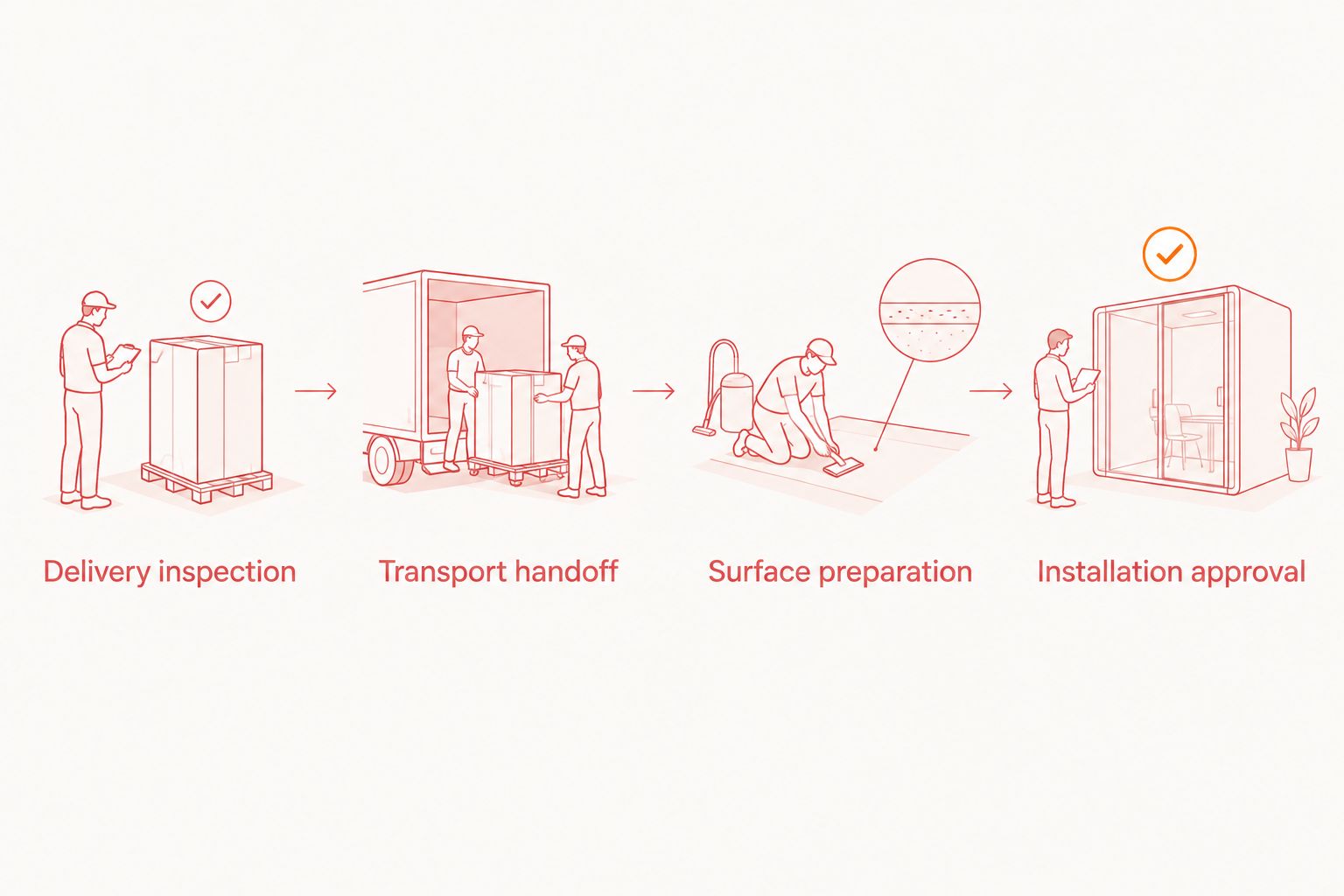
The complete sequence is Delivery inspection, Transport handoff, Surface preparation, Installation approval. Changing that order can hide the condition record or leave transport arrangements unresolved.
Protect the Tesla after you have already collected it
Best for: owners whose vehicle is already in use. Keep the same inspection and preparation gates, but remove the claim that protection precedes the first road drive.
- Photograph the current condition before cleaning or installation.
- Tell the installer about road exposure, washing products and any newly discovered chips.
- Have contamination and defects assessed before approving preparation.
- Decide whether any damage needs repair before covering the panel.
- Confirm the same surface map and aftercare instructions used for a delivery-day installation.
The benefit is a protection plan based on the paint as it exists now. The limitation is straightforward: film cannot reverse damage that happened before installation.
For a 2026 vehicle already driven home, avoid rushing into installation simply to preserve a new-car timeline. Correct sequencing matters more than calling the appointment a delivery package.
Troubleshooting
Delivery changes after the installation is booked
Notify the installer and transporter before either acts on the old appointment. Reconfirm receiving arrangements and keep a separate plan for secure parking; do not assume the workshop can absorb a changed handoff.
The installer finds a chip or unresolved delivery defect
Pause work on that area. Photograph it, decide whether repair or a delivery-team discussion comes first, and revise the approved scope before film hides or bridges the concern.
Wax or another treatment was applied before arrival
Disclose what was applied and when. The installer needs to select suitable removal and preparation methods; do not add a stronger cleaner yourself to compensate.
Film looks hazy or shows moisture after installation
Check the installer’s material-specific guidance and send photographs. Some installation moisture can remain temporarily, but you should not classify every bubble, lifted edge or visible contaminant as normal; do not puncture or press it yourself.
Washing and window instructions conflict
Ask for separate instructions for exterior film, coating and tint. Follow the restriction relevant to each surface, and have the installer resolve any overlap before washing or operating treated windows.
Customize your workflow
Best for: owners balancing road protection with everyday maintenance. Add services only when each addresses a defined need. Film on exposed paint, compatible coating and selected window tint can form one coordinated appointment, but they remain separate installations with separate limitations.
Ask Coaterz to organize your 2026 plan around your driving routes, parking conditions and cleaning routine. Highway exposure supports a discussion about film coverage; outdoor parking supports questions about the selected materials’ published sunlight-related properties.
Keep salt-residue removal in the maintenance plan. Protection does not replace washing, and neither a coating nor film makes neglected contamination harmless.
Plan your Tesla protection handoff
Discuss paint condition, film coverage, compatible treatments and delivery-to-installation arrangements.
FAQ
How do I arrange Tesla delivery paint protection before driving home?
Arrange the inspection, transport and installation before collection, then have the vehicle transported to the installer. Confirm receiving arrangements and condition documentation at both handoffs.
Does a new Tesla need paint correction before PPF?
A new Tesla needs a paint assessment, not automatic correction. Approve correction only for identified defects where the method suits the finish.
Is ceramic coating enough to prevent stone chips?
Ceramic coating does not replace paint protection film for stone impacts. Use film where physical impact protection is the priority and assess coating separately for surface maintenance.
Should ceramic coating go under or over paint protection film?
Follow the film and coating manufacturers’ compatibility instructions rather than assuming either sequence is acceptable. Require approval of the substrate preparation and any coating intended for use over film.
Can I drive my Tesla straight from delivery to the installer?
You can plan a direct drive, but that is not protection before the first road drive. Arrange transport if avoiding that road exposure is your requirement.
When can I wash a Tesla after film, coating and tint installation?
Follow the installer’s instructions for each installed material. Get separate guidance for exterior washing and window operation rather than using one assumed waiting period.
Does full-body PPF mean every surface is protected?
Full-body PPF still needs an explicit panel and exclusion list. Glass, trim, sensors, seams and other areas require separate clarification; do not treat the package name as a surface specification.
One last thing
Photograph the untreated paint, not just the finished installation. A glossy collection photo cannot show which marks existed before preparation or which concerns were deliberately left unresolved.
Keep 3 records together: the original condition photographs, the approved surface map and the written aftercare instructions. Those records make your first wash and any later inspection easier to handle without guesswork.
Paint protection film and ceramic coating at our CoaterZ locations
CoaterZ offers paint protection film and ceramic coating at all three of our Florida shops. Choose the location closest to you:
- Paint protection film in Palm Harbor and ceramic coating in Palm Harbor
- Paint protection film in Lutz and ceramic coating in Lutz
- Paint protection film in Sarasota and ceramic coating in Sarasota