

Instead of treating registration and tinting as separate errands, build one handoff: confirm your vehicle documents, measure the existing glass, approve a Florida-compliant film plan, and inspect the installation before collection. For legal window tint installation Florida vehicle owners can plan in 2026, the deciding factor is the finished glass-and-film combination—not the shade printed on a film sample.
- CoaterZ suits Gulf Coast vehicle owners seeking professional window tint installation with vehicle-specific planning.
- Legal window tint installation Florida planning starts with vehicle classification and existing glass measurements.
- Florida front side windows require at least 28% visible light transmission; rear limits depend on vehicle classification.
- Approve each window separately, then retain installation details and follow the film-specific aftercare instructions.
Why this matters
A registration document establishes vehicle information; it does not certify aftermarket tint. Dealer-installed film, factory privacy glass, and a registered vehicle can still leave you with unanswered questions about the finished windows.
CoaterZ is best for Florida Gulf Coast vehicle owners seeking professional window tint installation rather than a DIY film project. The service fits owners in Palm Harbor, Lutz, and Sarasota who want installation handled professionally. You still need a vehicle-specific scope, clear maintenance instructions, and an explanation of the finished tint measurements.
Start with CoaterZ when arranging the installation discussion. Use this 2026 workflow to keep registration paperwork, glass inspection, and film approval connected without confusing their legal purposes.
Before you start
- Gather vehicle documents. Have the purchase or ownership paperwork, insurance information, and registration or temporary-registration details available. For a Florida title or registration transaction, follow the Florida Highway Safety and Motor Vehicles requirements that apply to your purchase or move; those requirements are separate from tint selection.
- Arrange access and inspection. Bring the vehicle for glass measurements, identify any existing film, and disclose replacement glass, rear-window defrosters, and windshield-mounted cameras. Photos help explain the job but do not replace a glass inspection.
- Catch the hidden gotcha: glass already reduces light. A film marked 35% does not necessarily produce a window measuring 35% once installed. Ask for a plan based on combined visible light transmission before approving the shade.
You do not need a software integration or an online registration connection to complete this workflow. The useful connection is a written vehicle record that follows the car from paperwork through installation and collection.
Vehicle record and registration handoff
- Match the vehicle identity. Compare the vehicle identification number on the vehicle with the ownership and registration documents. Resolve a mismatch with the selling dealer or registration authority before relying on the paperwork for the installation order.
- Confirm the registration route. Establish whether the dealer is handling the transaction, you are registering a private-party purchase, or you are transferring an out-of-state vehicle. Follow the applicable instructions from Florida Highway Safety and Motor Vehicles or your county tax collector.
- Separate road-use permission from tint approval. Keep valid insurance and registration arrangements in place for any public-road journey. An installation appointment does not replace them, and registration completion does not approve a tint shade.
- Create the installation record. Ask the installer to record the vehicle identity, body classification, existing film, intended window coverage, and any glass-related concerns. Treat these as job-record details, not a substitute for official registration fields.
Expected result: Your vehicle documents agree, transport arrangements are lawful, and the installer has the information needed to assess the actual vehicle.
For a 2026 purchase, keep the dealer's description of any added tint with your records. A phrase such as privacy glass or dealer tint does not identify the finished light transmission or establish that additional film is appropriate.
Window measurements and legal limits
- Identify the regulated window positions. Separate the windshield, front side windows, rear side windows, and rear window. Do not approve one shade for the entire vehicle without checking the rules for each position.
- Confirm the vehicle classification. Florida permits different rear-window light transmission for passenger cars and qualifying multipurpose passenger vehicles. Do not assume every vehicle marketed as an SUV automatically qualifies.
- Measure the existing glass. Ask for visible light transmission readings before selecting film. If film is already present, determine whether the plan requires removal rather than another layer.
- Check light transmission and reflectivity. Darkness is not the only legal criterion. Ask how the proposed installation addresses both measures and the windshield restrictions.
Expected result: You have a window-by-window plan based on the vehicle's classification and measured glass, not its appearance in a parking lot.
Florida tint limits for the installation plan
For 2026 planning, the statutory reference points are Florida Statutes sections 316.2952–316.2954, covering windshields, front side windows, and windows behind the driver. Check the current statutory text before authorizing work; exemptions require their own documentation and conditions.
| Window or vehicle category | Ordinary light-transmission rule | Reflectivity or placement caveat | Best for |
|---|---|---|---|
| Front side windows | At least 28% visible light transmission | Solar reflectance must not exceed 25% | Every standard passenger-vehicle plan |
| Passenger-car windows behind the driver | At least 15% visible light transmission | Solar reflectance must not exceed 35% | Passenger-car rear-window planning |
| Qualifying multipurpose passenger-vehicle windows behind the driver | At least 6% visible light transmission | Solar reflectance must not exceed 35% | Rear-window planning after classification confirmation |
| Windshield | Do not apply a full-windshield darkness rule from the side-window limits | Ordinary sunscreen material is restricted to the permitted upper strip above the manufacturer's AS-1 line and must be nonreflective | Drivers considering an upper windshield strip |
These are compliance boundaries, not recommended shade targets. Choose a finished result comfortably within the applicable limits rather than designing the job around the darkest boundary.
Florida also requires outside mirrors on both sides when rear-window sunscreening restricts the rearward view. Ask the installer to address applicable labeling requirements as part of the installation, rather than treating the meter reading as the entire compliance check.
Why the film percentage is not the finished percentage
Visible light transmission, or VLT, describes how much visible light passes through a material. Lower VLT means less visible light passes through; it does not, by itself, establish better heat rejection.
As an illustrative calculation, glass transmitting 80% of visible light combined with film transmitting 35% produces approximately 28% combined transmission. Those are hypothetical inputs, not measurements of your vehicle, and the finished installation still needs measurement.
For heat-control decisions, compare documented performance for the actual film and shade being proposed. The window tint shades and heat rejection guide explains why selecting solely by darkness is the wrong starting point.
Film approval and installation scope
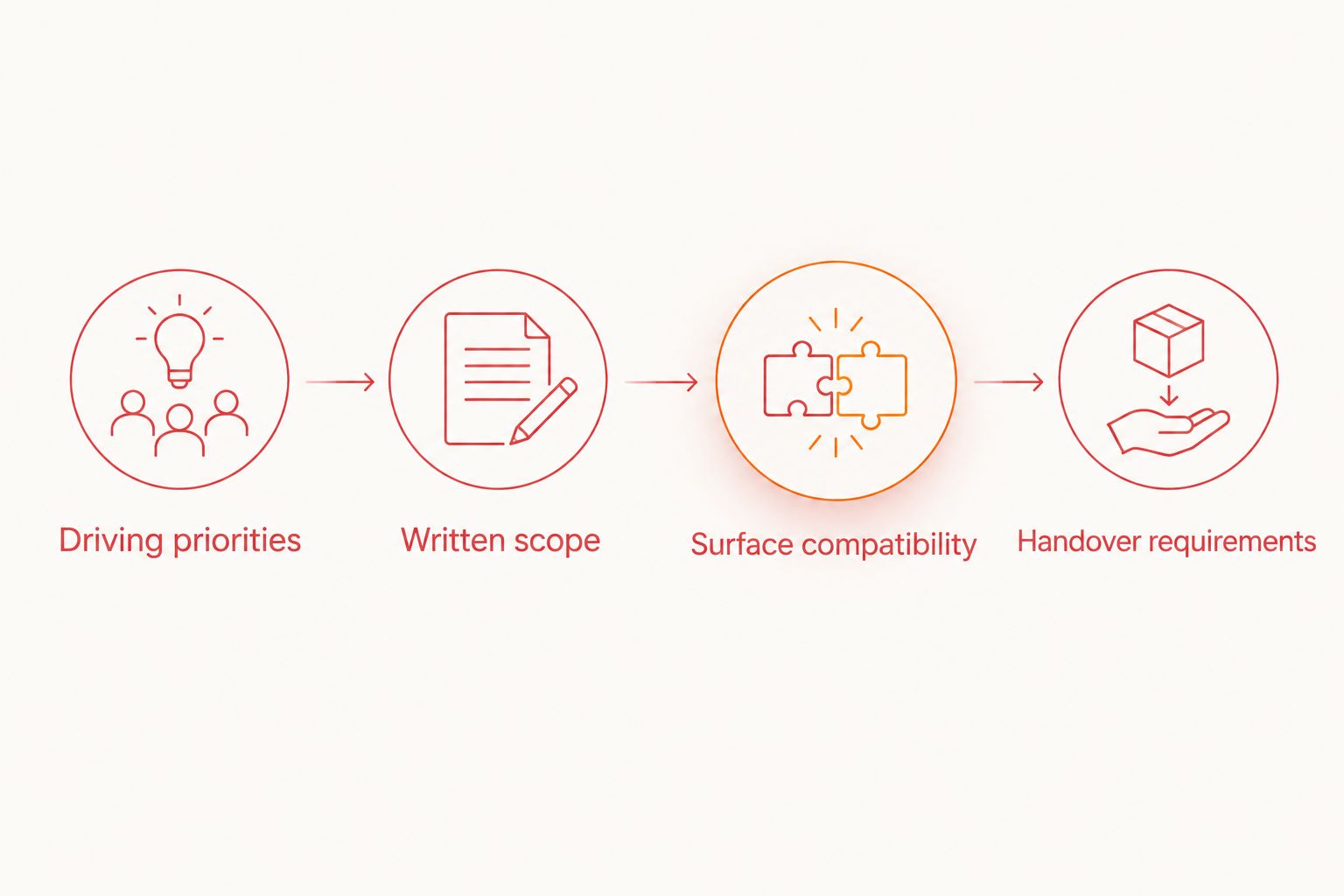
- State the driving priorities. Explain whether your main concern is daytime glare, cabin heat, passenger comfort, or visibility on unlit roads. Include your normal night-driving conditions, not just how the vehicle looks at midday.
- Approve a written scope. Specify which windows receive film, which remain unchanged, and whether existing film must be removed. Request the proposed film identification and the intended compliant result for each window position.
- Confirm surface compatibility. Have the installer assess existing film, damaged glass, defroster lines, antennas, and sensors. Removal work and replacement glass deserve separate discussion because they change the preparation requirements.
- Review the handover requirements. Request finished-window measurements, film-specific care instructions, and the actual terms of any documentation provided. Do not infer a warranty or lifespan from a general description of professional installation.
Expected result: You approve a defined job with measurable acceptance criteria and an aftercare plan, rather than an informal request for dark tint.
Compare the scope before choosing the appearance
| Installation approach | Best for | Advantage | Limitation |
|---|---|---|---|
| Front side windows only | Owners keeping existing rear privacy glass unchanged | Addresses the driver's immediate side-window exposure | Does not address untreated rear glass; matching appearance is not guaranteed |
| Front and rear side windows | Owners seeking a coordinated side-window plan | Allows each side-window position to be assessed together | Front and rear legal limits differ; one film shade need not suit every pane |
| Side windows and rear window | Owners seeking broader cabin-glass coverage | Includes the rear window in the measured installation scope | Requires attention to rear visibility, defrosters, mirrors, and compatible preparation |
CoaterZ window tint installation should be scoped around your glass and driving needs, not an assumption that every service has the same specifications. Ask for the relevant film details before making a comparison.
Collection checks and aftercare
- Inspect the agreed coverage. Confirm that the completed windows match the approved scope. Look for obvious edge lifting, trapped debris, or damage, and raise concerns before leaving.
- Request the finished readings. Ask the installer to identify the measured result for each regulated window. A film specification sheet is useful supporting information, but it is not a measurement of your completed glass.
- Get written curing instructions. Follow the actual film's instructions for operating windows, cleaning, and inspecting moisture during curing. Do not substitute a generic waiting period from another vehicle or film.
- Retain the handover record. Keep the film identification, installation details, measurements, care instructions, and any applicable exemption documentation together.
Expected result: You leave with an inspectable installation and clear instructions for maintaining it.
For your 2026 vehicle file, distinguish observations from acceptance decisions. If the installer identifies temporary curing moisture, ask what changes to expect and when to arrange a recheck; do not accept every visible defect as normal curing.
Florida sun makes heat-control discussions relevant, but window film is not protection for exterior paint, underbody components, or road-impact areas. Salt and road wear require separate surface-specific planning.
The second workflow: existing tint or replacement glass
A new-to-you vehicle needs a different starting point from a bare-glass installation. Inspect and measure existing tint before adding anything.
- Identify which panes have factory-colored glass, aftermarket film, or replacement glass.
- Ask the installer to assess existing film condition and combined VLT.
- Decide whether to retain the existing installation or remove it before applying replacement film.
- Repeat the classification, scope approval, and finished-measurement checks used for a new installation.
This variant is best for used purchases, out-of-state arrivals, and vehicles with recently replaced windows. Its advantage is avoiding an unnecessary layer; its limitation is that film removal can introduce additional preparation concerns, particularly around rear defroster elements.
A seller's statement that the tint was legal elsewhere does not establish Florida compliance. Likewise, replacing a window changes the glass-and-film combination, so keep the replacement pane in the inspection scope.
Troubleshooting
The film label meets the limit, but the window does not
The glass contributes to the final light transmission. Stop the installation plan and choose a suitable combination based on the measured glass; do not use the film label as proof of compliance.
The front and rear windows look different
Different glass, factory privacy treatment, and different legal limits can produce different appearances. Ask for an explanation of the measured results before requesting a darker front-window match.
Existing film is bubbling or peeling
Have the installer inspect it before scheduling a new layer. Damaged film needs an assessment of removal and glass preparation; applying new film over a failing surface does not correct that surface.
Moisture remains visible after collection
Consult the written curing instructions and contact the installer with clear photographs. Do not puncture bubbles or scrape the film to speed drying, especially near defroster lines.
A camera or sensor area is involved
Keep required viewing areas clear and confirm the vehicle manufacturer's requirements before work. If glass work or a vehicle-specific procedure calls for calibration, treat that as a separate requirement—not something tint installation automatically completes.
Customize your workflow
Coordinate tint with other new-car work, but keep each surface's requirements separate. Window film belongs on compatible glass; paint protection film addresses painted impact areas, and ceramic coating has a different maintenance role.
Use the new-car pickup and protection workflow to organize those handoffs. Ask CoaterZ to define preparation and access requirements for the services you actually choose, without assuming a shared curing schedule or identical protection claims.
FAQ
Does registering my new car make its window tint legal in Florida?
No. Registration does not certify aftermarket window tint. Florida tint compliance depends on the applicable window rules, vehicle classification, finished light transmission, and other statutory conditions.
What is the legal front side-window tint limit in Florida in 2026?
Florida front side windows require at least 28% visible light transmission under the ordinary rule. Solar reflectance must not exceed 25%, and the finished glass-and-film combination matters.
Can my SUV have darker rear tint than a passenger car?
Qualifying multipurpose passenger vehicles have a different rear-window limit from passenger cars. Confirm the statutory vehicle classification before using the 6% rear-window threshold instead of the passenger-car 15% threshold.
Is a film marked 35% automatically legal on my front windows?
No. Existing glass also reduces visible light, so the completed window can transmit less light than the film label suggests. Measure the glass and verify the finished installation.
Can I put clear heat-control film across the entire windshield?
Do not assume a film is permitted across the windshield because it appears clear. Florida’s ordinary windshield sunscreen rule concerns the permitted upper strip; a different installation needs a specific lawful basis.
Can I add new tint over factory privacy glass?
Only approve additional film after checking the existing glass, vehicle classification, compatibility, and intended finished transmission. Factory privacy glass is not the same as removable aftermarket film.
How long should I keep my windows closed after tint installation?
Follow the written instructions for the actual film installed. Curing and window-operation instructions depend on the product and installation conditions, so a universal waiting period is not appropriate.
One last thing
Ask for the measurement, not just the shade name. Two windows that look similar can have different glass-and-film combinations, and appearance alone cannot establish compliance. Keep the finished readings with your vehicle records so a later glass replacement starts with useful information.