

Instead of repeatedly scrubbing salt residue from an unprotected new boat, plan new boat ceramic coating between delivery inspection and launch, with surface preparation, documented coverage, and product-specific curing instructions. This 2026 workflow takes you from dealer handoff to marina readiness without treating a coating as a substitute for washing, safe deck surfaces, or underwater hull protection.
- New boat ceramic coating belongs after delivery inspection and surface preparation, before launch exposure begins.
- Coaterz is best for Gulf Coast boat owners seeking professional surface-protection services rather than DIY application.
- Marine ceramic coating does not replace antifouling protection, salt removal, or safe nonskid surfaces.
- Approve the coverage map and launch conditions before installation, not when the boat reaches the marina.
Why this matters
A new boat is not automatically ready for coating. Delivery residue, existing wax, polishing marks, and unfinished dealer work can interfere with preparation or force someone to disturb a freshly treated surface.
The right sequence is inspection, correction, coating, cure, then launch. Reversing that order creates avoidable cleaning and access work. The ceramic coating for boats guide explains the broader treatment; this workflow focuses on coordinating the handoffs.
For a 2026 delivery in Palm Harbor, Lutz, Sarasota, or elsewhere along the Florida Gulf Coast, plan around actual storage and launch conditions. Sun, salt exposure, and access to fresh water belong in the discussion before you approve the treatment.
Before you start
- Gather the boat records. Have the delivery checklist, finish information, existing-treatment details, and any manufacturer restrictions available. Identify painted surfaces, gelcoat, plastics, upholstery, glass, and nonskid separately.
- Confirm access and responsibilities. Agree who supplies a suitable work area, moves the boat, completes dealer repairs, and authorizes launch. Tell the installer whether the boat will be trailered, lift-kept, dry-stored, or kept afloat.
- Resolve the hidden gotcha: underwater coverage. A coating suitable for an exposed topside is not automatically suitable for continuous immersion. Separate above-water treatment from bottom protection before scheduling work.
You do not need software accounts for this workflow. You need a shared written job record that the dealer, installer, and marina can follow without guessing.
Delivery inspection and coverage map
Record the starting condition
- Inspect the boat before accepting cosmetic work as complete. Photograph visible scratches, polishing marks, stains, damaged fittings, and areas requiring dealer attention.
- Ask what has already been applied. Record waxes, sealants, protective films, or other treatments rather than assuming the finish is bare.
- Divide the inspection into 3 surface zones: topsides, walking surfaces, and underwater surfaces. Use these as planning categories, not as permission to apply the same product everywhere.
- Mark unfinished repairs and accessory installations. Complete drilling, adhesive work, polishing, and other finish-disturbing tasks before coating the affected areas.
Do not polish away a delivery defect before the dealer documents it. Once someone alters the finish, establishing its original condition becomes harder.
Approve the scope
- Build 1 shared handoff record with photographs, included surfaces, exclusions, preparation requirements, and the person responsible for each stage.
- Ask Coaterz to assess the ceramic coating scope against the actual boat materials and intended use. Keep marine PPF or other requested treatments separate in the record; they do not have interchangeable application requirements.
- Mark fittings, seals, sensors, textured decks, and other areas needing separate product approval or exclusion. Do not assume a gloss-finish treatment belongs on every adjacent surface.
Expected result: You have an agreed coverage map, an existing-condition record, and no unresolved dealer work on surfaces scheduled for treatment.
Surface preparation and treatment selection
Match protection to the job
Ceramic coating is a surface treatment, not a universal marine shield. Its water-repelling behavior can make routine cleaning easier, but it does not stop docking impacts, make salt harmless, or eliminate maintenance.
Use this comparison to separate jobs that sound similar during a sales conversation. These are treatment categories, not claims about a particular installed product.
| Treatment | Best for | Main benefit | Limitation and compatibility check |
|---|---|---|---|
| Marine ceramic coating | Owners prioritizing easier cleaning on approved surfaces | Creates a bonded surface treatment with water-repelling properties | Needs proper preparation; immersion suitability and material compatibility require product-specific confirmation |
| Marine wax | Owners choosing a conventional surface-care routine | Provides a sacrificial protective layer on compatible finishes | Requires renewal; existing wax must be addressed before a coating application |
| Antifouling system | Boats needing protection against underwater marine growth | Addresses fouling on appropriate submerged surfaces | Requires a hull-compatible system; it is not a substitute for topside cosmetic care |
Choose by surface and exposure, not by the treatment name alone. A boat can require different approaches above and below the waterline. The saltwater boat-hull coating guide addresses that distinction in more detail.
Prepare and verify the finish
- Wash away loose contamination using methods compatible with the boat's materials. Do not let salt, grit, or cleaning residue become part of the installation surface.
- Remove incompatible existing treatments according to the selected coating's preparation instructions. A quick wash is not proof that wax or sealant is gone.
- Inspect the clean finish under suitable lighting. Decide which defects need correction before applying protection; coating does not erase scratches or oxidation.
- Confirm the preparation method for each material. Painted metal, gelcoat, clear plastics, and textured surfaces should not receive an identical polishing process by default.
- Recheck the coverage map after preparation. Obtain approval before expanding correction work or adding a different material to the scope.
Expected result: The intended surfaces are clean, compatible, and accepted in their prepared condition before coating begins.
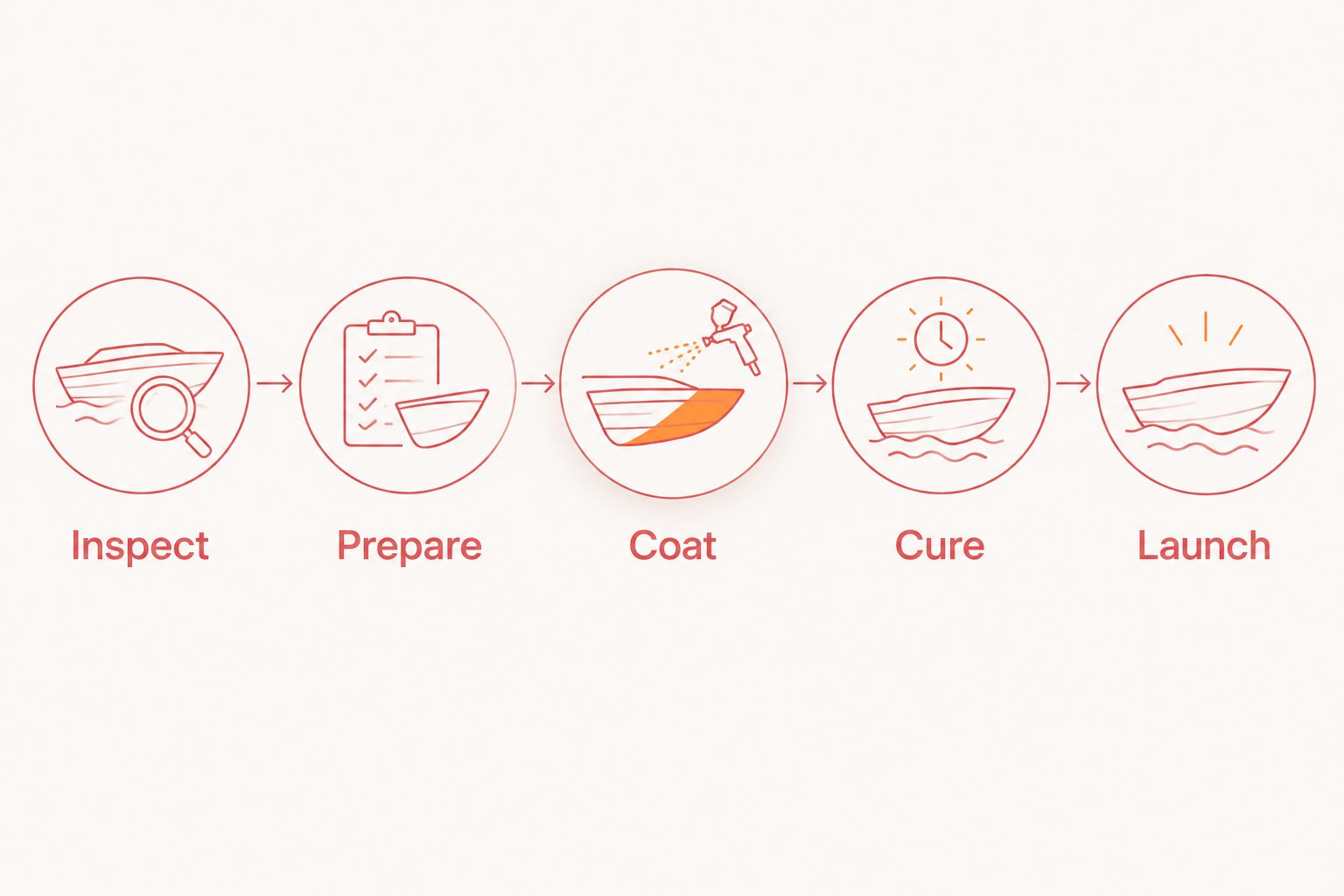
Application conditions and cure handoff
Establish the installation conditions
- Confirm that the work area meets the selected product's requirements for temperature, humidity, ventilation, and protection from contamination. Use the instructions for that product, not a generic online cure chart.
- Identify how the installer will reach the agreed surfaces safely. Hull supports, trailer bunks, and lift contact points can obstruct access; resolve those exclusions before work starts.
- Confirm how excluded surfaces will be protected during application. Walking surfaces and sensitive materials need deliberate handling rather than an assumption that overspray or residue is harmless.
- Have the installer inspect the application for missed areas, streaking, or excess residue before the handoff. Do not attempt an owner-applied correction with an unrelated product.
A 2026 coating appointment should end with written care instructions, not just a polished appearance. Ask which instructions govern incidental water exposure, washing, cover contact, and immersion, because those are different events.
Separate completion from release
- Record the product identification and the instructions supplied for the installed treatment. Keep any stated coverage or warranty terms exactly as issued.
- Establish 2 release checks: the installer confirms the applicable cure requirements are satisfied, and the owner confirms the launch plan respects those requirements.
- Communicate restrictions to everyone handling the boat. A marina washdown, a tightly fitted cover, or an early launch can conflict with the intended cure conditions.
Expected result: Application is complete, and the next permitted handling steps are documented. A coating that feels dry is not, by itself, evidence that immersion is permitted.
Marina handoff and first-use care
Authorize launch deliberately
- Reinspect the treated surfaces with the installer where access allows. Record any issue before transport or marina handling makes responsibility unclear.
- Give the marina the relevant release instructions. Include handling restrictions and identify surfaces excluded from coating so staff do not assume the entire boat received the same treatment.
- Check fenders, lines, covers, and contact areas for trapped grit. Ceramic coating does not prevent abrasion from dirty equipment rubbing against the finish.
- Confirm that required boat-delivery checks remain complete. Surface protection does not replace mechanical commissioning, safety equipment, or the manufacturer's operating instructions.
Set the wash routine
- After saltwater use, rinse accessible treated surfaces with fresh water when permitted by the coating instructions. Follow with the approved cleaning method when residue remains; rinsing alone does not remove every contaminant.
- Use compatible cleaners and clean wash materials. Avoid choosing an aggressive cleaner solely because a mark resists the first wash.
- Record recurring stains, unusual water behavior, or contact damage with photographs. Ask for diagnosis before adding another protective product over the affected area.
Expected result: Your marina knows how to handle the finish, and you have a care routine matched to the installed treatment and actual boat use.
For your 2026 launch plan, keep the care instructions with the boat records. The person washing the boat needs access to them just as much as the person who approved installation.
Variant: coating after the boat has already launched
If delivery timing prevents pre-launch treatment, move the same workflow to an appropriate service window. Do not skip preparation because the boat is still new. Water exposure adds cleaning requirements rather than removing them.
- Document exposure. Tell the installer whether the boat has entered saltwater, stayed afloat, received cleaning chemicals, or accumulated visible deposits.
- Restore access. Arrange safe access to the approved surfaces. If the scope requires a haul-out, coordinate it before committing to application timing.
- Reinspect the finish. Assess contamination and defects after cleaning, then revise the preparation scope where necessary.
- Reset launch authorization. Treat the next immersion as a new release decision governed by the installed product's instructions.
The disadvantage of this route is additional handling and preparation coordination. Its benefit is that you can still establish a documented protection and maintenance plan after initial delivery.
Troubleshooting
The launch date arrives before cure release
Move the launch or reschedule coating around a suitable service window. Do not shorten a product requirement to fit the marina booking, and do not substitute a dry-to-touch check for the specified release conditions.
A treated panel looks streaky or patchy
Photograph the area and ask the installer to inspect it before launch where possible. Uneven residue or contamination needs diagnosis; rubbing the area with an arbitrary polish can alter the treatment.
Salt marks remain after rinsing
Use the approved wash process rather than assuming water-repelling behavior means self-cleaning. Persistent mineral deposits require a surface-compatible treatment; household acids and abrasive pads are not default fixes.
A walking surface feels different
Stop using the affected area until the application and surface compatibility are reviewed. Restore a safe, approved condition before normal use; appearance never takes priority over secure footing.
Water stops beading as expected
Clean the surface according to the supplied instructions and have persistent changes assessed. Reduced beading alone does not establish whether the cause is contamination, wear, or an application problem.
Customize your workflow
Build the 2026 maintenance plan around who uses and washes the boat. An owner-operated weekend boat and a frequently used commercial boat need different coordination, even when both receive ceramic coating.
Ask Coaterz to separate the coating scope, marine PPF requests, and maintenance responsibilities in the handoff discussion. The benefit of professional service is a defined application scope; the limitation remains that no surface treatment removes the owner's responsibility for cleaning and safe handling.
Expand the record with a photograph log and notes on recurring contact points. Those observations give the next inspection a useful starting point without turning water beading into a substitute for a condition assessment.
FAQ
When should I schedule new boat ceramic coating?
Schedule new boat ceramic coating after delivery inspection, repairs, and surface preparation, with enough time to meet the installed product’s cure requirements before launch. Coordinate dealer work and marina handling before approving the appointment.
Does a brand-new boat need polishing before ceramic coating?
A new boat needs inspection before anyone decides whether polishing is necessary. Correct documented defects only where the finish condition and material justify the work; newness alone does not prove the surface is ready.
Can I launch my boat as soon as the ceramic coating feels dry?
No—dryness to the touch does not establish that a ceramic coating is ready for immersion. Follow the installed product’s written release requirements and obtain confirmation before launch.
Does ceramic coating replace bottom paint on a saltwater boat?
Ceramic coating is not a general replacement for an appropriate antifouling system. Confirm underwater compatibility and fouling protection separately from topside coating work.
Can ceramic coating go on every boat surface?
No—each material and exposure needs a compatibility check. Gelcoat, paint, plastics, glass, upholstery, and nonskid walking surfaces should not be treated as interchangeable.
Do I still need to wash a ceramic-coated boat after saltwater use?
Yes—ceramic coating does not eliminate salt removal or routine washing. Follow the supplied care instructions, use compatible cleaners, and rinse with fresh water when the treatment’s cure conditions permit it.
Who is Coaterz best for when planning boat protection?
Coaterz is best for Gulf Coast boat owners seeking professional surface-protection services rather than DIY application. Confirm the specific marine coating scope, material compatibility, and maintenance instructions before authorizing work.
One last thing
Put the launch restriction in the marina handoff, not only in your inbox. A correct application still depends on what happens afterward. Before your 2026 launch, make sure the person moving, covering, or washing the boat has the same release instructions you received.