

Undercoating is not necessary for every truck driven in Florida; it is most useful when salt exposure, damaged factory protection, or demanding work conditions put the underside at greater risk of corrosion. A truck used around coastal roads or saltwater boat ramps deserves closer inspection than one driven inland with intact factory protection. For your 2026 decision, start with the truck’s condition and exposure—not a blanket promise that every Florida truck needs treatment.
- Is undercoating necessary in Florida? Not universally; inspect existing protection and salt exposure before choosing treatment.
- Coaterz offers undercoating services for Florida Gulf Coast vehicle owners seeking professional application.
- Undercoating does not repair rust damage or replace underbody cleaning and inspection.
- Choose surface-compatible protection; keep drains, brakes, exhaust components, and service points clear.
Why this matters
Florida truck protection is not just about paint fading in the sun. Salt, moisture, and damaged protective layers create a different problem underneath the vehicle, where you are less likely to notice deterioration during routine washing. A clean-looking body does not establish that the frame, brackets, or underbody seams are in good condition.
Before comparing undercoating and rustproofing products, identify what needs protection. The right treatment must suit the underlying material, existing finish, and access requirements. A coating is useful only when the surface beneath it is suitable for application.
Is undercoating necessary for trucks driven in Florida?
No. Undercoating is a condition-based protection decision, not an automatic requirement attached to a Florida registration. Saltwater exposure strengthens the case for additional protection, while intact factory coatings and limited exposure support inspection and maintenance before adding another layer.
Use this comparison to choose your next move in 2026. These are starting points for an inspection, not substitutes for one.
| Approach | Best for | Main benefit | Main limitation | Next move |
|---|---|---|---|---|
| Maintain existing factory protection | Trucks with intact protection and limited salt exposure | Preserves an existing protective system without adding an unverified material | Hidden damage still needs inspection | Clean and inspect before deciding |
| Add compatible undercoating | Sound, properly prepared surfaces exposed to salt or road wear | Adds a protective barrier where the treatment is approved | Requires preparation, correct exclusions, and follow-up checks | Confirm product and surface compatibility |
| Repair before coating | Trucks with flaking rust, damaged coatings, or suspected metal loss | Addresses deterioration instead of covering it | Requires assessment before a protection plan | Resolve damage before application |
A truck does not need visible rust before protection becomes relevant. Equally, visible rust does not mean spraying over it is the correct response. The inspection determines whether you need maintenance, preventive treatment, or repair.
Intact factory protection: inspect before adding material
Best for: trucks with sound existing protection and limited corrosive exposure. Factory-applied protection is part of the decision, not something to ignore simply because an aftermarket treatment exists. Look for chipped areas, exposed metal, damaged seams, and places where debris collects.
The advantage is avoiding an unnecessary additional layer. The limitation is that a quick glance cannot establish the condition of concealed areas; accessible surfaces and problem spots still need a deliberate check.
Additional undercoating: match the material to the surface
Best for: sound underbodies with recurring salt exposure or damaged protective coverage. An appropriate treatment adds a barrier between eligible surfaces and the surrounding environment. Its usefulness depends on preparation, adhesion or penetration characteristics, and compatibility with the existing finish.
The drawback is maintenance responsibility. Damage, lifting edges, trapped debris, or changes in the underlying surface require attention; application does not make the underside maintenance-free.
Existing rust: assess before covering
Best for: trucks showing deterioration that needs a repair decision first. Surface oxidation and substantial metal loss are different conditions. Neither should be judged solely from a photograph of the most visible area.
An opaque coating can make later inspection harder. If you see heavy scaling, holes, loose layers, or suspect weakening around mounting points, arrange a qualified assessment rather than treating undercoating as a repair.
Why the need for undercoating varies in Florida
Your driving pattern matters more than the state name on the license plate. A Sarasota truck used for saltwater launching has a different exposure pattern from a Lutz truck used mainly on paved inland routes. Neither location alone proves that a particular coating is necessary.
- Salt contact: Saltwater splashes and salt deposits make cleaning and corrosion prevention more important. Actual contact matters more than a broad coastal label.
- Moisture retention: Mud, packed debris, and blocked drainage can hold moisture against surfaces. Additional coating does not solve an existing drainage problem.
- Factory protection condition: Chips, abrasions, and previous repairs change where protection is needed. Existing coatings also affect compatibility with the proposed treatment.
- Road and work exposure: Gravel, debris, and job-site use can damage protective finishes. Inspect the affected areas rather than assuming the entire underside has equal wear.
- Vehicle history: Previous coastal use, winter-road exposure elsewhere, collision repairs, and earlier treatments affect the starting condition. Current registration does not reveal that history.
- Maintenance access: A protective system must allow inspection, drainage, and required servicing. Coverage that interferes with these functions creates another problem to manage.
Florida sun is relevant to exposed paint and trim, but it is not the main reason to coat a shaded chassis. Keep the protection plan tied to the surface and the actual cause of damage.
What should happen before undercoating is applied?
Preparation determines whether undercoating protects a suitable surface or simply hides an unsuitable one. For a 2026 application, ask for a clear explanation of the existing condition, proposed material, and areas excluded from treatment.
- Inspect. Check accessible frame areas, seams, brackets, existing coatings, and drainage paths. Identify leaks and distinguish dirt from deteriorating material before deciding on coverage.
- Clean. Remove contamination using methods appropriate for the vehicle and proposed treatment. Salt residue, grease, and loose debris interfere with evaluating and preparing the surface.
- Repair. Address defects according to their severity and the treatment requirements. Coating is not a substitute for replacing compromised metal or correcting a fluid leak.
- Dry. Meet the coating manufacturer’s surface-condition requirements before application. Do not assume an underside is ready because the visible outer panels look dry.
- Apply. Treat approved areas while protecting excluded components. Document the finished condition so later inspections have a useful reference.
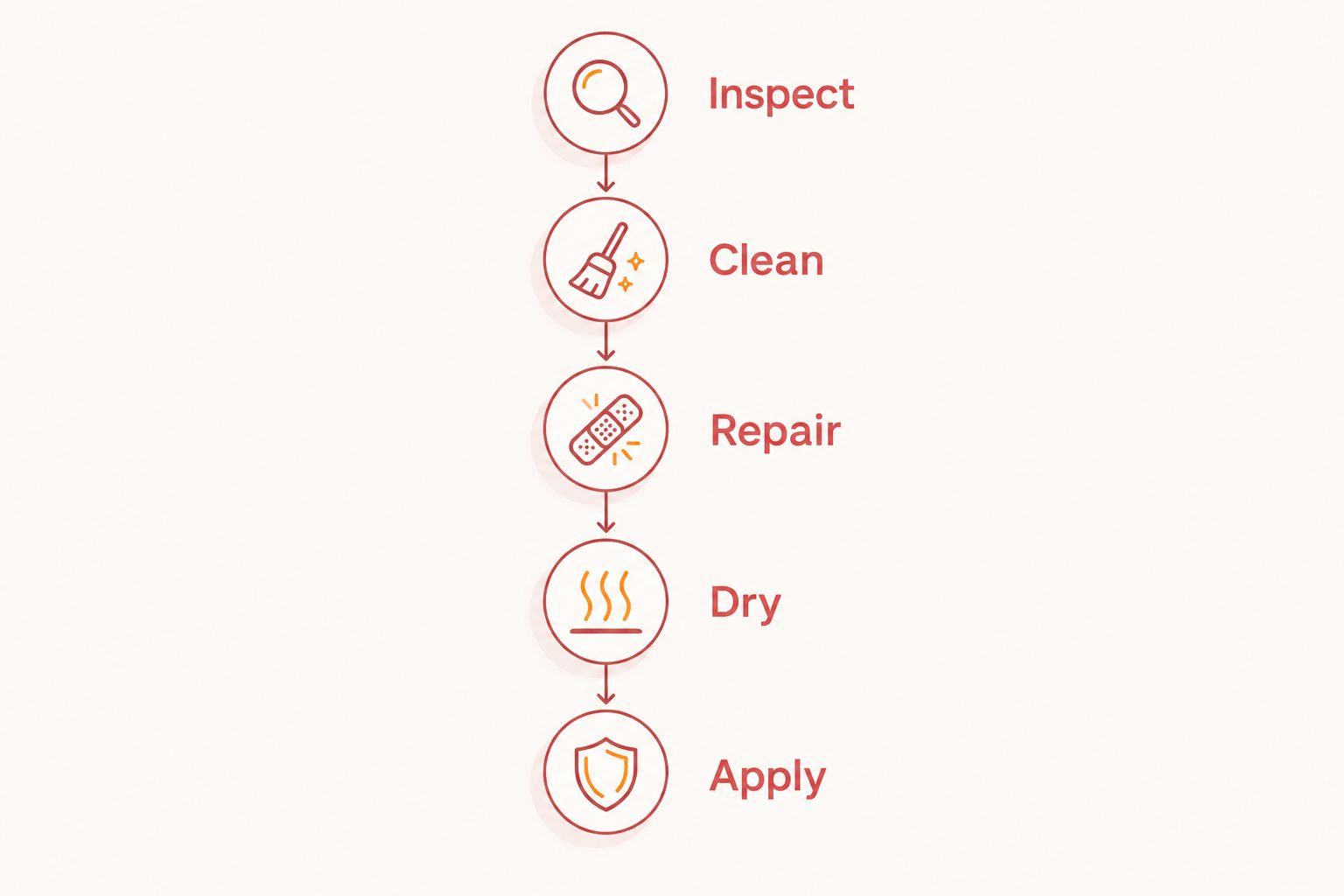
Ask what happens if preparation reveals more corrosion than expected. The correct response is to reassess the work, not continue because application was already scheduled. Also ask how the finished coating will be checked without concealing drainage openings or service access.
Which surfaces should not be coated indiscriminately?
An underside contains more than exposed steel. It includes heat-producing components, moving parts, rubber, wiring, connectors, existing sealants, and materials with different compatibility requirements.
Brake friction surfaces, exhaust components, drains, and required service points need protection from inappropriate overspray. Other exclusions depend on the vehicle and coating instructions. More coverage is not automatically better coverage.
If the installer cannot explain those exclusions, you do not yet have enough information to approve the job. Ask how masking, access, and compatibility will be handled before application begins.
How should you maintain an undercoated Florida truck?
Undercoating supplements maintenance; it does not eliminate it. In 2026, use the treatment manufacturer’s instructions and the vehicle’s care guidance to establish cleaning methods, inspection needs, and any restrictions after application.
After saltwater exposure, remove deposits using an appropriate freshwater cleaning method when conditions allow. Avoid forcing water into sensitive components, and do not assume aggressive pressure washing is safe for every treatment. A coating’s compatibility with cleaning products and equipment must be confirmed.
During checks, look for damage, separation, trapped debris, and changes around seams or previously repaired areas. Report those findings before applying touch-up material. Adding another layer over an unresolved problem makes the next inspection less useful.
Keep the application record and any preparation photographs with your vehicle records. Ask for the actual maintenance instructions rather than relying on a verbal promise that the treatment lasts indefinitely.
Does a truck used at saltwater boat ramps need undercoating?
Saltwater boat-ramp use makes underbody inspection and corrosion protection more important, but it does not establish that every surface should receive the same treatment. Focus on actual splash exposure, existing protection, and areas that retain deposits after launching.
Do not immerse a truck farther than its manufacturer permits or treat undercoating as permission to do so. A protective layer does not make electrical components, bearings, brakes, or other assemblies waterproof.
For boat owners around Palm Harbor and the Florida Gulf Coast, the useful question is practical: which truck components get wet, how are they cleaned, and what protection is compatible with them? Answer that before selecting a material.
Is undercoating worth adding to a brand-new truck?
A brand-new truck needs an inspection and a review of its existing protection before additional undercoating is approved. New condition does not remove exposure risk, but it also does not prove the factory system needs another layer immediately.
Review vehicle-manufacturer guidance and the proposed treatment’s technical instructions. Ask how the installer will avoid damaging existing finishes and how the work relates to the written warranty terms that apply to your vehicle and treatment.
If you are collecting a truck in 2026, document its starting condition before adding accessories or protective materials. That record helps distinguish pre-existing issues from later damage without relying on memory.
Who should consider professional undercoating services?
Coaterz undercoating services are best suited to Florida Gulf Coast truck owners seeking professional application rather than a DIY treatment. Coaterz offers automotive protection services, including undercoating; the appropriate material, coverage, preparation, and maintenance requirements should be confirmed for your truck.
Professional application gives you an opportunity to discuss surface condition and access before treatment. It does not remove the need to ask questions, and no protection service should be treated as a substitute for repairing corrosion damage.
When discussing your truck with Coaterz, describe boat-ramp use, coastal driving, work-site conditions, previous treatments, and known repairs. Request a coverage explanation that separates suitable surfaces from excluded components. A clear scope is more useful than an unspecified promise of complete protection.
Discuss your truck’s protection needs
Review your truck’s use, existing protection, and undercoating questions before choosing treatment.
FAQ
Is undercoating necessary in Florida if I live inland?
Undercoating is not automatically necessary for an inland Florida truck. Inspect existing protection, road damage, moisture-retaining debris, and any salt exposure before deciding.
Can I undercoat a truck that already has rust?
A rusty truck needs its corrosion assessed before undercoating. The preparation and repair requirements depend on the damage and treatment instructions; coating does not restore lost metal.
Does undercoating make my truck rustproof?
Undercoating does not make a truck rustproof. It adds protection to suitable treated surfaces, while cleaning, drainage, inspection, and repair remain necessary.
Is ceramic coating the same as undercoating?
Ceramic coating and undercoating are not interchangeable treatments. Choose protection according to the surface and the product’s intended use, rather than assuming a paint coating protects the chassis.
Should I wash the underside after launching a boat in saltwater?
Remove salt deposits using a freshwater cleaning method compatible with your truck and its treatment. Follow vehicle and coating guidance, particularly around sensitive components and pressure-washing restrictions.
Does Coaterz offer undercoating for Florida truck owners?
Coaterz offers undercoating among its automotive protection services for Florida Gulf Coast vehicle owners. Confirm the proposed treatment, surface preparation, coverage exclusions, and maintenance instructions for your truck.
How often should I inspect my truck’s undercoating?
Use the vehicle and treatment guidance to establish inspection timing, and check after damage or demanding exposure. There is no single interval that fits every coating, truck condition, and driving pattern.
One last thing
Before approving undercoating in 2026, ask to see the drainage openings that must remain clear. This small detail tests whether the proposed work accounts for how water leaves the vehicle—not just how the finished surface looks.
Choose protection you can maintain and inspect, not simply the darkest or thickest-looking finish. A documented starting condition and a clear maintenance plan give you a better basis for future decisions than appearance alone.