

A factory truck warranty does not automatically pay for aftermarket undercoating, and adding undercoating does not automatically void your entire factory warranty. A manufacturer can deny coverage for damage caused by the treatment or its installation; an unrelated covered defect is a different matter. The answer depends on the truck’s written warranty, the affected component, and what caused the problem—not simply whether the truck is still under warranty.
- Undercoating and factory truck warranty are separate: treatment coverage does not replace manufacturer coverage.
- FTC guidance says aftermarket work alone does not automatically cancel a vehicle warranty.
- CoaterZ offers undercoating services; confirm truck-specific compatibility and written terms before scheduling.
- Document existing corrosion, installation areas, and maintenance instructions before applying any rustproofing treatment.
Is undercoating covered if a truck still has factory warranty?
Not automatically. Having factory coverage does not make an aftermarket undercoating installation a covered repair. First separate the coverage for a manufacturing defect from any protection promised by the treatment provider.
For a 2026 installation, read the warranty booklet issued for your truck’s model year rather than assuming current advertising describes your coverage. If you are considering CoaterZ for undercoating, bring that booklet and any existing corrosion records to the discussion.
| Coverage or service | Best for | What it addresses | Important limitation |
|---|---|---|---|
| Factory vehicle warranty | Evaluating a suspected covered defect | Repairs that meet the manufacturer’s written terms | Does not automatically include elective aftermarket treatments |
| Factory corrosion warranty | Evaluating a qualifying corrosion claim | The corrosion conditions and components specifically listed | Surface rust and rust-through are not interchangeable terms |
| Undercoating installation | Adding a treatment to compatible underbody surfaces | Application work described in the installation agreement | Does not expand the truck manufacturer’s obligations |
| Separate treatment warranty | Evaluating a problem with the applied treatment | Only the protection expressly promised in its terms | Coverage, exclusions, inspections, and remedies require separate review |
The Federal Trade Commission’s consumer guidance on auto warranties and aftermarket parts explains the central rule: using an aftermarket part or independent service does not, by itself, cancel warranty coverage. If that part or service causes damage, the manufacturer can deny coverage for the affected repair.
That distinction matters more than a blanket assurance that a product is warranty-safe. Ask which surfaces are compatible and which warranty provisions apply to the proposed work.
Why this matters for Florida truck owners
Truck owners in Palm Harbor, Lutz, Sarasota, and the Florida Gulf Coast face different exposure patterns. Coastal parking, boat-ramp use, wet job sites, and road debris create different inspection and maintenance needs.
Factory coverage is a repair obligation under written terms. Undercoating is a treatment applied to selected surfaces. Neither replaces cleaning, inspection, or attention to damaged factory finishes.
Florida sun also affects a different set of surfaces than underbody exposure. Do not treat undercoating as a substitute for exterior paint protection, or assume a bedliner protects the frame simply because both treatments are used on trucks.
For a protection plan made in 2026, identify the surface and the problem first. Then match the service to that problem without treating every protective coating as the same product.
Does aftermarket undercoating void the whole factory warranty?
Aftermarket undercoating alone does not automatically void the whole factory warranty. The relevant question is whether the treatment or installation caused the failure being claimed.
For example, an unrelated covered electrical defect does not become an undercoating problem merely because a treatment was installed. Damage caused by coating a component that should have remained untreated presents a different coverage question.
FTC guidance provides a general consumer-warranty framework, not approval for every material or installation method. Your truck’s instructions still matter, including restrictions concerning existing finishes, corrosion protection, inspection access, and sensitive components.
Avoid asking only, “Will this void my warranty?” That wording encourages an oversimplified answer. Ask instead: “Does the manufacturer restrict this treatment on these surfaces, and what damage would be excluded if application caused a failure?”
Keep the response with your vehicle records. A written explanation tied to the proposed work is more useful than a broad verbal promise.
Does the factory warranty cover rust under the truck?
A factory corrosion warranty covers only the conditions described in its written terms. Visible rust is not enough, by itself, to establish a covered corrosion claim.
Read how the booklet defines corrosion, perforation, covered panels, and exclusions. Perforation means rust has created a hole; surface oxidation is not the same condition. A corrosion provision can distinguish between these problems and between different vehicle components.
Also separate body-panel coverage from frame or underbody questions. Do not assume that a promise concerning sheet metal applies to every bracket, fastener, suspension part, or structural surface underneath the truck.
If you discover rust before installation, photograph it and request a manufacturer warranty assessment before covering it. Coating over an unresolved condition can make its original appearance harder to document.
For a claim submitted in 2026, use the truck’s actual in-service date, mileage, and applicable coverage terms. The date of the undercoating appointment does not restart factory coverage.
Why undercoating warranty outcomes vary
Warranty outcomes turn on the treatment, the truck, and the specific failure. These factors deserve attention before installation:
- Warranty wording: Manufacturing defects, cosmetic corrosion, and perforation can have different definitions and exclusions. Read the provision that matches the actual damage.
- Surface condition: Dirt, loose corrosion, moisture, and damaged existing finishes affect preparation decisions. A treatment is not a substitute for repairing unsound metal.
- Material compatibility: A product must be suitable for the substrate and any existing factory coating. Do not assume compatibility because another truck received a similar service.
- Application location: Exhaust components, brakes, moving parts, electrical connections, and designated inspection points require specific attention to application restrictions.
- Maintenance requirements: Inspection, cleaning, touch-up, or reapplication instructions depend on the treatment. Follow its written requirements rather than a generic schedule.
- Cause of failure: A treatment-related problem and an unrelated manufacturing defect require different evidence. Documentation should show the affected component and the proposed cause.
These factors explain why a confident blanket guarantee is less useful than a precise installation scope. The scope should identify what receives treatment, what stays untreated, and how existing corrosion will be handled.
What should you check before undercoating a warranted truck?
Use this sequence before authorizing work. It separates the coverage decision from the application decision and leaves a record of both.
Read the warranty
Locate the vehicle warranty booklet, corrosion provisions, and any manufacturer instructions concerning additional rustproofing. Check whether the proposed work affects access to areas the manufacturer requires for inspection or repair.
For your 2026 appointment, bring the documents that apply to your specific truck. A general dealership brochure is not a replacement for the actual terms.
Inspect the surfaces
Check the underbody before treatment, with particular attention to existing corrosion, loose finishes, drainage openings, and evidence of leaks. Have structural concerns assessed before discussing cosmetic coverage or protective application.
Ask for photographs that show the condition clearly. Close-up images help record individual problems; wider views establish where those problems sit on the vehicle.
Confirm compatibility
Request the proposed material’s technical and application instructions. Ask how it interacts with the truck’s existing finishes and which components must remain untreated.
Compatibility is not just about adhesion. The installation must also preserve drainage, service access, and the function of nearby components.
Define the work
Get a written description of preparation, application areas, exclusions, and aftercare. Clarify whether the job includes any corrosion removal or repair rather than assuming those tasks are part of coating application.
Keep factory coverage and any separate treatment coverage distinct. Ask who handles a problem with the application and what remedy the written agreement provides.
Keep the records
Save the invoice, product identification, inspection photographs, installation scope, and care instructions. Record any written guidance received from the manufacturer or dealer about the proposed treatment.
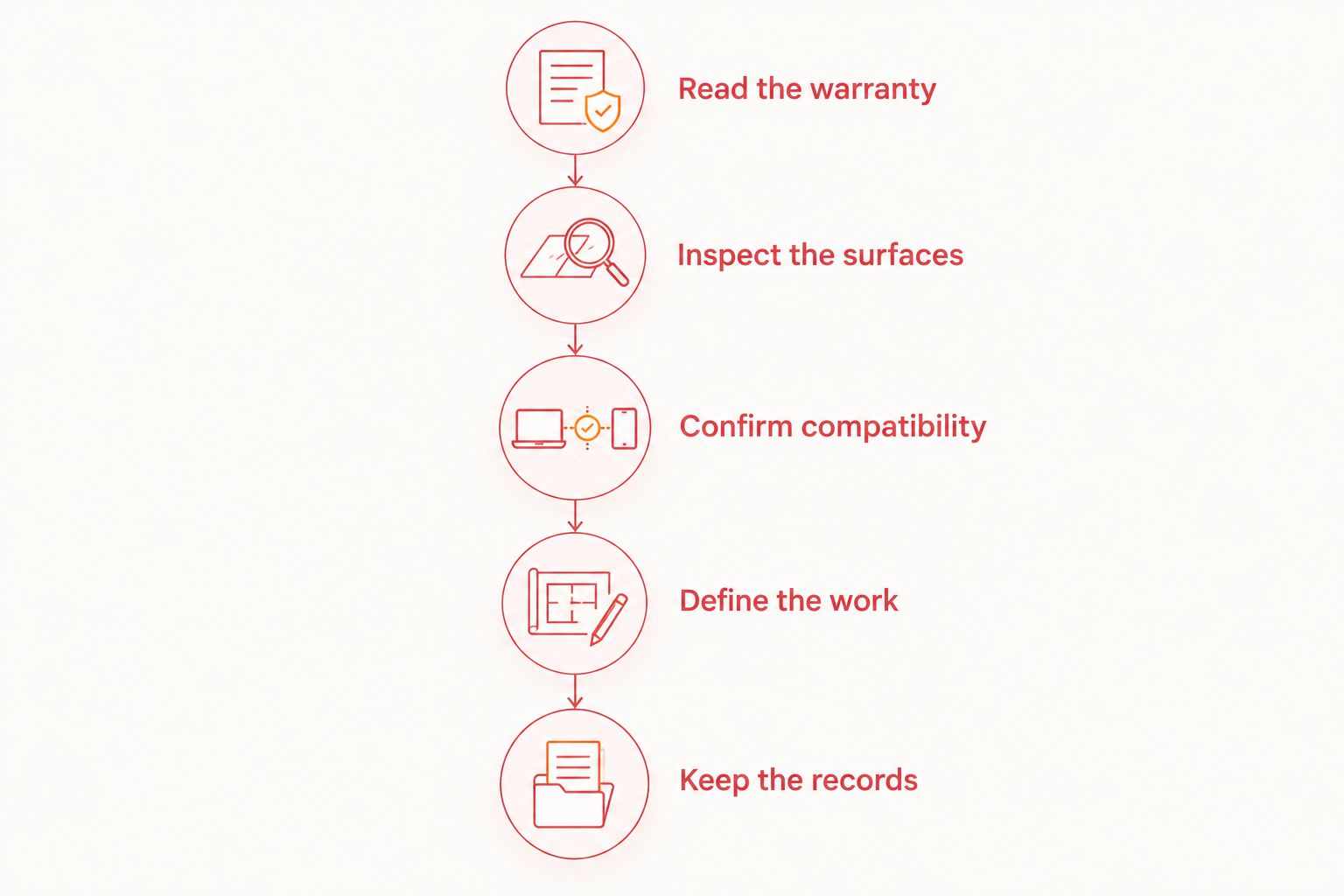
Keep 3 record groups: factory warranty documents, installation documents, and condition photographs. Together, they help distinguish what the manufacturer promised from what the installer agreed to do.
Is professional undercoating better than applying it yourself?
Professional installation gives you a service agreement and an identified provider to question about preparation, application, and aftercare. It does not automatically make every treatment compatible with your truck or preserve every disputed claim.
A do-it-yourself application puts product selection, preparation, masking, and recordkeeping in your hands. The legal principle concerning unrelated warranty repairs does not remove those responsibilities.
CoaterZ undercoating services are best for Florida Gulf Coast truck owners seeking a professional installation rather than a do-it-yourself application. The necessary next step is to confirm the material, application scope, and written terms for your specific vehicle—not assume a particular lifespan or warranty.
A professional service also has limits: it cannot turn an aftermarket treatment into manufacturer coverage, repair structural corrosion through coating alone, or eliminate maintenance. Judge the proposal by the work described and the compatibility questions answered.
What should you do if a dealer denies a claim after undercoating?
Ask for the denial in writing. Request the applicable warranty provision, the affected component, and an explanation of how the treatment or installation caused the claimed damage.
A statement that the truck has aftermarket undercoating does not explain causation. On the other hand, documentation of a coating-related failure deserves a specific technical response rather than a general appeal to warranty rights.
Keep the discussion focused on 1 disputed repair at a time. Separate the requested repair from unrelated systems so a narrow disagreement does not become an unsupported claim that the entire truck has lost coverage.
Preserve photographs and service records before authorizing removal or corrective work. Follow the manufacturer’s written escalation or dispute process where applicable, and seek qualified legal advice if the dispute remains unresolved.
Can undercoating prevent every corrosion problem?
Undercoating cannot guarantee that every surface remains corrosion-free. Coverage gaps, damaged material, incompatible application, and untreated cavities all matter when evaluating a protection plan.
Inspect areas exposed to road wear and follow the selected treatment’s cleaning and maintenance instructions. After boat-ramp use or other salt exposure, follow the truck manufacturer’s cleaning guidance; a protective treatment does not make salt deposits irrelevant.
Avoid coating over a problem simply to hide its appearance. Existing rust requires assessment, and the correct preparation depends on the condition and the material being applied.
FAQ
Will my factory warranty pay for undercoating?
A factory warranty does not automatically pay for aftermarket undercoating. Payment requires an applicable written coverage provision or separate agreement; being within the factory warranty period is not enough.
Can a dealer void my whole warranty because I added undercoating?
Adding undercoating does not automatically void the whole factory warranty. FTC guidance distinguishes aftermarket work itself from damage that the work causes, which can affect coverage for a particular repair.
Is surface rust covered by a truck corrosion warranty?
Surface rust is covered only if the written warranty includes that condition. Read the definitions carefully because surface corrosion and perforation are different, and coverage can distinguish between components.
Should I have existing rust inspected before undercoating?
Have existing rust inspected and documented before undercoating. Request a warranty assessment first if you believe the condition qualifies, and address repair needs before covering the surface.
Does dealer-applied undercoating become part of my factory warranty?
Dealer-applied undercoating does not automatically become part of the factory warranty. Check the sales agreement and any separate treatment warranty to identify the responsible provider and exact coverage.
What paperwork should I keep after undercoating?
Keep 3 record groups: factory warranty documents, installation documents, and condition photographs. Include the invoice, material identification, application scope, and maintenance instructions within those records.
Does undercoating replace washing salt off my truck?
Undercoating does not replace appropriate cleaning and inspection. Follow the truck manufacturer’s cleaning guidance and the treatment’s care instructions, especially after salt exposure.
One last thing
The most useful warranty photograph is often the one taken before application. It preserves evidence of existing finishes, corrosion, and component condition that becomes harder to see once a treatment covers the surface.
Before a 2026 installation, ask whether the inspection record clearly distinguishes existing damage from surfaces ready for treatment. That small documentation step supports a better conversation with both the installer and the manufacturer if a problem develops later.