

PPF is not necessary just because your car already has ceramic coating, but it adds impact protection that ceramic coating does not provide. Choose paint protection film when reducing stone chips and road-debris damage matters; keep ceramic coating alone when easier cleaning is your main priority and you accept chip risk. Adding film to an already-coated car requires a preparation plan because the existing coating can interfere with film adhesion.
- Is PPF necessary with ceramic coating? No, unless you want the physical chip protection ceramic coating does not provide.
- PPF is best for exposed paint facing road debris; ceramic coating is best for easier routine cleaning.
- Existing ceramic coating needs assessment before PPF installation; do not assume film will adhere correctly over it.
- For a 2026 protection plan, choose coverage by driving exposure and confirm coating compatibility with the film.
Is PPF necessary with ceramic coating?
No: ceramic coating does not make PPF mandatory, and it does not replace PPF either. The right choice depends on which damage you want to prevent, not whether you already paid for another treatment.
CoaterZ provides ceramic coating and paint protection film services for vehicle owners in the Tampa Bay and Florida Gulf Coast area. CoaterZ is best for Gulf Coast vehicle owners seeking professional paint protection services rather than a do-it-yourself product.
For your 2026 decision, separate surface maintenance from physical protection:
| Protection approach | Best for | Main benefit | Main limitation |
|---|---|---|---|
| Ceramic coating alone | Owners prioritizing easier washing | A water-repellent surface that helps routine cleaning | Does not provide a physical barrier against stone chips |
| PPF alone | Owners prioritizing vulnerable painted panels | A sacrificial film between paint and road debris | Film can still be damaged and needs appropriate maintenance |
| PPF with a compatible ceramic coating | Owners wanting impact protection and easier cleaning | Combines film coverage with a coating suited to that film | Adds preparation and compatibility requirements; neither layer eliminates maintenance |
If highway debris is your concern, the question is whether paint protection film can stop rock chips, not whether ceramic coating feels slick. Film reduces exposure to certain impacts; it does not make paint immune to every strike.
Why this matters
A car can bead water beautifully and still collect chips across its front bumper. Water repellency describes how liquid behaves on the surface, not how that surface responds to a stone impact.
For drivers in Palm Harbor, Lutz, Sarasota, and along the Florida Gulf Coast, sun, salt residue, and road wear create different maintenance concerns. Choose protection by the problem, not by a single promise of protection. Neither treatment replaces washing, prompt contaminant removal, or inspection of damaged paint.
You also need to consider what is already underneath. Clear coat, repainted panels, matte finishes, existing film, and textured trim do not all accept the same preparation methods or products.
Ceramic coating alone: best for easier cleaning
Ceramic coating changes the exposed surface so water and some contamination release more readily during appropriate washing. It can make upkeep easier, but dirt still reaches the car and needs removal.
Choose ceramic coating alone when your main frustration is cleaning rather than stone damage. This is a reasonable decision if you understand that exposed paint remains exposed to impacts.
The limitation is straightforward: ceramic coating is not a substitute for chip-resistant film. Descriptions of coating hardness do not establish resistance to highway stones, and a glossy finish does not prove that the paint underneath is undamaged.
For a 2026 maintenance plan, keep the distinction practical. Judge the coating by its intended surface behavior and care instructions, not by an expectation that it will prevent every scratch, stain, or chip.
PPF alone: best for physical protection on exposed panels
Paint protection film is a physical layer applied over suitable surfaces. Its purpose differs from ceramic coating: the film takes contact that would otherwise reach the paint directly.
PPF makes sense when you want to reduce damage from road debris on vulnerable areas. Inspect your actual wear pattern before choosing coverage; the bumper, hood, mirrors, and areas behind the wheels do not necessarily face identical exposure.
The trade-off is that film becomes another surface to maintain. Edges need inspection, embedded contamination needs appropriate cleaning, and damaged film needs assessment rather than aggressive polishing.
Some films offer self-healing behavior for certain light surface marks under specified conditions. That does not mean punctures, tears, deep scratches, or damage beneath the film repair themselves. Ask for the exact product instructions instead of treating the term as a blanket guarantee.
PPF with ceramic coating: best for complementary protection
PPF and ceramic coating can work together when the coating is approved for the particular film. Film supplies the physical barrier; the compatible coating changes the exposed surface's cleaning behavior.
The usual sequence is prepared paint, then PPF, then a compatible coating. Do not reverse that sequence simply because the car already has ceramic coating.
Combining treatments is not automatically the right choice for every panel. You can prioritize film where impacts matter and discuss coating for other suitable surfaces, provided each application follows its own requirements.
CoaterZ offers both paint protection film and ceramic coating services. The relevant decision is the coverage and preparation your vehicle needs—not an assumption that combining services produces identical results on every finish.
Why the need for PPF varies
Use these factors to decide whether film addresses a real gap in your current protection:
- Driving exposure: Highway use, construction debris, and loose material increase the relevance of physical impact protection.
- Existing wear: Chips and abrasion show where your vehicle is taking damage; coating does not repair those defects.
- Coverage goals: Protecting the front impact areas is a different objective from covering the entire painted exterior.
- Surface condition: Repainted panels, compromised clear coat, and existing damage require assessment before installation.
- Maintenance habits: Both film and coating need suitable washing; neither makes abrasive cleaning safe.
- Finish compatibility: Gloss paint, matte paint, film, and trim require product-specific preparation and care.
For your 2026 plan, describe the result you want before choosing the treatment. “I want fewer bumper chips” calls for a different discussion from “I want washing to be easier.”
Can you install PPF over an existing ceramic coating?
Do not assume PPF will adhere correctly over an existing ceramic coating. The installer needs to identify the coating, assess the surface, and follow the film manufacturer's preparation requirements.
A water-repellent coating is designed to change surface behavior. That creates a compatibility question for adhesive film, so washing the car alone is not proof that it is ready for installation.
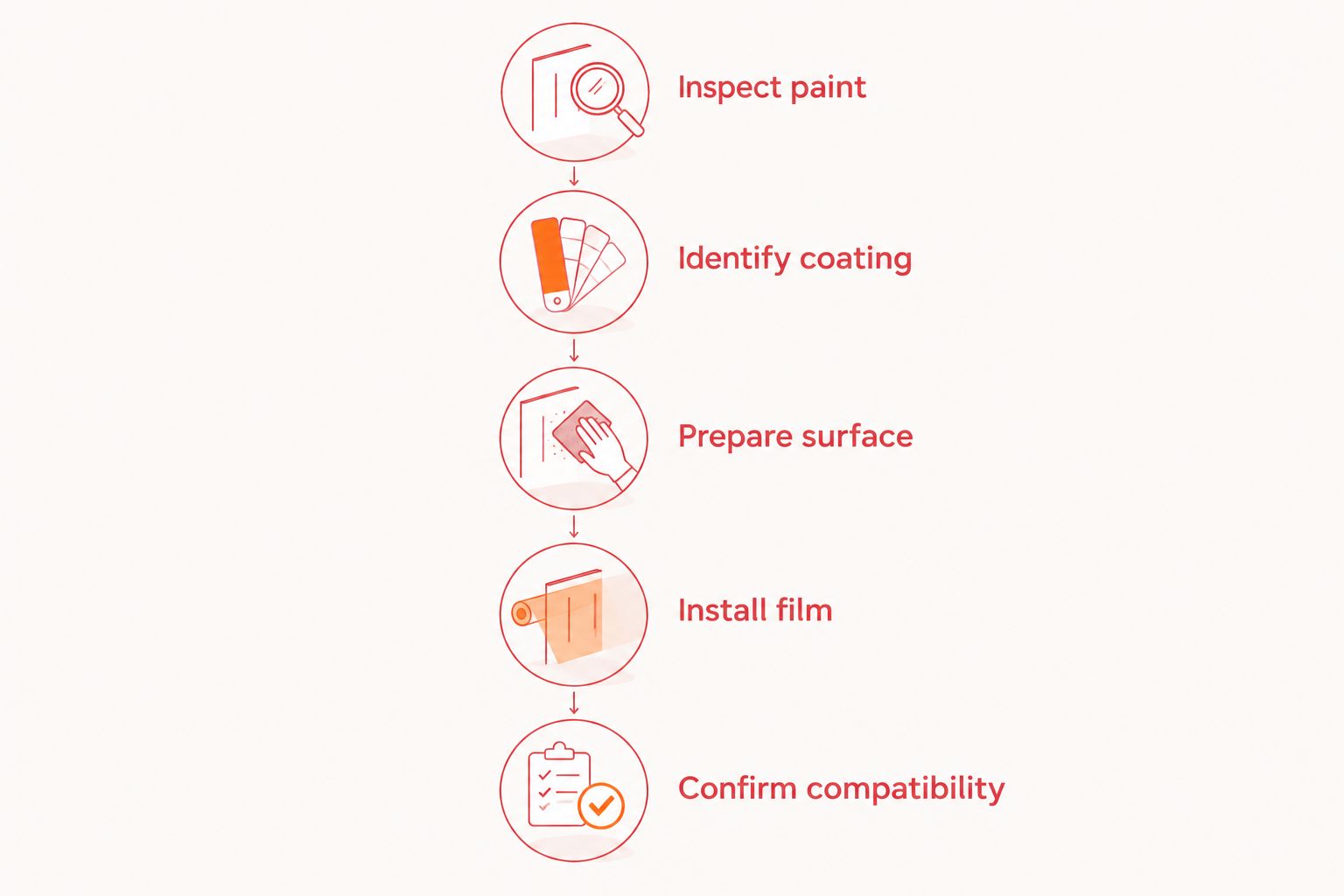
Use this sequence when discussing the work:
- Inspect paint. Identify chips, scratches, repainting, clear-coat problems, and existing film before selecting coverage.
- Identify coating. Share the product name, application details, and maintenance history if you have them.
- Prepare surface. Have the installer determine the necessary coating removal or surface correction without unnecessary clear-coat removal.
- Install film. Apply PPF only after the substrate meets the chosen film's requirements.
- Confirm compatibility. Apply a coating over the film only when the products and application instructions permit it.
Surface preparation is not permission to polish every finish. Matte paint, thin or damaged clear coat, and repainted areas need their own assessment; abrasive correction that suits one surface can be inappropriate for another.
Ask what will happen to the coating outside the filmed area, too. The installation plan should distinguish panels receiving film from panels retaining their current treatment.
How should you maintain both treatments in Florida?
Start with the installed products' care instructions, including their initial curing and washing restrictions. There is no universal waiting period that applies to every coating, film, adhesive, and installation condition.
Once routine washing is permitted, remove loose contamination before touching the surface. Use suitable wash materials and avoid scrubbing trapped grit across either coating or film.
The distinction in ceramic coating vs. PPF remains important after installation: easier contaminant release is a coating function, while a sacrificial physical barrier is a film function. A maintenance problem should be assessed against the layer involved rather than treated as proof that both treatments failed.
For your 2026 care routine, focus on these practical checks:
- Salt residue: Rinse and wash exposed exterior surfaces appropriately; exterior paint protection does not treat hidden corrosion or replace underbody care.
- Bird droppings and insects: Remove contamination promptly with an approved method rather than leaving it to bake onto a hot panel.
- Film edges: Avoid directing concentrated pressure at edges, and report lifting rather than trimming or pulling the film yourself.
- Water spots: Do not assume beading prevents mineral deposits; use a compatible cleaning process rather than an unverified chemical treatment.
- Visible damage: Inspect a fresh impact before polishing, recoating, or assuming only the film was affected.
Keep different surfaces separate in your care plan. A cleaner approved for glass or wheels is not automatically suitable for coated film or matte paint.
Do you need full-car PPF if only the front gets chipped?
Full-car PPF is not necessary solely because the front of your car gets chipped. Match coverage to the areas you want protected and the damage you are willing to accept elsewhere.
Walk around the vehicle in good light and identify existing impact marks. Front-facing surfaces often deserve attention, but side panels and lower areas can also show wear depending on the vehicle and its use.
Ask the installer to explain panel boundaries, visible edges, and areas left uncovered. Partial coverage leaves some paint exposed; broader coverage still does not guarantee protection against every impact or collision.
Will PPF hide chips that are already under the coating?
PPF does not repair existing chips, scratches, or failing clear coat. Transparent film leaves the underlying finish part of the final appearance, so discuss damage before installation.
Paint correction and paint repair are different jobs. Polishing addresses suitable surface defects, while missing paint or a deep chip requires a separate assessment; neither should be promised away by adding another layer.
FAQ
Is PPF necessary with ceramic coating on a daily driver?
PPF is not necessary for every ceramic-coated daily driver, but it adds physical protection against road debris. Choose it when reducing chip damage matters more than cleaning convenience alone.
Does ceramic coating stop rock chips?
Ceramic coating does not provide the physical barrier used to reduce stone-chip damage. Paint protection film serves that role, although film cannot prevent every impact from damaging paint.
Can I put PPF directly over my existing ceramic coating?
Do not assume PPF can be installed directly over an existing ceramic coating. The installer must assess the coating and prepare the surface according to the selected film’s requirements.
Should ceramic coating go on before or after PPF?
A compatible ceramic coating normally goes on after PPF when combining the treatments. Existing coating on the paint needs assessment before film installation, and any coating applied over film must be suitable for that film.
Is ceramic coating over PPF worth choosing?
Ceramic coating over PPF is an option when easier cleaning is a priority and the products are compatible. It does not increase the film’s protection into a guarantee against chips, tears, or collision damage.
Can PPF and ceramic coating protect my car from Florida salt?
PPF and ceramic coating do not make a car immune to salt-related damage. Suitable exterior protection can support surface care, but washing and separate attention to exposed underbody areas remain necessary.
Should I replace good ceramic coating just to add PPF?
Replace or remove existing coating only where the installation plan requires it for suitable film adhesion. Decide whether the added impact protection addresses your needs before disturbing a coating that is otherwise serving its purpose.
One last thing
Water beading is not an impact-protection test. Before adding anything to your car, point out the damage you want to avoid and ask which layer addresses it.
For a CoaterZ paint protection discussion, bring your coating records and identify the panels that concern you. That gives the conversation a concrete starting point: preserve suitable existing protection, prepare the surfaces correctly, and add film where its physical barrier serves your goals.