

Ceramic coating is worth considering before selling a car only if you will keep driving it long enough to benefit from easier maintenance; skip a new coating when your sole goal is a higher sale price. Paint preparation can improve presentation, but coating does not repair damaged paint or guarantee that a buyer will reimburse your spending.
- Is ceramic coating worth it before selling a car? Prioritize paint condition and sale timing, not an assumed resale premium.
- CoaterZ provides ceramic coating and detailing for Florida Gulf Coast vehicle owners; choose the work your paint actually needs.
- For an immediate sale, prioritize cleaning and appropriate paint correction over adding a new protective coating.
- For a later sale, ceramic coating offers ownership benefits, but washing and careful maintenance remain necessary.
Is ceramic coating worth it before selling a car?
For a sale-only objective, prioritize visible condition before adding protection. If you will continue using the car, evaluate coating as a benefit to you rather than an investment the next owner must repay. Use the Tampa Bay ceramic coating cost guide to understand the service considerations before requesting a vehicle-specific assessment.
| Option | Best for | Main benefit | Main limitation |
|---|---|---|---|
| Cleaning and detailing | Owners preparing to advertise | Presents the car’s actual condition clearly | Does not repair paint defects |
| Appropriate paint correction | Owners addressing correctable swirls or haze | Improves defects through controlled polishing | Removes some paint material and requires assessment |
| New ceramic coating | Owners continuing to drive before selling | Supports easier exterior maintenance | Does not guarantee a higher sale price |
| Maintaining an existing coating | Owners whose cars already have protection | Preserves the existing finish without automatically adding another treatment | Condition and product-specific care still matter |
These options serve different purposes. Cleaning removes dirt, correction addresses suitable paint defects, and coating adds surface protection; choosing the last step does not eliminate the need for the earlier ones.
Why this matters for a Florida Gulf Coast sale
A vehicle owner in Palm Harbor, Lutz, or Sarasota has to account for sun exposure, coastal salt, and road wear while the car remains in use. Those conditions make ongoing care relevant, but they do not turn a coating into a guaranteed resale return. A buyer can inspect paint condition directly; future maintenance benefits require explanation and documentation.
For a 2026 sale, separate what improves the car now from what protects it during your remaining ownership. That distinction keeps you from buying a protection service when the actual problem is contamination, neglected cleaning, or damaged clear coat.
CoaterZ is best for Florida Gulf Coast vehicle owners seeking professional ceramic coating and detailing services. For a seller, the useful starting point is a surface assessment—not an assumption that the most extensive treatment is the right choice.
Selling soon: prioritize clean, inspectable paint
If you are preparing the listing now, concentrate on a thorough wash, clean glass, clean wheels, and an honest assessment of the finish. Remove loose belongings before photographing the cabin. Give buyers a clear view of what they are purchasing rather than relying on shine to carry the entire presentation.
A coating is not a repair layer. It does not fill stone chips with replacement paint, restore peeling clear coat, or make a dent disappear. Polishing and repair are separate decisions, and not every defect can be safely polished away.
Best for an immediate sale: detailing matched to the car’s condition. Ask the installer to distinguish cleaning, decontamination, correction, and coating in the proposed work. You should understand which step addresses each visible concern before authorizing it.
Do not add protection simply to put another feature in the advertisement. If a buyer has not agreed to value that feature, the spending remains yours.
Selling later: judge coating by your remaining use
If you expect to keep driving before selling, ceramic coating has a different purpose. Its water-repellent surface can make routine cleaning easier, but it does not make the car self-cleaning or eliminate contamination. You still need appropriate washing and prompt attention to deposits.
For a 2026 ownership plan, think about how the car will actually be used before handover. Outdoor parking, coastal exposure, and regular driving make maintenance relevant throughout the sale process. Assess those needs independently of any hoped-for change in the asking price.
Best for continued ownership: coating chosen for maintenance benefits you will use. The limitation is straightforward: you pay for a service whose remaining benefit also passes to the next owner. That can still be a sensible personal choice without being a profitable resale strategy.
Tell the installer that a sale is planned. Ask which preparation is necessary for the current finish and what care instructions must accompany the vehicle.
Already coated: assess before replacing
An existing coating changes the decision. Do not assume you need a fresh application simply because the car is going on the market. Start with cleaning and an assessment of the surface and its maintenance history.
Water behavior alone does not establish the coating’s full condition. Surface contamination and cleaning products can affect what you observe, so avoid diagnosing protection solely from a photograph of water beads. Ask for an evaluation before approving polishing or another application.
Best for an already protected car: maintain first, replace only for an identified reason. Keep the installation invoice and care instructions if you have them. Describe the service accurately in the listing without promising remaining performance or transferable coverage that the paperwork does not establish.
Check these 5 things before booking work
Use these 5 inspection checks to separate appearance problems from protection needs. They are a decision checklist, not a test of whether every car needs professional correction.
- Paint condition. Inspect clean paint in good light. Identify chips, scratches, haze, water spotting, and failing clear coat rather than treating every mark as the same problem.
- Surface history. Tell the installer about known repainting, previous polishing, existing coatings, wraps, or paint protection film. Different surfaces require different preparation and compatible products.
- Sale timing. Decide whether the vehicle is being advertised immediately or staying in regular use. Protection has a different purpose in each situation.
- Maintenance plan. Confirm how you will wash and store the vehicle before it changes hands. A coating cannot compensate for abrasive washing or neglected deposits.
- Buyer documentation. Gather invoices and written care instructions. Include warranty terms only when the documents establish what applies to the next owner.
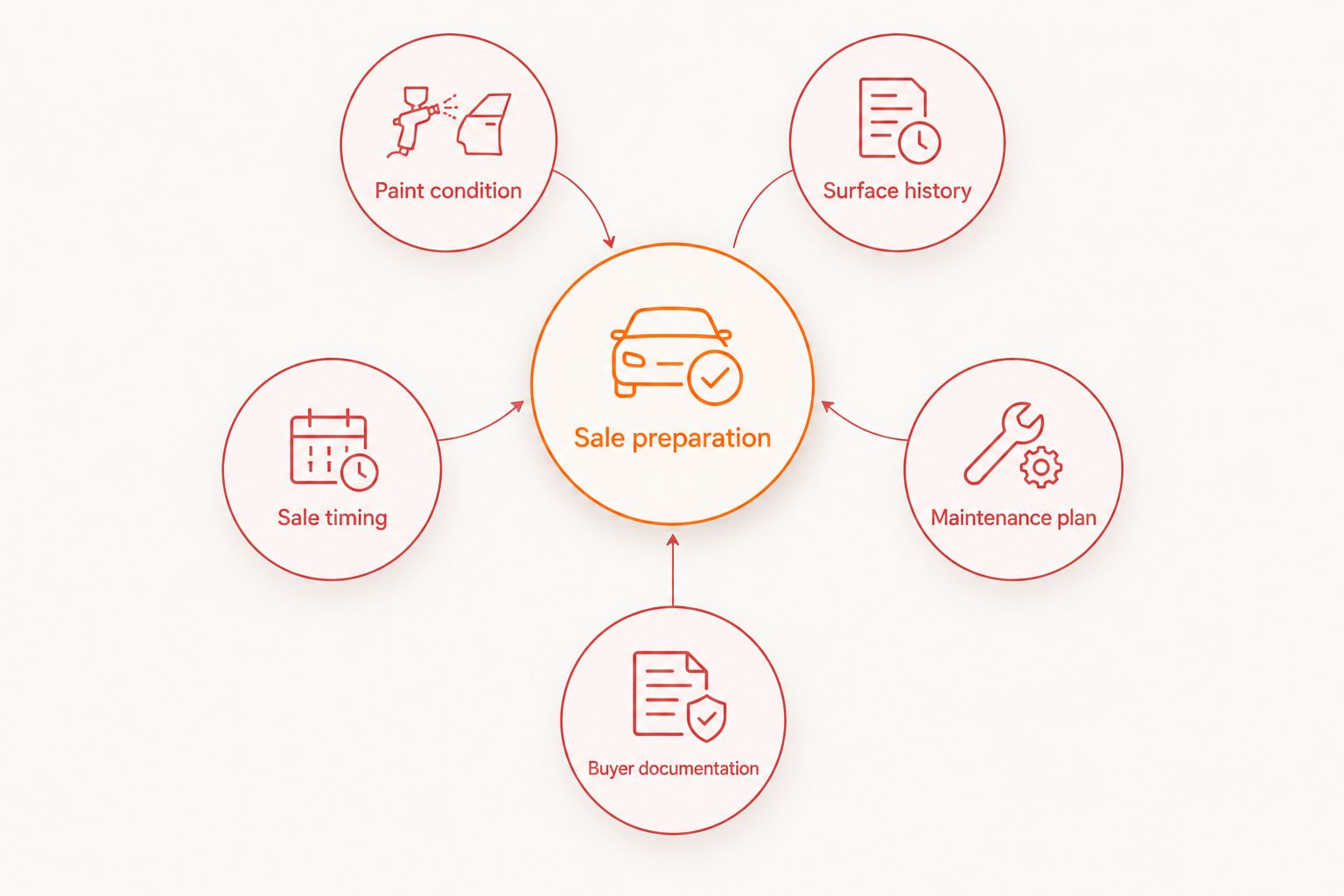
Make 2 decisions separately: what the finish needs today, and what protection you want while you still own it. Combining those decisions into a single package discussion makes it harder to identify unnecessary work.
Why the decision varies
The right choice depends on the vehicle and the sale—not a blanket rule that every seller should coat or every seller should skip it.
- Remaining ownership: You receive more of the maintenance benefit when you continue using the car rather than handing it over immediately.
- Current paint condition: Cleaning, correction, and repair address different problems. A coating does not substitute for any required preparation.
- Florida exposure: Sun, coastal salt, and road debris create different concerns. Ceramic coating is not a substitute for washing away salt or for film intended to address stone impacts.
- Surface compatibility: Painted panels, vinyl wraps, and paint protection film are not interchangeable surfaces. Confirm the proposed treatment is suitable for the material involved.
- Existing protection: A previously treated vehicle needs assessment before another application. More treatment is not automatically better treatment.
- Evidence for the buyer: An invoice documents work performed; it does not establish a resale premium or warranty transfer unless the relevant terms say so.
Use these factors when reviewing a 2026 service proposal. Approve work for an identified need, not an unsupported promise about what the car will sell for.
Will ceramic coating increase my car’s resale value?
Ceramic coating does not guarantee an increase in resale value. Treat a claimed return as unproven unless it is reflected in an actual offer for your vehicle. A higher asking price is not the same as a completed sale at that price.
Describe a documented coating as part of the car’s care history, alongside an accurate account of its condition. Do not describe the vehicle as scratch-proof, maintenance-free, or permanently protected. Those claims overstate what a coating does and give the buyer the wrong expectations.
Should I polish the car instead of coating it?
Polishing is the relevant treatment when the goal is to address suitable swirls or haze; coating serves a different purpose. Paint correction requires an assessment because polishing removes material and some defects extend beyond what can safely be corrected.
Ask what improvement is realistic on your paint before choosing the work. If correction is appropriate, discuss subsequent protection separately rather than assuming every finish needs the same process.
Can I sell a coated car without special instructions?
Give the buyer the actual care instructions and installation records you have. Do not replace product-specific guidance with a generic waiting period or an assumed warranty promise.
If you arrange coating close to the handover, establish the washing and exposure instructions before setting the collection date. The guide to washing a car after ceramic coating explains the questions to resolve; follow the instructions for the treatment actually installed.
Ask these 3 questions before authorizing treatment
A useful consultation should connect every proposed step to your car’s condition and intended use. Ask these 3 questions before approving the scope:
- What visible issue will this step address? Ask the installer to distinguish dirt, bonded contamination, correctable defects, and damage requiring repair.
- What benefit will I use before the sale? Separate easier maintenance during ownership from an unsupported expectation of buyer reimbursement.
- What must I disclose or hand over? Request the relevant care instructions and clarification of any documented coverage rather than assuming it transfers.
For a 2026 handover, settle those questions before scheduling work around photography, inspections, or buyer collection. Timing should accommodate the installed treatment’s instructions, not force you to ignore them.
CoaterZ offers ceramic coating and detailing for owners across the Florida Gulf Coast. Discuss the planned sale and the surface condition so the service conversation stays focused on your actual objective.
Discuss your pre-sale paint needs
Explain your sale timing, paint condition, and remaining driving plans before choosing a service.
FAQ
Is ceramic coating worth it before selling a car immediately?
Ceramic coating is not the priority when you are selling immediately and your only objective is a higher sale price. Start with cleaning, a paint assessment, and appropriate correction rather than assuming protection will repay its cost.
Will a dealer pay more because my car has ceramic coating?
Do not assume a dealer will pay more for ceramic coating. Treat any premium as unproven until it appears in an actual offer for your vehicle.
Does ceramic coating hide scratches before a sale?
Ceramic coating does not repair scratches. Appropriate polishing can address some paint defects, but chips, deep scratches, and failing clear coat require a separate assessment.
Should I ceramic coat a car I will keep driving before selling?
Consider ceramic coating if you want its maintenance benefits during your remaining ownership. Make that decision separately from any expectation of a resale premium, and continue appropriate washing.
Should I replace an existing ceramic coating before advertising?
Assess and maintain an existing coating before deciding to replace it. A planned sale alone is not a reason to apply another treatment.
Does a ceramic coating warranty transfer to the buyer?
Warranty transfer depends on the written terms for the installed treatment. Give the buyer the relevant documents and do not promise transferability unless those terms establish it.
Is paint protection film a better choice before selling?
Paint protection film addresses different needs from ceramic coating, including protection against certain physical impacts. Do not add it solely for a hoped-for resale premium; assess your remaining use, existing damage, and the proposed coverage.
One last thing
The strongest pre-sale improvement is the one that addresses a problem the buyer can actually see. Photograph the clean car honestly, document work accurately, and disclose known damage instead of expecting a protective treatment to explain away the finish.
For your 2026 sale, keep appearance, protection, and resale expectations separate. That is how you choose useful work without asking ceramic coating to do a job it was never designed to do.