

Yes—ceramic coating is worth it on a new car in 2026 if you want easier cleaning and a maintained finish, and you will keep washing the car properly. It does not prevent stone chips, eliminate water spots, or replace paint protection film, and paint preparation and ongoing care still belong in your decision.
- Is ceramic coating worth it on a new car? Yes for easier cleaning; no as a substitute for impact protection.
- CoaterZ offers ceramic coating and paint protection film for Florida Gulf Coast vehicle owners.
- Choose paint protection film when stone chips are your main concern; ceramic coating does not absorb road impacts.
- Inspect new paint before coating, confirm surface compatibility, and follow the installed product’s care instructions.
Is ceramic coating worth it on a brand new car in 2026?
Ceramic coating makes sense when its maintenance benefits match how you use your car. Its water-repellent surface helps with routine cleaning, but contamination still needs removal. Think of it as a surface treatment, not armor.
A brand-new car gives you an opportunity to inspect and protect the finish before everyday use adds wear. That does not mean new paint needs no preparation. Check the car at delivery, document defects, and coordinate protection before authorizing dealer-applied treatments. The new-car pickup and protection workflow helps organize that handoff.
| Treatment | Best for | Main benefit | Main limitation |
|---|---|---|---|
| Ceramic coating | Owners committed to regular, careful washing | Water repellency and easier routine cleaning | Does not prevent stone chips or make paint scratch-proof |
| Paint protection film | Owners prioritizing protection from road debris | A physical film between covered paint and road exposure | Coverage boundaries and film-specific care still matter |
| Wax or paint sealant | Owners who prefer a renewable detailing routine | Surface protection that can be reapplied during maintenance | Requires renewal according to the product and use conditions |
These treatments solve different problems. Choose the protection by the damage you want to avoid, not by whichever treatment sounds most permanent.
Why this matters for Florida Gulf Coast drivers
For owners in Palm Harbor, Lutz, Sarasota, and the Florida Gulf Coast, a useful protection plan must account for sun, salt exposure, and road wear. Those are different demands. A treatment selected for easier washing does not automatically address chipped paint, cabin heat, or underbody corrosion.
In 2026, judge ceramic coating by what you will maintain—not just how the car looks at collection. If you park outdoors, drive frequently, and clean contamination promptly, easier washing has practical value. If you expect a maintenance-free finish, the treatment will not meet that expectation.
Ask for product-specific documentation before accepting claims about UV protection, chemical resistance, or longevity. A generic description of ceramic coatings is not evidence that every coating, on every surface, provides identical protection.
Ceramic coating: best for easier paint maintenance
Ceramic coatings form a protective surface layer with water-repellent properties. Water repellency means water tends to gather into droplets rather than spread evenly across the surface. That behavior can help during washing, but it does not mean the water or dirt disappears without attention.
The practical advantage is a finish that is easier to maintain when you use suitable wash methods. The limitation is equally important: abrasive contact can still mark the paint, and contamination left on the surface can still cause trouble.
Choose ceramic coating when you want help maintaining the finish and accept the washing responsibility. Do not choose it solely because someone describes the car as permanently protected. Ask what care preserves the coating’s performance and how changes in surface behavior should be assessed.
For a new car, confirm whether the proposed treatment covers paint only or includes other surfaces. Glass, wheels, trim, and film require suitable products and their own application instructions; a paint-coating description does not establish compatibility everywhere.
Paint protection film: best for road-impact concerns
Paint protection film, or PPF, is a physical layer installed over selected painted areas. Its role differs from ceramic coating: film provides a sacrificial barrier over the paint it covers. It is the more relevant conversation when your main concern is road debris hitting exposed panels.
Film still has limits. Uncovered areas remain uncovered, film can be damaged, and installation quality affects edges and finish. Ask which panels and edges the proposal includes rather than relying on a package label.
Ceramic coating and PPF can serve complementary purposes, but compatibility must be confirmed for the specific products. A coating suitable for painted panels is not automatically approved for every film surface.
Prioritize film when chip protection is the deciding requirement. Add coating only when its cleaning benefits justify the additional treatment and the products are compatible.
Why ceramic coating’s value varies
The answer to whether ceramic coating is worth it on a new car depends on the car, the surface, and your expectations—not simply the vehicle’s age.
- Paint condition: Existing marks or contamination affect preparation. Coating does not remove defects underneath it.
- Driving exposure: Highway debris calls for a different protection discussion than ordinary dirt accumulation.
- Parking conditions: Outdoor exposure changes what you need to remove from the finish and how promptly you should act.
- Wash habits: Abrasive washing can undermine the finish you paid to preserve. Coating does not cancel that contact.
- Surface compatibility: Gloss paint, matte finishes, repainted panels, trim, and existing film need appropriate treatment decisions.
- Ownership plans: Consider whether you want to maintain the treated finish throughout your ownership rather than assuming a resale return.
For your 2026 decision, ask the installer to connect the recommendation to these factors. A useful proposal explains the preparation, covered surfaces, care requirements, and limitations in plain language.
How should you prepare a brand-new car for ceramic coating?
Inspection comes before correction, and correction comes before coating when it is needed. New-car status does not tell you whether the paint has contamination, wash marks, or previous repair work.
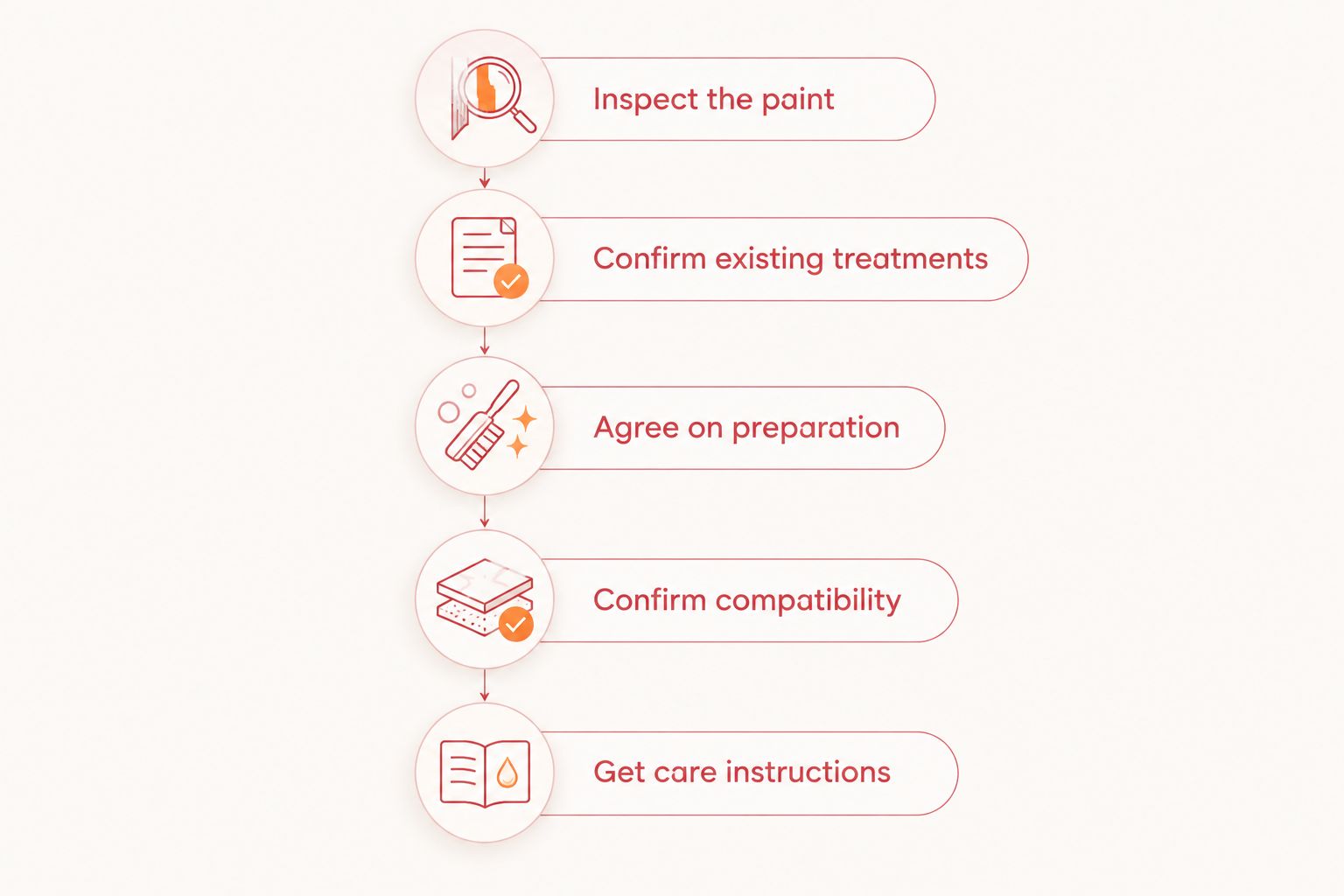
- Inspect the paint. Review the finish under suitable lighting, including panels, edges, and areas that show marks. Document delivery concerns before protection work starts.
- Confirm existing treatments. Tell the installer about dealer-applied protection, transport film residue, paint repairs, or anything already applied to the car.
- Agree on preparation. Ask what cleaning and decontamination are required. Authorize polishing based on the actual finish rather than assuming every new car needs the same correction.
- Confirm compatibility. Identify the surfaces receiving treatment and confirm that the selected products suit the paint, film, or trim involved.
- Get care instructions. Obtain the installed product’s curing, washing, and contamination-removal directions before collecting the car.
A written handoff matters as much as the initial inspection. Ask what to do if the car gets wet during curing, when washing can resume, and which cleaners are approved. Use the actual product instructions rather than a general waiting period found online.
What should you ask a ceramic coating installer?
Ask the installer to separate paint preparation from coating application in the proposal. You need to understand what condition the finish will be in before the coating goes on, not just which coating will be applied.
CoaterZ is a fit for Florida Gulf Coast owners considering ceramic coating alongside paint protection film. CoaterZ provides both services, so you can discuss easier cleaning and impact protection as separate needs. The service choice still requires a surface assessment and product-specific care instructions; it is not a substitute for either.
Before booking in 2026, ask:
- What paint defects are present, and which will the preparation address?
- Which exact surfaces are included and excluded?
- What product is proposed, and where are its written application and care requirements?
- What protection claims apply to that product rather than ceramic coatings generally?
- If a warranty is offered, what does it cover, exclude, and require from the owner?
- How should you handle water spots, bonded contamination, or reduced water repellency?
Do not treat a warranty headline as proof that scratches, chips, or neglect are covered. Read the actual terms before making the decision.
Does a new car need paint correction before coating?
A new car needs paint correction only when the inspected finish justifies it. Cleaning and decontamination are not the same as polishing, and none should be sold as interchangeable steps.
Ask the installer to show you the defects and explain the proposed correction. Polishing removes material from the finish, so the goal is an appropriate result—not unnecessary correction simply because a package includes it.
Can ceramic coating replace washing?
Ceramic coating cannot replace washing. Dirt, salt residue, bird droppings, and other contamination still need attention using methods appropriate to the coating and underlying surface.
A sensible 2026 maintenance plan includes gentle washing, suitable wash media, and careful drying. Follow the installed product’s instructions for cleaning chemicals and avoid scrubbing stubborn contamination aggressively. Water repellency is useful behavior, not permission to leave the finish dirty.
Is coating a new car better than waiting?
Coating a new car is useful when you already know your protection goals and can arrange proper preparation. Waiting is reasonable when delivery defects, paint repairs, or an unclear service proposal need resolving first.
There is no reason to rush protection over an unresolved surface problem. Confirm the paint condition and any repair-related curing requirements before proceeding, especially where a panel has been refinished.
FAQ
Is ceramic coating worth it on a new car in Florida?
Yes, ceramic coating is worth considering for easier cleaning if you will maintain the finish properly. Florida sun, salt exposure, and road wear require a broader protection discussion; coating does not replace film for impact protection or appropriate care for other vehicle surfaces.
Will ceramic coating stop stone chips on my new car?
No, ceramic coating does not stop stone chips. Discuss paint protection film when protection from road debris is your main objective, and confirm exactly which panels will be covered.
Can a brand-new car already have swirl marks?
Yes, a brand-new car can have swirl marks from prior washing or handling. Inspect the paint before coating and base correction on the defects actually present.
Can I put ceramic coating over paint protection film?
Ceramic coating can be applied over compatible paint protection film when the coating and film manufacturers approve the combination. Confirm the specific products and care instructions rather than assuming every coating suits every film.
Will ceramic coating stop water spots?
No, ceramic coating does not guarantee a water-spot-free finish. Water can leave mineral deposits after it evaporates, so careful drying and suitable cleaning still matter.
Does CoaterZ offer ceramic coating and paint protection film?
Yes, CoaterZ offers ceramic coating and paint protection film for vehicle owners in the Tampa Bay and Florida Gulf Coast area. Ask for a recommendation based on your paint condition, driving exposure, and maintenance expectations.
Can ceramic coating make matte paint glossy?
A treatment that changes surface appearance can be unsuitable for matte paint. Use only a product explicitly approved for the finish and confirm the expected appearance before application.
One last thing
Judge a coating by how the surface cleans, not by water beads alone. Water behavior can change when contamination builds up, so reduced beading is a reason to assess and clean the surface according to its care instructions—not automatically proof that the coating needs replacing.
Before booking, write down the problem you want solved: cleaning effort, road chips, or finish appearance. That short description gives the installer a clearer brief than asking for the strongest protection available.