

You can wash your car after ceramic coating when the installed coating’s specified no-wash period has ended—not simply when the surface feels dry. Follow your installer’s written release date and cleaning instructions; rain exposure, spot cleaning, and a full shampoo wash can have different restrictions.
- How soon can you wash car after ceramic coating? Follow the installed coating’s written no-wash period.
- CoaterZ provides ceramic coating services for Florida Gulf Coast vehicle owners seeking professional paint protection.
- Rain exposure is not permission to shampoo, scrub, or pressure-wash a freshly coated car.
- After clearance, choose a gentle hand wash with coating-compatible shampoo and clean wash media.
Why this matters
A glossy finish is not proof that a ceramic coating is ready for washing. The coating’s application instructions determine when it can tolerate water, detergents, and cleaning contact. Treating those milestones as interchangeable creates an avoidable maintenance mistake.
For drivers in Palm Harbor, Lutz, Sarasota, and the Florida Gulf Coast, the practical challenge is protecting fresh work while managing rain, sprinkler water, salt spray, and road grime. CoaterZ offers automotive protection services, including ceramic coating, but your first-wash instructions need to match the actual treatment applied to your vehicle.
This 2026 guide separates the scheduled first wash from situations that need immediate installer advice. You should not have to choose between scrubbing a fresh coating and leaving a potentially damaging contaminant untreated.
How soon can you wash a car after ceramic coating?
Wash only after the no-wash period specified for your installed coating has ended. There is no single waiting period that applies to every ceramic coating, application process, and surface.
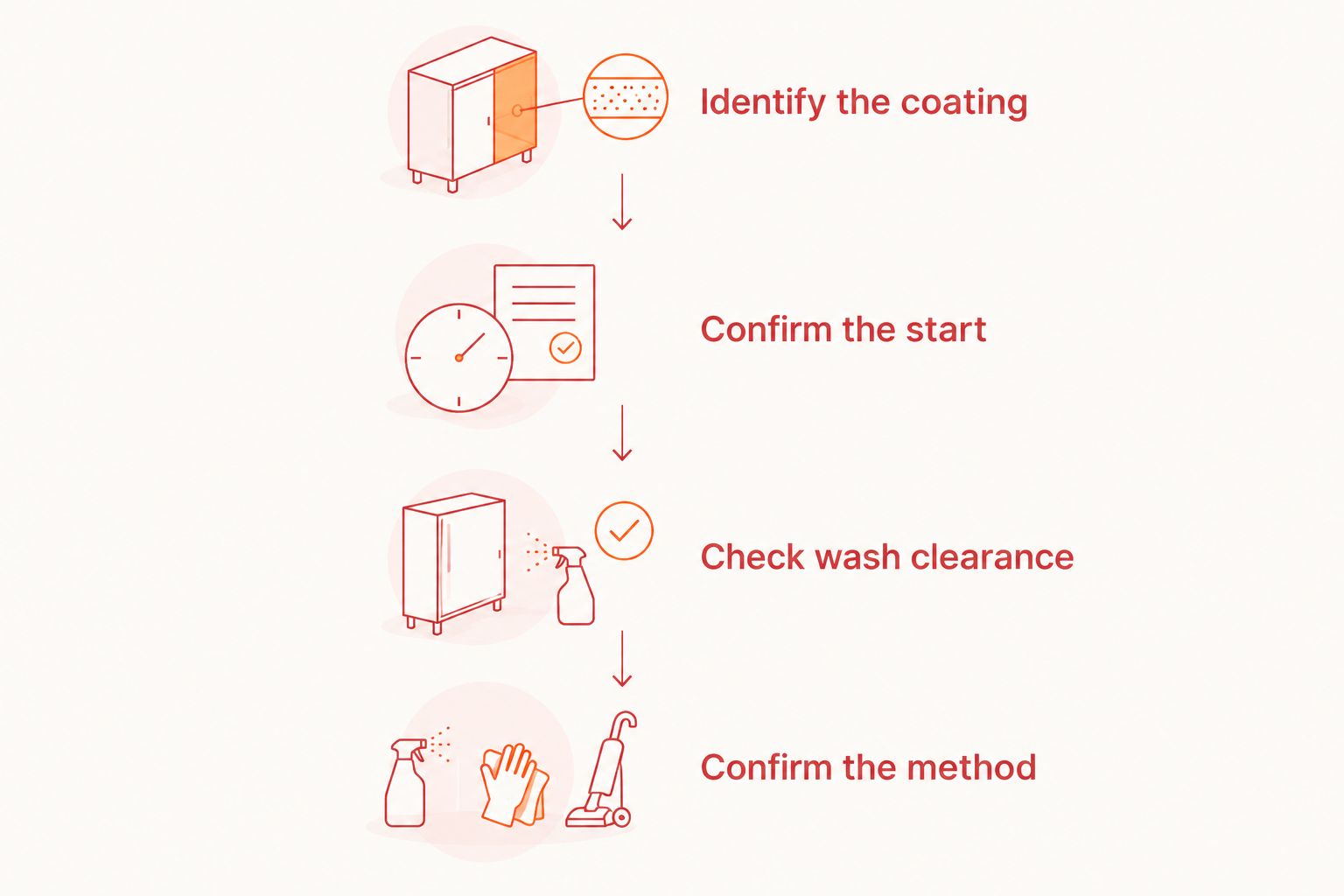
Use this sequence before booking a wash or picking up a mitt:
- Identify the coating. Check your invoice or handover paperwork for the exact treatment applied. A general description such as ceramic protection does not establish its care requirements.
- Confirm the start point. Ask whether the waiting period begins at application completion, after a curing stage, or at vehicle collection. Do not assume those times are identical.
- Check wash clearance. Get a clear answer about the first shampoo wash, not just whether you can drive the car home or expose it to rain.
- Confirm the method. Ask which shampoo, wash tools, drying method, and any pressure-washer restrictions apply to the treated surfaces.
If the paperwork gives conflicting instructions, resolve the conflict with the installer before washing. Do not average different recommendations or substitute a general internet timetable for the product’s directions.
The useful answer is a release date plus a permitted cleaning method. A date without instructions still leaves you guessing about shampoo, equipment, and anything applied afterward.
Initial water exposure is not first-wash clearance
Water exposure and washing are different events. A rain shower does not involve the same combination of detergent, wash-media contact, and directed water pressure as a deliberate wash.
Likewise, permission to drive home does not automatically mean permission to use a wash tunnel. Your installer’s handover should distinguish normal vehicle use from cleaning during the coating’s early care period.
Do not judge readiness by water beading. Beading describes how water behaves on the surface; it does not independently establish that every curing or aftercare requirement has been met.
Use written instructions, not appearance, as your first-wash decision rule. This also prevents a common misunderstanding: assuming a coating that looks finished needs no further care precautions.
Why ceramic coating wash timing varies
The correct waiting period depends on the coating and its application conditions. These are the details to confirm rather than reasons to invent your own shorter timetable:
- Product formulation. Different coating systems have different application and aftercare instructions. A spray maintenance product’s directions do not establish the rules for a professionally applied coating.
- Temperature and humidity. Application conditions matter to curing. Ask whether the conditions during installation affect the handover instructions for your vehicle.
- Curing process. Establish whether the installer used a product-specified curing process and what restrictions remain afterward. Do not treat equipment use alone as wash clearance.
- Time since application. Collection time and application-completion time are not necessarily the same. The correct starting point must come from the installer.
- Treated surfaces. Painted panels, film, wraps, glass, trim, and wheels can carry different treatments and care requirements. A whole-vehicle wash must respect those differences.
For a 2026 ceramic coating appointment, ask for these details before collection. They are more useful than a generic promise that the finish will be easy to maintain.
Which first-wash method should you choose?
A controlled, gentle hand wash is the best fit after wash clearance because you can choose the chemistry, tools, and drying method. It still requires care: dirty wash media can drag grit across the finish, and a shampoo must suit the installed coating.
An automated wash offers less control over what touches the vehicle. Brushless does not automatically mean coating-compatible, either; the cleaning chemicals still matter.
| Wash method | Best for | Main advantage | Main limitation | First-wash recommendation |
|---|---|---|---|---|
| Gentle hand wash | Owners who can control tools and shampoo | Lets you inspect and clean each surface carefully | Dirty mitts or towels can scratch | Choose after clearance with compatible products |
| Professional maintenance hand wash | Owners who want someone else to perform the wash | Allows you to give the detailer specific aftercare instructions | The operator still needs the coating details | Choose when the method matches your instructions |
| Touchless automatic wash | Owners considering a no-brush wash | Avoids rotating wash brushes | Chemical compatibility is not established by the word touchless | Confirm suitability before using |
| Brush automatic wash | Owners prioritizing automated convenience | Requires little hands-on work | Repeated contact introduces a scratching risk | Skip for the first wash |
Do not assume a coating makes paint scratch-proof. Ceramic coating and paint protection film serve different purposes; neither gives permission to use contaminated wash tools.
Your 2026 first-wash checklist
Once your installer has cleared the wash, focus on removing dirt without adding unnecessary friction or chemicals. The goal is a clean surface—not an aggressive reset of a newly treated finish.
Prepare a cool, shaded work area
Let hot panels cool before washing. Shade helps you manage shampoo and rinse water before they dry on the surface, which matters when working outside on Florida’s Gulf Coast.
Gather clean wash media, a suitable shampoo, and clean drying towels before starting. Keep wheel-cleaning tools separate from tools used on painted panels so abrasive brake dust does not travel onto the bodywork.
Remove loose contamination before contact
Rinse loose dirt away before using a wash mitt. Do not start by wiping a dusty panel with a dry towel, even if the dirt looks light.
Use the rinse method allowed by the coating and any film or wrap instructions. Where pressure-washing equipment is involved, follow the applicable nozzle, distance, and edge precautions rather than assuming one setting suits every surface.
Wash with compatible chemistry
Choose a shampoo approved for the coating. A pH-neutral maintenance shampoo is a common starting category, but that label alone does not replace the product’s compatibility instructions.
Avoid adding a polish, abrasive cleaner, solvent, or mineral-deposit remover to the first wash without guidance. A stubborn mark needs diagnosis; stronger chemistry is not automatically the correct response.
Dry without grinding dirt into the finish
After rinsing, use clean drying media and light contact. If you discover missed dirt, clean that area properly instead of rubbing harder with a drying towel.
Do not finish with an unapproved wax, sealant, or spray topper. Additional products can change the surface’s behavior and make it harder to assess the coating itself.
What should you do if it rains before the first wash?
Rain before wash clearance calls for the coating’s early-water-exposure instructions, not an automatic shampoo wash. Contact your installer if you do not have those instructions, particularly if droplets have dried into visible marks.
Avoid rubbing rain-soaked road dirt with a dry towel. The issue is not just water; driving can deposit grit and traffic contamination on the wet surface.
Record what happened and when, and photograph any visible spotting. That gives the installer useful context without requiring you to experiment with cleaners on a fresh coating.
What if bird droppings or sprinkler water land on the coating?
Bird droppings and mineral-bearing sprinkler water need prompt attention, but prompt attention does not mean aggressive cleaning. Ask your installer for an approved spot-cleaning procedure during the restricted period.
Do not scrape dried contamination or polish away a fresh mark. Both actions introduce a separate risk while you are trying to solve the original problem.
Sprinkler exposure is also a parking problem you can prevent. Choose a different space where possible, and avoid parking beneath obvious sources of droppings while the coating remains under early-care restrictions.
Keep any emergency cleaning advice with your 2026 handover paperwork. You should be able to find the permitted procedure without searching through unrelated maintenance tips.
What should you ask before collecting your coated car?
Ask for instructions that answer real situations, not just a reminder to be careful. A useful handover covers the first wash and what to do when normal driving interrupts the ideal care plan.
- What exact coating was applied to each surface?
- When can the vehicle get wet, and when can it receive a shampoo wash?
- What should you do about droppings, bugs, salt spray, or sprinkler marks before then?
- Which wash products and drying methods are compatible?
- Do coated paint, PPF, wraps, glass, or wheels need different care?
- Who should you contact if a mark remains after the approved cleaning method?
CoaterZ ceramic coating services suit Florida Gulf Coast vehicle owners seeking professional paint protection. The practical trade-off is that professional application does not remove your maintenance responsibilities: you still need compatible cleaning methods and clear surface-specific instructions.
Plan your vehicle’s protection
Discuss ceramic coating and the aftercare questions that matter for your vehicle.
FAQ
How soon can you wash car after ceramic coating in 2026?
Wash after the installed coating’s specified no-wash period has ended. Confirm the release date and permitted cleaning method with your installer rather than applying a universal day count.
Can I wash my car as soon as the ceramic coating feels dry?
No—surface dryness does not establish wash readiness. Use the coating’s written aftercare instructions to determine when shampoo, water pressure, and cleaning contact are permitted.
Does rain mean I have to restart the ceramic coating curing period?
Rain alone does not establish that the coating needs a restarted curing period. Tell your installer when the exposure occurred and follow the product-specific response rather than creating a new timetable yourself.
Is a touchless car wash safe for a fresh ceramic coating?
A touchless wash is not automatically safe for a fresh ceramic coating. Wait for wash clearance and confirm that the wash chemistry is compatible with the installed product.
Can I remove bird droppings before the first allowed wash?
Use the installer-approved spot-cleaning procedure for bird droppings during the no-wash period. Do not scrape the deposit or substitute an aggressive cleaner for that procedure.
Can I use the same wash method on ceramic coating and paint protection film?
Use a method that satisfies both the coating’s instructions and the film’s care requirements. Pay particular attention to chemical compatibility and precautions around film edges.
Does ceramic coating mean I can stop washing my car?
No—ceramic coating does not eliminate washing. Dirt, salt residue, and other contamination still need suitable cleaning, and the coating does not make the paint scratch-proof.
One last thing
The most useful item to leave with is not a bottle of maintenance spray—it is a written first-wash release date and an emergency spot-cleaning procedure. Before you drive away from a 2026 appointment, save both where you can find them from your phone.
For CoaterZ customers, the next move is straightforward: confirm the instructions for your installed treatment, then follow them. A clean car starts with the right method, not the earliest possible wash.