

The cost to ceramic coat a boat in 2026 requires a boat-specific quote that identifies surface condition, treatment area, preparation, and access—not just hull length. Check whether that quote includes oxidation removal, polishing, haul-out arrangements, and maintenance requirements before comparing totals.
- The cost to ceramic coat a boat depends on preparation, coated surfaces, and access—not length alone.
- Compare marine ceramic coating quotes with matching preparation and coverage before choosing an installer.
- Ceramic coating does not replace antifouling paint, corrosion controls, or regular salt removal.
- CoaterZ is best suited to Florida Gulf Coast owners seeking local, professional vehicle and boat surface protection.
Why this matters
A glossy finish and a well-defined protection plan are not the same thing. For boats exposed to Florida sun, salt spray, and repeated washing, the important question is what the installer prepares and protects—and what remains your responsibility.
Start with the ceramic coating for boats guide if you need the treatment basics. For a purchasing decision, require a written scope that separates surface restoration from coating application. A coating quote without preparation details is not ready for comparison.
How much does it cost to ceramic coat a boat in 2026?
A boat-specific inspection and written scope establish the cost. Length alone does not describe the amount of exposed surface, the condition of the gelcoat, or the work needed around rails, fittings, and hard-to-reach areas.
For your 2026 quote, ask the installer to itemize the following work. A single total is useful only after these inclusions are clear.
| Quote component | What the written scope should identify | Why it matters |
|---|---|---|
| Cleaning and decontamination | Salt, mineral deposits, residue, and existing protection to be addressed | The coating needs a properly prepared surface |
| Surface correction | Oxidation removal, polishing, and defects excluded from correction | Applying coating does not repair damaged gelcoat |
| Coating coverage | Exact panels and materials included | “Boat coating” does not define a treatment boundary |
| Access and handling | Responsibility for haul-out, transport, stands, or trailer positioning | Access arrangements affect the project scope |
| Application conditions | Product requirements for temperature, moisture, and curing | Scheduling must suit the selected coating |
| Aftercare | Approved cleaning methods, inspections, and any required follow-up | Protection still requires maintenance |
Ask the installer to distinguish necessary work from optional appearance improvements. Correcting oxidation before application serves a different purpose from pursuing a more refined cosmetic finish. You should understand both before authorizing the job.
Should you compare a per-foot quote with a whole-boat quote?
Compare the inclusions first. A length-based estimate is a quoting method, not proof that the deck, console, hardtop, transom, and hull sides are all included.
Request the same coverage description from each installer. If one proposal covers hull sides and another includes additional topside surfaces, their totals describe different jobs. Dividing either total by boat length does not fix that mismatch.
Hull sides only: define the waterline boundary
Best for: owners whose priority is maintaining the appearance and cleanability of exposed hull sides.
A hull-side scope should identify its upper and lower boundaries, including whether the transom is included. Ask the installer to mark the treatment area on photographs rather than relying on phrases such as “exterior protection.”
The advantage is a focused scope. The limitation is equally important: unlisted decks, consoles, fittings, and other surfaces remain outside the job. Do not interpret hull-side coating as protection for every surface exposed to saltwater.
Expanded topside coverage: list each surface separately
Best for: owners who want a broader cleaning and appearance-maintenance plan for compatible above-water surfaces.
Expanded coverage needs a material-by-material assessment. Gloss gelcoat, painted surfaces, textured decking, clear plastics, metal fittings, and upholstery are not interchangeable substrates.
The advantage is broader treatment where the selected product is appropriate. The limitation is greater complexity: a product approved for glossy gelcoat is not automatically appropriate for walking surfaces or clear panels. Require explicit exclusions and preserve the traction characteristics of non-skid areas.
These are ways to define a quote, not named CoaterZ packages:
| Scope to request | Best for | Main advantage | Main limitation |
|---|---|---|---|
| Hull sides only | Owners focused on exposed hull appearance | Clear, limited treatment area | Does not include other surfaces unless listed |
| Hull sides plus selected topsides | Owners seeking broader exterior coverage | Addresses more compatible surfaces | Requires a detailed material and access assessment |
| Correction before coating | Owners with oxidized or visibly marked finishes | Addresses surface condition before protection | Cannot repair every defect or failing finish |
Choose the coverage you can maintain, not the broadest wording on a proposal. More listed surfaces are useful only when compatibility, preparation, and aftercare are specified.
Why boat ceramic coating quotes vary
The same boat length can describe very different coating projects. These factors explain why the written scope matters more than a headline estimate:
- Surface condition: Chalky oxidation, staining, old protection, and polishing defects require assessment before application. Structural damage or failing finishes need a repair decision, not a coating promise.
- Coverage area: Hull sides, transom, console, hardtop, and selected topside surfaces represent different amounts of work. Require an inclusion list instead of assuming “full boat” includes everything.
- Material compatibility: Gelcoat, marine paint, metal, plastics, and textured surfaces need product-specific checks. Ask which materials the selected coating is approved to treat.
- Access: Trailer bunks, fittings, hull geometry, and working height affect how the installer reaches each surface. Identify obstructed areas and how they will be handled.
- Preparation standard: Cleaning, decontamination, oxidation removal, and finish polishing are distinct tasks. Confirm which are included and which require separate authorization.
- Application and aftercare requirements: The product determines environmental limits, curing instructions, and cleaning restrictions. Require those instructions in writing before scheduling the work.
Boat owners in Palm Harbor, Lutz, Sarasota, and across the Florida Gulf Coast should also explain how the boat is stored and used. Trailering, covered storage, saltwater use, and marina exposure provide context for the installer; none removes the need for a surface inspection.
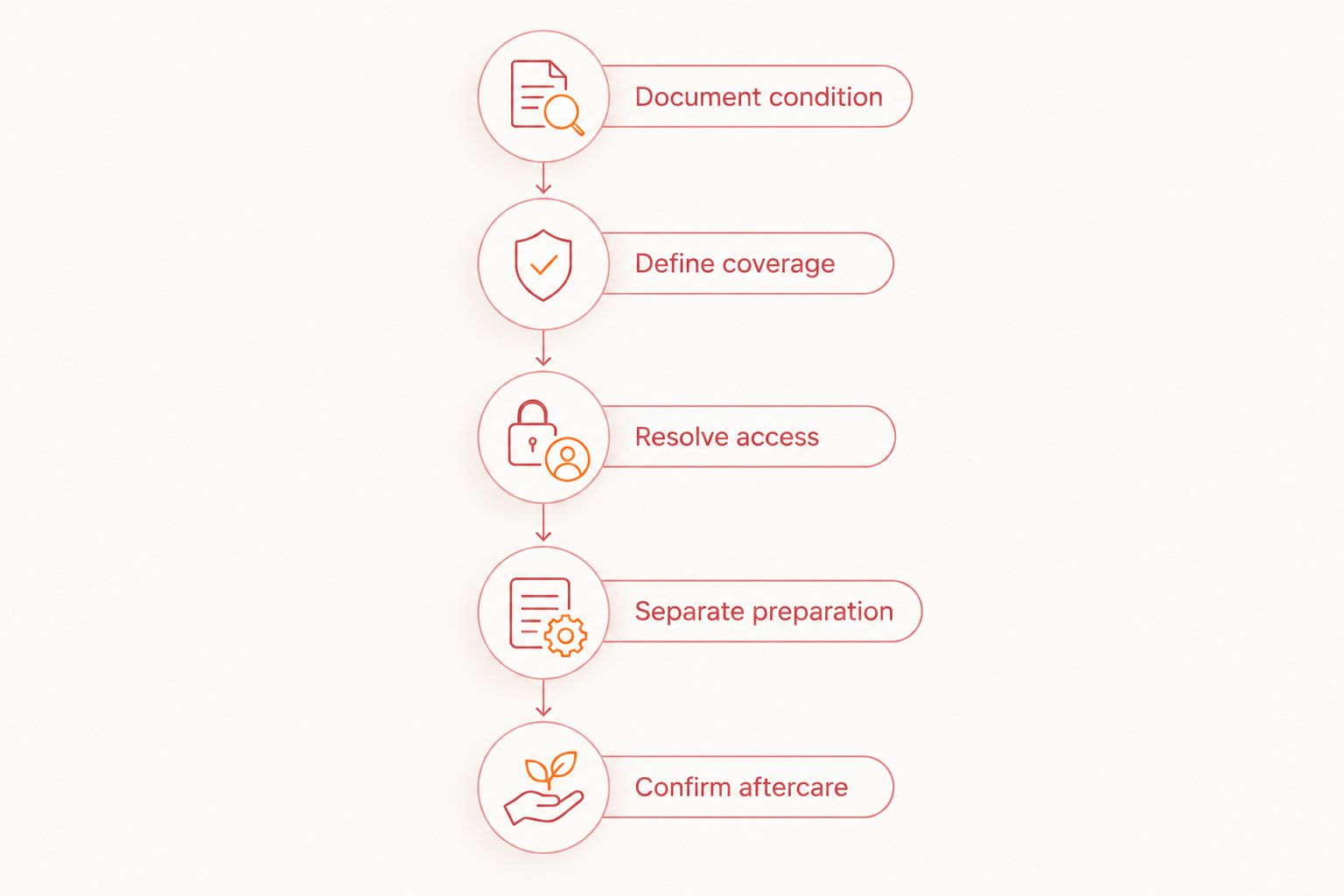
How do you get a useful boat coating quote?
Give each installer the same information. You will get a clearer comparison when every proposal answers the same questions rather than responding to different assumptions.
- Document condition. Supply clear photographs of both hull sides, the transom, topsides, and visible defects. Explain any known repairs, repainting, or existing coatings.
- Define coverage. List the exact surfaces you want treated. Identify textured walking areas, clear panels, graphics, and fittings that need a separate compatibility decision.
- Resolve access. Explain whether the boat is afloat, on a trailer, or otherwise accessible. Ask who arranges any movement and how blocked surfaces are excluded or reached.
- Separate preparation. Request a distinction between cleaning, correction, coating application, and repairs. Agree on how additional work will be approved if inspection reveals a problem.
- Confirm aftercare. Obtain the selected product’s curing, washing, and maintenance instructions. Ask what written warranty, if any, applies and what it excludes.
For a 2026 booking, ask what conditions must be met before the boat returns to service. Do not substitute a general internet curing interval for the instructions attached to the actual product.
CoaterZ provides ceramic coating and marine protection services for Florida Gulf Coast owners. Use the same scope-first checklist when discussing your boat with CoaterZ, and confirm the proposed treatment, compatible surfaces, and preparation before approving work.
Discuss your boat protection needs
Define the surfaces, preparation, and aftercare requirements before approving a coating project.
Is ceramic coating worth it for a saltwater boat?
Ceramic coating is worth considering when you want easier routine cleaning and surface appearance maintenance on compatible materials. Its value depends on preparation, your maintenance habits, and whether the proposed treatment addresses your actual concern.
Do not buy ceramic coating as a substitute for antifouling or corrosion prevention. A surface treatment does not replace anodes, sound electrical systems, appropriate underwater protection, or regular salt removal.
Water beading is also not a complete condition assessment. Residue can change how water behaves on a surface, and a freshly treated appearance does not prove that every part of the boat is protected. Follow the product’s maintenance guidance rather than judging the entire system from a rinse test.
Does a new boat need polishing before ceramic coating?
A new boat needs inspection before coating; its delivery date does not establish its surface condition. Residue, handling marks, storage exposure, and previous surface treatments affect preparation decisions.
Ask the installer to explain which defects are present and what correction is necessary. Avoid authorizing aggressive correction simply because it appears in a package description. The goal is a sound, properly prepared surface—not unnecessary material removal.
If you are planning a new-boat coating project in 2026, coordinate inspection before committing to a launch schedule. Application and curing requirements should determine when treated surfaces can get wet or return to use.
What maintenance remains after ceramic coating?
Ceramic coating does not make a boat maintenance-free. You still need to remove salt and contamination, use compatible cleaning products, and avoid abrasive methods that damage the treated finish.
Get a written care plan covering these practical points:
- Salt removal: Ask how to rinse and wash the treated surfaces after saltwater exposure.
- Cleaning products: Confirm which cleaners suit both the coating and the underlying material.
- Contact methods: Use washing tools appropriate to the finish; coating does not make rough brushes harmless.
- Deposits and stains: Follow approved removal methods instead of escalating immediately to abrasive compounds.
- Inspection: Ask how to distinguish removable contamination from coating deterioration or underlying finish damage.
Keep the product identification and care instructions with your boat records. If another detailer later polishes a coated area, tell that provider what was applied. Abrasive correction can remove coating and change the maintenance plan.
FAQ
What’s included in the cost to ceramic coat a boat?
The cost to ceramic coat a boat should identify cleaning, preparation, coating coverage, access arrangements, and aftercare. Require a written inclusion list because a total alone does not show whether correction, movement, or additional surfaces are included.
Can I get an accurate boat ceramic coating quote from length alone?
Boat length alone does not establish an accurate project scope. The installer also needs surface condition, materials, coverage boundaries, and access information; photographs help establish an initial scope before inspection.
Does ceramic coating remove oxidation from gelcoat?
Ceramic coating does not remove oxidation from gelcoat. Oxidation must be assessed and addressed through suitable preparation before coating application, and damaged or failing finishes need a separate repair decision.
Can ceramic coating go below the waterline?
Below-waterline use requires explicit approval for the selected product and application conditions. Do not assume an above-water coating is suitable for continuous immersion or that it replaces antifouling protection.
Will ceramic coating stop saltwater corrosion on my boat?
Ceramic coating is not a substitute for a boat’s corrosion-control systems. Continue appropriate anode maintenance, electrical-system checks, salt removal, and material-specific care.
How long should I keep a freshly coated boat dry?
Keep a freshly coated boat dry for the interval specified by the selected product and installer. Cure requirements depend on the coating and application conditions, so obtain the instructions before arranging launch or transport.
Should I choose the boat coating quote with the lowest total?
Choose the quote that clearly matches your required preparation, coverage, and aftercare—not the lowest unexplained total. Compare equivalent scopes and resolve exclusions before authorizing work.
One last thing
Ask the installer to mark every excluded area on photographs before work begins. A rail base, trailer-supported section, textured deck, or clear panel is easy to overlook in a verbal discussion and easy to identify on a shared image.
For your 2026 decision, keep those marked photographs with the approved scope. They make the finished-work inspection more useful than a general promise of whole-boat protection.