

Paint protection film has no single replacement age: how long PPF lasts on your car depends on the specific film, installation, exposure, and maintenance. Use the film manufacturer’s written service-life guidance alongside its actual condition—not a warranty period alone—to decide when to replace it. Road damage, lifting edges, discoloration, or adhesive problems can require attention before the rest of the film needs replacement.
- How long does PPF last on a car? Follow the specific film’s guidance and inspect its condition.
- A PPF warranty is not a guaranteed replacement schedule or a promise against every type of damage.
- CoaterZ provides paint protection film services for Florida Gulf Coast vehicle owners.
- Inspect exposed panels, film edges, and surface clarity before deciding whether to keep or replace PPF.
How long does paint protection film last on a car?
PPF lifespan is product-specific, while replacement is condition-specific. A service-life statement describes expected performance under stated conditions. It does not establish the replacement date for every panel on every vehicle.
For a 2026 installation, get the exact film identification and its current care instructions in writing. Keep those records with your installation paperwork so future inspections assess the product actually on your car.
If you are choosing protection for a commuter, start with the guide to PPF kits for daily-driven cars. Then separate the choice of film from the question of how you will maintain it.
| Film condition | Best for | Recommended action | Limitation |
|---|---|---|---|
| Clear, firmly attached film without significant damage | Owners maintaining intact protection | Continue approved cleaning and routine inspection | Appearance alone cannot confirm every underlying issue |
| An isolated damaged section | Owners addressing localized road wear | Have the affected panel or film section assessed | Replacing one section can leave a visible difference beside older film |
| Widespread lifting, discoloration, or deterioration | Owners deciding whether existing film remains serviceable | Arrange professional assessment and replacement planning | Removal also requires attention to the paint underneath |
The useful question is not simply whether the film has reached a birthday. It is whether the film remains attached, presentable, and suitable to keep on the underlying finish.
Why this matters on Florida’s Gulf Coast
A car parked outside in Sarasota has a different exposure pattern from a garaged car driven occasionally in Palm Harbor. Sunlight, outdoor storage, road debris, and cleaning practices all belong in the discussion about film condition.
Salt exposure also calls for appropriate cleaning. PPF covers selected painted surfaces; it does not turn the entire vehicle into a sealed barrier against coastal conditions. Exposed paint, panel gaps, wheels, and the underside still need their own care.
Choose protection by surface and exposure, not by a single longevity claim. Window tint, undercoating, ceramic coating, and paint protection film perform different jobs. A lifespan statement for one treatment does not establish the life of another.
Expected lifespan, warranty, and replacement are different
These terms answer different questions. Mixing them creates unrealistic expectations and makes it harder to compare installation proposals.
Expected service life describes the specific film
A manufacturer’s service-life guidance applies to a named product under stated conditions. Check whether the guidance addresses your climate, surface, exposure, and maintenance routine rather than treating a general lifespan claim as universal.
For your 2026 comparison, ask the installer to identify the exact film rather than describing it only as premium PPF. Product identification makes the care instructions and warranty terms traceable.
A recommendation without a named film leaves you unable to check what applies later. Keep the identification even if you expect the same installer to handle future maintenance.
Warranty coverage describes defined obligations
A warranty sets out covered defects, exclusions, and claim requirements. It is not automatically a promise that film will remain cosmetically unchanged throughout the coverage period.
Read the treatment of discoloration, cracking, bubbling, adhesion, and installation workmanship where those subjects appear in the actual terms. Do not assume that impact damage, staining, or improper cleaning receives the same coverage as a manufacturing defect.
Ask who handles a claim and what documentation you must retain. An easy-to-find warranty document is more useful than a remembered sales conversation.
Replacement timing follows condition and paint safety
A damaged area can need replacement while neighboring film remains serviceable. Conversely, reaching a stated age does not by itself diagnose the condition of every panel.
Have deteriorating film assessed before attempting removal yourself. Repainted panels, failing clear coat, and uncertain repair history require particular care because the underlying finish affects removal risk.
Do not use the condition of the hood as a verdict on the entire car. Different panels receive different exposure and road wear.
Why PPF lifespan varies
The following factors explain why identical calendar ages do not guarantee identical results:
- Film construction and care requirements. Follow the instructions for the actual installed product. Do not transfer cleaning or polishing advice from a different film.
- Sun exposure and storage. Outdoor parking changes the film’s exposure compared with covered storage. Include your normal parking conditions when discussing maintenance.
- Road wear. Debris strikes and abrasion can damage a section independently of age. Frequently exposed front-facing surfaces deserve close inspection.
- Surface condition. Existing chips, failing paint, repairs, and contamination affect installation decisions. Film should not be treated as a repair for an unstable finish.
- Installation quality. Surface preparation, fit, and edge adhesion matter. Persistent lifting or trapped contamination needs assessment rather than an improvised fix.
- Cleaning practices. Incompatible chemicals, abrasive tools, and careless pressure washing can damage film. Use the manufacturer’s approved methods and products.
A Gulf Coast driving routine should shape your maintenance plan, but it does not justify inventing a shorter or longer guaranteed lifespan. Judge the actual film and its documented requirements.
How to check whether your PPF needs attention
Use this sequence after cleaning the vehicle with film-compatible products. Inspect cool surfaces in good light; dirt and glare make changes harder to distinguish.
- Check clarity. Look for persistent yellowing, haze, staining, or uneven appearance. Compare neighboring sections, but remember that lighting and paint color can affect what you see.
- Check edges. Look around panel boundaries, recesses, and exposed film edges for lifting or accumulated contamination. Do not pick at an edge to test its strength.
- Check damage. Identify punctures, tears, abrasion, or impact marks. Photograph the location so the installer can distinguish a local repair question from widespread deterioration.
- Request assessment. Describe what changed, where it appeared, and whether the panel has been repaired. Bring the installation records and care history.
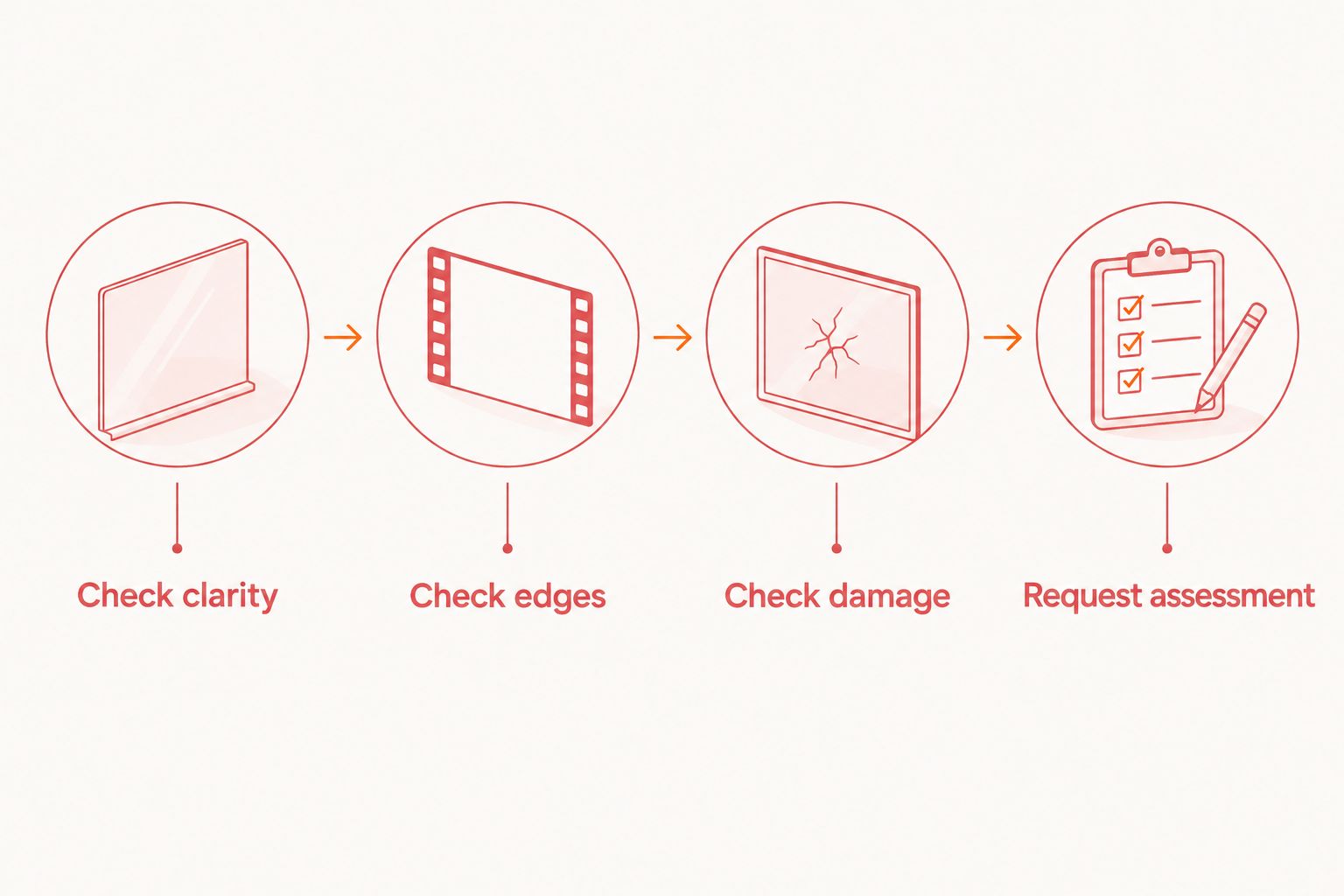
Check 3 inspection areas: the surface, the edges, and impact-prone panels. This is a practical inspection structure, not a claim that every problem will be visible without professional assessment.
If an area looks different after washing, avoid escalating immediately to stronger chemicals. First establish whether the mark is contamination, film damage, or a problem beneath the film.
For an existing installation assessed in 2026, take dated photographs. Consistent views make it easier to explain a change than a general description that the film looks older.
How to care for PPF without shortening its useful life
Follow the installed film’s care instructions before following generic detailing advice. A cleaning method suitable for exposed paint is not automatically suitable for film, its topcoat, or its edges.
Wash without attacking the edges
Use compatible cleaning products and clean wash media. Avoid scrubbing trapped grit across the surface or directing a concentrated pressure-washer jet into a film edge.
The correct pressure-washing limits depend on the film’s instructions and equipment. Do not substitute an arbitrary distance or pressure setting for the product’s written guidance.
Pay attention to lower panels and front-facing areas where road contamination collects. Cleaning those areas carefully is different from repeatedly scrubbing a stubborn mark.
Remove contamination using approved methods
Address bird droppings, insect residue, and other contamination promptly with film-approved cleaning methods. Do not scrape the surface or experiment with household solvents.
If a stain remains, ask the installer which treatment is compatible. Aggressive correction can create a second problem without resolving the first.
Treat self-healing as a limited feature
Some films have a topcoat designed to reduce the appearance of certain light surface marks under specified conditions. That does not mean the film repairs punctures, deep cuts, or every scratch.
Do not apply uncontrolled heat because a film is described as self-healing. Follow the instructions for that particular product and let an installer assess damage outside normal care.
Confirm compatibility before adding a coating
A coating intended for use over PPF must be compatible with the installed film. It does not repair lifting edges or replace damaged material.
Ask which maintenance products remain appropriate after coating. Layering treatments should produce a clear care routine, not conflicting instructions from unrelated products.
Can you replace only one damaged PPF panel?
One damaged panel does not automatically require full-car film replacement. An installer can assess whether localized replacement addresses the problem while leaving sound neighboring film in place.
Check the appearance of the proposed replacement beside older film. Differences in age, finish, or film type can affect the visual match even when the underlying paint is the same color.
Removal planning matters as much as the new installation. Tell the installer about repainting, body repairs, touch-up work, or previous removal problems before work begins.
If several areas show similar deterioration, ask whether treating them separately still makes sense. The decision should follow the condition across the vehicle rather than the first damaged spot you noticed.
Does ceramic coating make PPF last longer?
A compatible ceramic coating can change surface behavior and cleaning characteristics, but it does not establish a new PPF lifespan. Do not add a coating’s advertised duration to the film’s stated service life.
PPF remains the physical film layer; a coating is a separate surface treatment. Neither treatment makes the other immune to road damage, incompatible chemicals, or neglected maintenance.
For a 2026 protection plan, ask for separate instructions covering the film and any coating applied over it. If the two sets of instructions conflict, resolve that before installation.
What should you ask before booking PPF installation?
Bring 2 documents into the decision: the product warranty and the care instructions. Then ask how the installation proposal applies them to your vehicle.
Use these questions to make the discussion specific:
- What exact film will go on the vehicle?
- Which panels and edges are included in the proposed coverage?
- Does any repaired or repainted surface require a different approach?
- What maintenance products and washing methods are approved?
- Which issues fall under the product warranty, and which concern workmanship?
- What should you do if an edge lifts or a panel takes an impact?
CoaterZ suits Florida Gulf Coast owners seeking professional paint protection film installation. Vehicle owners in Palm Harbor, Lutz, and Sarasota can use CoaterZ to discuss protection services without treating every surface or vehicle as the same installation.
CoaterZ provides paint protection film and other automotive protection services; the specific film, coverage, compatibility, and written terms still need to be established for your vehicle. A service list alone does not answer those questions.
FAQ
How long does PPF last on a car in Florida?
PPF lifespan in Florida depends on the specific film, installation, exposure, and care. Use the manufacturer’s written guidance and inspect the film’s condition rather than assuming a universal replacement age.
Does a PPF warranty mean the film will last that long?
A PPF warranty defines coverage under stated terms; it is not a guarantee against every form of wear or damage. Check covered defects, exclusions, and maintenance requirements separately.
How do I know when my paint protection film needs replacing?
Persistent discoloration, lifting, tearing, or deterioration calls for professional assessment. The installer should distinguish localized damage from a wider replacement need and evaluate the underlying paint.
Can I replace just one panel of paint protection film?
One panel can be assessed for replacement without automatically replacing all the film. Check the condition of adjacent sections and the potential appearance difference between older and replacement material.
Does ceramic coating extend the life of PPF?
A compatible ceramic coating does not establish a new guaranteed PPF lifespan. Confirm compatibility and follow the care requirements for both treatments.
Can removing old PPF damage my car’s paint?
PPF removal can put compromised or repainted finishes at risk. Tell the installer about repair history and have the surface assessed before removal.
What paperwork should I keep for PPF installed in 2026?
Keep the film identification, installation record, written warranty, and care instructions for PPF installed in 2026. These records help establish the applicable maintenance guidance and claim requirements.
One last thing
A replacement date is less useful than a traceable installation record. Before you leave the shop, save the film identification, covered panels, and care instructions somewhere you can find them after the original paperwork disappears into a glove box.
Also record any known repainting. When film eventually needs attention, knowing what lies beneath it helps the installer plan the work—not just select new material.