

Window tint installation time depends on the windows being covered, the condition of the glass, and whether existing film needs removal. Book around the installer’s confirmed pickup time—not a generic estimate—and treat adhesive curing as a separate period after installation. Your vehicle can be ready for collection before the film is ready for normal window operation or cleaning.
- How long does window tint installation take? Confirm timing for your vehicle, coverage, and existing film condition.
- Installation, vehicle pickup, and adhesive curing are separate milestones; ask about each before booking.
- Coaterz offers window tint installation for Florida Gulf Coast vehicle owners seeking professional protection services.
- Choose automotive window film for documented performance and glass compatibility, not installation speed alone.
Why this matters
A tint appointment affects more than the time your vehicle spends in the installation bay. You also need to plan transportation, collection, and any restrictions on lowering the windows afterward. A pickup estimate without aftercare instructions leaves part of that plan unfinished.
For vehicle owners in Palm Harbor, Lutz, Sarasota, and the Florida Gulf Coast, the goal is useful solar protection with a clean installation—not simply the shortest appointment. Coaterz is a fit for Florida Gulf Coast vehicle owners seeking professional window tint installation. Explore Coaterz when planning tint alongside other automotive protection services.
For a 2026 appointment, ask for the vehicle-specific schedule before arranging your day. A timing estimate becomes useful only when it describes the work you actually want completed.
How long does window tint installation take?
The useful answer separates hands-on installation from the overall appointment and the film’s curing period. Those stages overlap in your experience, but they do not mean the same thing. Ask the installer to explain the following sequence for your vehicle.
- Confirm the scope. Identify every pane receiving film, the selected film, and whether existing tint must come off. Include fixed glass rather than describing the job only as a vehicle size.
- Inspect and prepare the glass. The installer checks the surface and removes contamination or adhesive that would interfere with installation. Existing film changes this preparation work.
- Fit and apply the film. Automotive film must match the glass shape and sit correctly at the edges. Access, curvature, and coverage affect the work involved.
- Inspect and release the vehicle. Collection follows the installer’s release decision, not simply the moment the last piece of film is applied. Confirm how collection will be communicated.
- Follow the curing instructions. Residual installation moisture must dry, and the adhesive bond must develop. Follow the instructions for your installed film before operating or cleaning treated windows.
A confirmed collection time is a scheduling commitment; a curing instruction is an aftercare requirement. Do not substitute one for the other.
For your 2026 booking, get both in writing. That makes the appointment easier to coordinate and gives every driver of the vehicle the same instructions.
Which type of tint appointment are you booking?
A fresh installation and a replacement installation are different scopes of work. Matching the appointment description to your vehicle helps the installer allocate preparation and application time correctly.
| Appointment scope | Best for | Scheduling advantage | Limitation to account for |
|---|---|---|---|
| Selected windows | Owners addressing specific glass areas | Defines a narrower installation scope | Untreated glass remains unchanged; appearance and performance need consideration |
| Broader vehicle coverage | Owners seeking treatment across more permitted glass areas | Coordinates the selected windows in one booking | More panes and different glass shapes require additional work |
| Existing-film replacement | Owners changing or replacing installed film | Allows removal and new installation to be planned together | Old adhesive and film condition add preparation work |
These are scope descriptions, not named service packages. Ask for the actual windows to be listed on your booking rather than assuming that “full vehicle” means the same thing everywhere.
A smaller scope is not automatically the better choice. If you want consistent comfort across the cabin, discuss the whole objective before selecting individual windows. Conversely, adding coverage you do not need makes the appointment broader without resolving a specific concern.
Selected windows: define the exact panes
Tell the installer which windows you want treated and whether they already have film. Include any concerns about appearance next to untreated or factory-tinted glass. A matching appearance does not establish matching heat rejection.
Broader coverage: confirm what is included
Ask which fixed panes, rear glass, and other permitted areas are included. Do not assume a windshield, sunroof, or panoramic roof belongs in the quoted scope. Each surface requires its own compatibility and legal assessment.
Replacement film: disclose the existing condition
Mention peeling edges, bubbling, discoloration, and any previous removal attempts. These details help define preparation work; they do not establish the cause of the problem. Let the installer inspect the glass before deciding what removal requires.
Why window tint installation time varies
Installation time follows the work required to prepare and fit film correctly. These factors give you a better basis for discussing the appointment than vehicle size alone.
- Glass coverage. More treated panes mean more surfaces to prepare, fit, apply, and inspect. Count fixed quarter windows as well as windows that open.
- Existing film and adhesive. Replacement includes removal work before the new film can be installed. Tell the installer about existing tint when requesting the appointment.
- Glass shape and access. Curved glass and restricted interior access affect fitting and application. A large, accessible pane and an awkwardly positioned pane present different tasks.
- Surface condition. Adhesive residue and contamination require attention before application. Film does not correct damaged glass or hide every underlying defect.
- Other booked services. Ceramic coating, paint protection film, and window tint are separate procedures. A combined visit needs an overall schedule rather than a tint-only estimate.
Choose the correct preparation and coverage before choosing the shortest appointment. Rushing the booking decision can leave important work outside the agreed scope.
For 2026 planning, send the vehicle details and existing-film information before accepting a pickup estimate. That gives the timing discussion a defined starting point.
What should you confirm before booking?
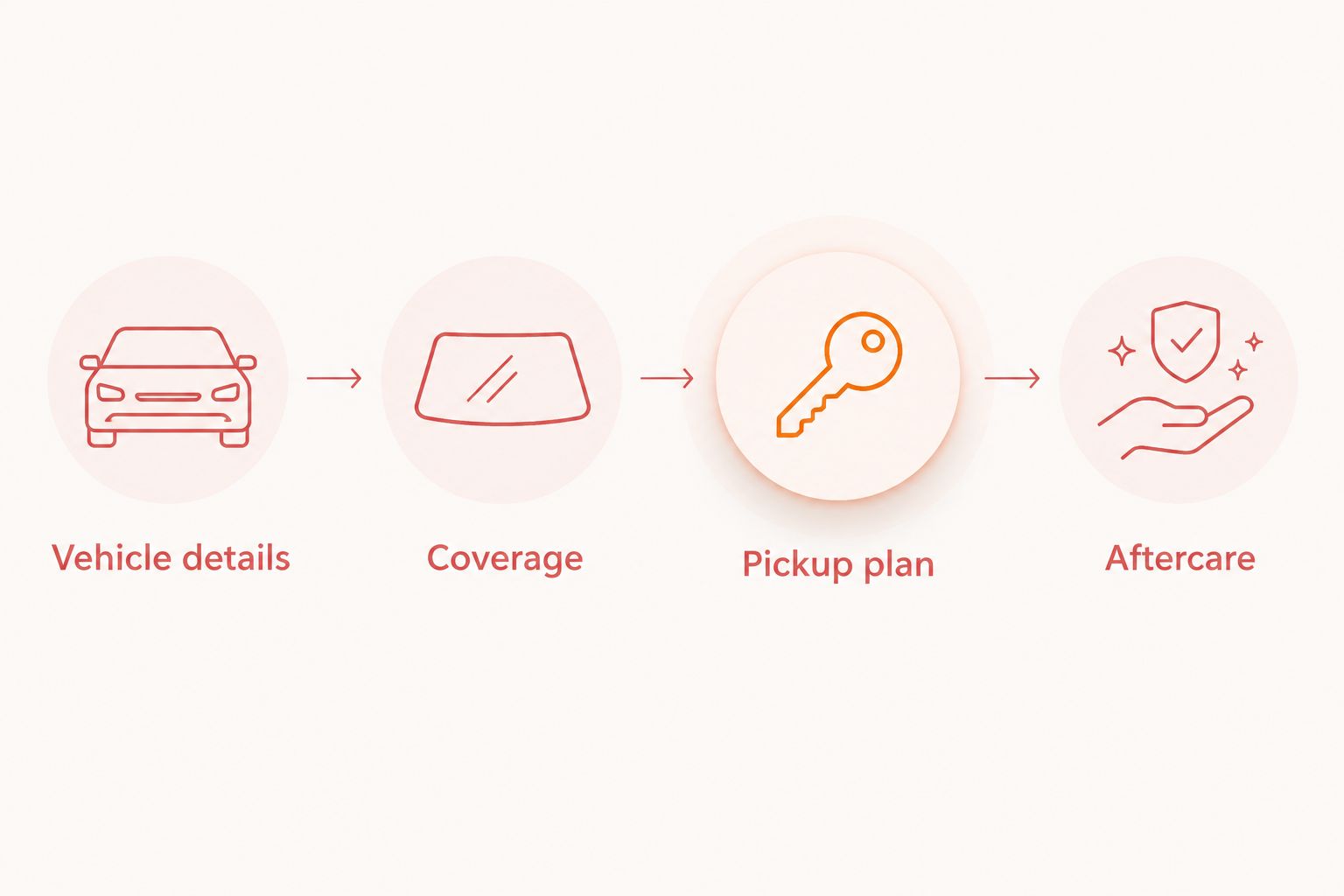
Use a short booking brief rather than asking only how quickly the shop can finish. The installer needs the vehicle and work details; you need a collection plan and clear aftercare.
- Vehicle details: Provide the make, model, body style, and relevant glass features.
- Coverage: Identify the windows you want treated and any existing film.
- Pickup plan: Ask whether you should wait, arrange transportation, or return after notification.
- Aftercare: Request instructions for window operation, cleaning, and concerns during drying.
Keep those details together in the appointment confirmation. If the scope changes after inspection, ask for an updated collection expectation before approving the added work.
Describe how you use the vehicle
Tell the installer if the vehicle is essential for deliveries, passenger transport, or a fixed work schedule. That does not change the film’s requirements, but it helps you decide whether the proposed booking fits your needs. Avoid building a tight travel connection around an unconfirmed finish time.
If someone else will collect the vehicle, make sure that person receives the aftercare instructions. A careful installation still needs appropriate handling after collection.
Does window tint need to cure before you can drive?
Vehicle release and complete curing are separate decisions. Follow the installer’s instructions on collection, visibility, window operation, and cleaning rather than treating pickup as permission to use every treated surface normally.
Window film is commonly applied using an installation solution. Residual moisture can affect its appearance while drying, so an immediate visual change does not establish whether the installation has a defect. Ask what appearance is expected and which signs require inspection.
Do not press, puncture, or peel an area that concerns you. Photograph it and contact the installer. Attempting a repair yourself can damage the film and make the original concern harder to assess.
For a 2026 installation, keep the film-specific instructions accessible after you leave. A remembered rule from a different vehicle is not a substitute for the requirements of the newly installed film.
Does ceramic window tint take longer to install?
The word “ceramic” alone does not establish the appointment length. Glass coverage, preparation, existing-film removal, and the installer’s process still need to be assessed for your vehicle.
Choose film by its documented properties and suitability for the glass. Visible light transmission describes how much visible light passes through; it does not, by itself, tell you the film’s overall solar heat performance. A darker appearance is not a complete performance specification.
For Florida driving, discuss visibility and solar comfort together. Review the window tint shades ranked by heat rejection guide before selecting a shade solely because it looks darker.
Ask about compatibility with factory-tinted glass, rear-window defrosters, antennas, cameras, and sensors where applicable. Do not assume that a film suitable for a side window is automatically suitable for every glass surface on the vehicle.
Can tint share an appointment with other protection services?
Window tint can be part of a broader protection plan, but the booking must account for each service separately. Coaterz offers automotive window tint, ceramic coating, paint protection film, and other protection services; those services do not share identical preparation or aftercare requirements.
The advantage of discussing the work together is a coordinated plan. The limitation is a broader appointment scope: a tint-only collection expectation does not describe a vehicle also receiving paint protection work.
Keep the protection goals distinct, too. Window tint addresses automotive glass and solar-control needs; it does not shield exterior paint from road impacts or protect the underbody from salt exposure. Florida sun, coastal salt, and road wear require surface-specific decisions.
Ask for one collection plan and separate care instructions for each treated surface. That is more useful than assuming every installed material becomes ready for normal use at the same time.
FAQ
How long does window tint installation take if my car already has tint?
Existing tint adds removal and adhesive-cleanup work before replacement film can be installed. Describe its condition when booking, and confirm the collection estimate after the installer assesses the glass.
Can I wait at the shop while my windows are tinted?
Confirm the waiting arrangement with the shop before your appointment. Whether waiting fits your day depends on the agreed scope, preparation requirements, and collection plan.
Can I roll my windows down as soon as I collect my car?
Follow the installer’s specific window-operation instructions after collection. Pickup does not mean the adhesive has completed curing, and lowering a treated window too soon can disturb the film.
Does darker window tint install faster than lighter tint?
Shade alone does not establish installation time. Glass coverage, preparation, film fitting, and existing-film removal are more useful details for scheduling the appointment.
Is haze after window tint installation always a problem?
Haze is not automatically evidence of a defect because residual installation moisture can affect appearance during drying. Ask the installer what is expected for your film and contact the shop about anything outside those instructions.
Does Coaterz provide automotive window tint installation?
Coaterz provides automotive window tint services for vehicle owners in the Tampa Bay and Florida Gulf Coast area. Confirm your vehicle, coverage, existing film, and appointment timing directly when planning the service.
Will tint near a camera mean my vehicle needs calibration?
Calibration requirements depend on the vehicle and the work performed around its camera or sensor systems. Ask the installer to check the vehicle-specific requirements rather than assuming every tint installation requires calibration.
One last thing
The most useful pickup question is not just “Is it finished?” Ask: “What can I do with the vehicle now, and what still needs to wait?” That separates driving, window operation, cleaning, and follow-up into clear instructions.
Before leaving your 2026 appointment, save those instructions somewhere every driver can find them. The person collecting the vehicle is not always the next person to lower a window.