

No—ceramic coating does not prevent swirl marks from washing. It helps dirt release and makes routine cleaning easier, but contaminated wash mitts, dirty towels, and excessive pressure can still scratch a coated finish. The coating supports safer washing; it does not make abrasive washing safe.
- Does ceramic coating prevent swirl marks? No—abrasive washing can still scratch coated paint.
- Ceramic coating supports easier cleaning; paint correction addresses existing swirl marks.
- CoaterZ serves Florida Gulf Coast vehicle owners considering professional ceramic coating and paint protection film.
- Remove loose grit before contact washing, then use clean wash media and coating-compatible products.
Does ceramic coating prevent swirl marks from washing?
Ceramic coating is not a scratch-proof barrier. Swirl marks are fine scratches that become especially visible around a concentrated light source. Washing and drying can create them when abrasive contamination moves across the finish.
A coating changes surface behavior, including how water and some contamination interact with the surface. That does not stop grit trapped beneath a mitt from abrading it. Easier cleaning is the benefit—not permission to scrub harder.
Existing scratches require a separate decision before coating. Read about ceramic coating over existing paint damage before choosing the preparation work for your vehicle.
| Treatment | Best for | Main benefit | Limitation for swirl marks |
|---|---|---|---|
| Ceramic coating | Owners prioritizing easier maintenance | Helps contamination release during cleaning | Does not prevent scratches from abrasive contact |
| Paint correction | Owners addressing existing defects in gloss paint | Polishing reduces suitable surface defects | Does not prevent future wash damage; removes some paint material |
| Paint protection film | Owners seeking a physical protective layer | Places a film over covered paint | Film can develop surface marks; self-healing behavior depends on the product |
These treatments solve different problems. Choosing between them starts with whether you want to improve existing paint, simplify maintenance, or add a physical barrier.
Why this matters for Florida Gulf Coast drivers
For your 2026 maintenance plan, separate environmental exposure from wash damage. Florida sun, salt exposure, and road contamination create different protection needs; none makes careless washing acceptable.
Sand and road grit are the immediate concern when you touch dirty paint. Rinse loose contamination away before washing, especially around lower doors, wheel arches, and rear panels. Do not spread wheel grime across painted panels with shared wash tools.
CoaterZ ceramic coating services are best for Florida Gulf Coast owners seeking easier paint maintenance, not scratch-proof paint. If you drive around Palm Harbor, Lutz, or Sarasota, choose a protection plan that also accounts for where you park, how you wash, and whether the vehicle encounters coastal spray.
The practical limitation matters: a professionally applied finish still needs careful cleaning. Protection does not replace maintenance.
Why swirl-mark risk varies
Your wash method and the condition of everything touching the vehicle influence whether a coated finish develops marks. Focus on these factors rather than treating the coating label as a guarantee:
- Contamination load: Sand, grit, and road debris create abrasion when dragged across the surface. Remove loose particles before contact.
- Wash-media cleanliness: A clean-looking mitt can contain trapped debris. Inspect and rinse it during washing, and replace it when it no longer cleans up properly.
- Lubrication: Use a coating-compatible wash product according to its directions. Do not compensate for inadequate cleaning with harder scrubbing.
- Contact pressure: Heavy pressure increases abrasive contact. Let the cleaning process loosen contamination instead of forcing it off.
- Drying technique: Dirty towels and repeated rubbing can introduce marks after an otherwise careful wash. Dry only a clean surface with clean equipment.
- Existing finish condition: Previous scratches, residues, and water spots affect what you see after washing. Inspect before deciding that every visible defect is new damage.
A coating cannot correct any of these factors by itself. Your strongest next move is to remove unnecessary friction from the wash routine.
How should you wash a ceramic-coated car in 2026?
Use a repeatable sequence that keeps dirty tools away from clean paint. Follow the installed coating's care instructions, including its initial cure restrictions, rather than applying a generic schedule to every product.
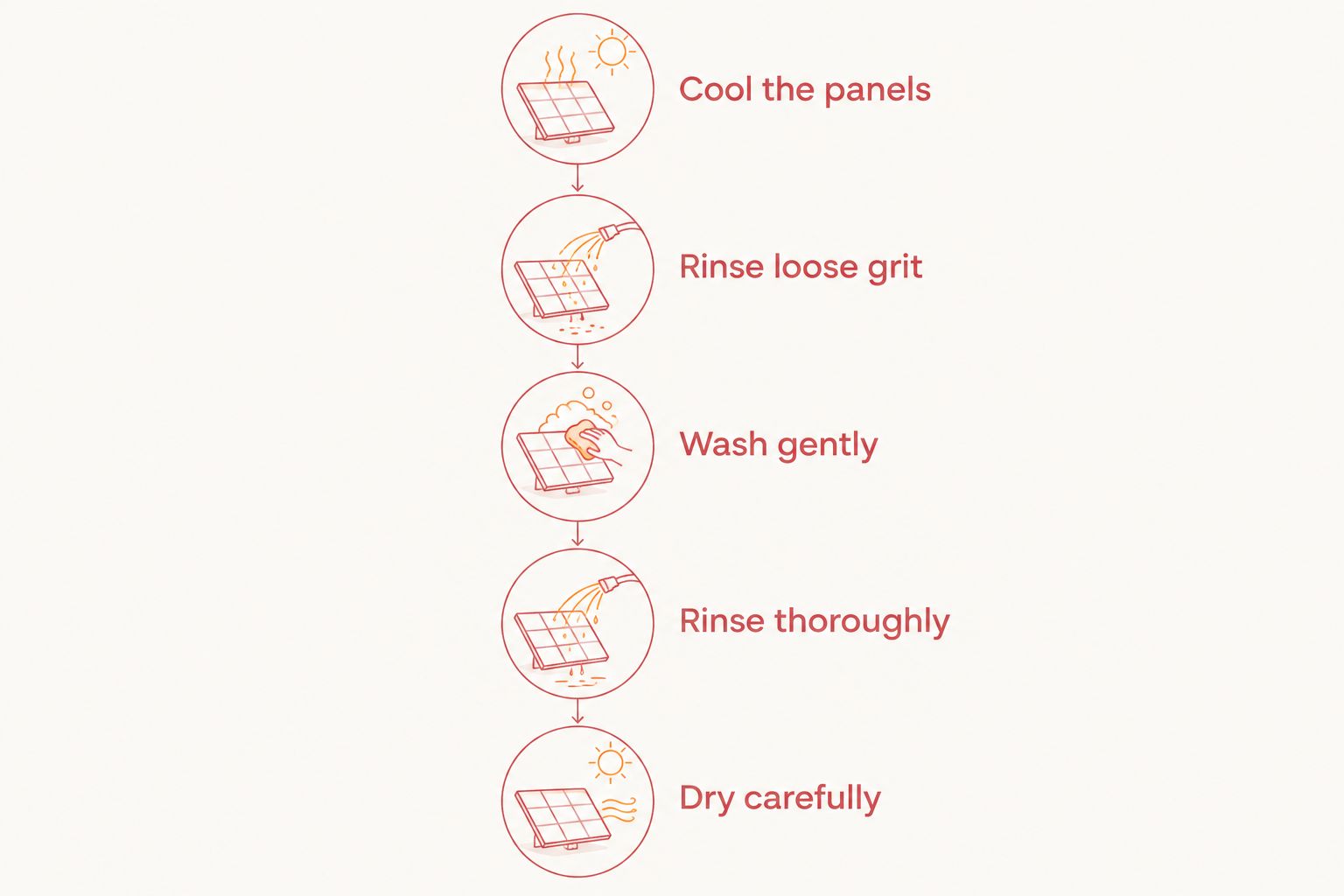
1. Cool the panels
Wash in shade with panels cool enough to keep cleaning products from drying prematurely. Follow the product label's surface and temperature instructions. Florida sunshine makes checking the panel itself more useful than relying on the air temperature.
2. Rinse loose grit
Rinse before touching the paint. Give lower panels and dirt-trapping areas particular attention, and follow equipment guidance for pressure and distance. A prewash can help loosen contamination, but foam alone does not prove that a surface is clean.
3. Wash gently
Use a clean mitt and a coating-compatible shampoo. Work in manageable sections, keep dirty wash media out of clean solution, and switch to clean media when contamination builds up. Reserve separate tools for wheels and tires.
4. Rinse thoroughly
Remove shampoo before it dries. Inspect for remaining dirt rather than immediately attacking resistant spots with more pressure. Use a surface-compatible treatment for specific contamination when normal washing does not remove it.
5. Dry carefully
Use clean, suitable drying towels or equipment intended for vehicle drying. Avoid dragging a towel over contamination you missed. If a towel falls on the ground, set it aside until it has been properly cleaned and inspected.
Stop when contamination resists normal washing. Pressing harder turns a cleaning problem into an abrasion problem. Bird droppings, insect residue, and bonded contamination need an appropriate removal method—not repeated dry rubbing.
What if your car already has swirl marks?
Inspect the clean, dry finish before adding more products. Residue, mineral deposits, and fine scratches can look similar in casual lighting, but they need different treatments.
Use a focused inspection light and view the panel from different angles. Photographs taken under consistent lighting can help you compare the same area over time. Avoid judging paint immediately after applying a product that temporarily changes its appearance.
For a 2026 coating appointment, ask for the preparation scope in writing. Clarify whether the work includes cleaning only or paint correction, and which defects the proposed process addresses.
Polishing removes a small amount of surface material to refine suitable defects. It is not appropriate to chase every scratch, particularly where paint condition or previous repair history limits safe correction. A coating does not fill that gap with guaranteed scratch removal.
Polishing an already coated panel can also remove or compromise the coating in the worked area. Ask how protection will be restored afterward rather than treating polishing as routine coating maintenance.
Is paint protection film better than ceramic coating for scratches?
Paint protection film provides a physical layer over covered paint; ceramic coating is not a substitute for that layer. For an owner concerned about road debris and physical contact, film belongs in the protection discussion.
That distinction does not make film maintenance-free. Film surfaces can mark, edges require appropriate care, and any self-healing capability depends on the specific product and the type of damage. Do not assume a film repairs deep scratches or heals damage to the paint beneath it.
Ceramic coating remains relevant when easier cleaning is the main goal. Where both treatments are considered, confirm that the coating is suitable for the film rather than assuming any paint coating works on every surface.
For a fuller comparison, see whether PPF is necessary on a ceramic-coated car. Choose according to the damage you want to address, not a blanket promise of protection.
Can you use an automatic car wash after ceramic coating?
A contact wash with contaminated brushes or cloth can mark a ceramic-coated finish. The coating does not neutralize abrasive material carried by wash equipment.
A touchless wash removes brush contact, but that alone does not establish compatibility. Cleaning chemistry, dwell time, and the installed coating's care instructions still matter. Residual dirt also needs attention before you dry the vehicle by hand.
For your 2026 wash routine, favor a process you can verify: suitable chemistry, clean tools, and no unnecessary rubbing. If an operator cannot explain the process, do not assume the word gentle answers those questions.
Newly coated vehicles need a separate check. Follow the installer's written first-wash instructions; an established coating's normal maintenance routine does not automatically apply during curing.
What should you ask before booking ceramic coating?
Ask CoaterZ to separate paint preparation from ceramic coating in the proposed service scope. You need to understand the starting condition, the intended improvement, and the maintenance required afterward.
Use these questions during your 2026 consultation:
- Which visible defects are scratches, and which are deposits or residue?
- What paint correction, if any, is included before application?
- Is the selected treatment compatible with repainted panels, existing film, or wrapped areas?
- What are the exact first-wash and routine-care instructions?
- Which maintenance products are approved for the installed coating?
- What should you do if a panel develops scratches or persistent contamination?
Ask for product-specific guidance, not a universal lifespan or scratch-resistance promise. Gloss paint, matte finishes, vinyl, and film do not share identical care requirements. Abrasive polishing that suits a gloss-painted panel can permanently alter a matte finish's appearance.
A clear handover should leave you knowing how to wash the vehicle and when to request an inspection. It should not leave you guessing whether every maintenance problem needs another layer of coating.
FAQ
Does ceramic coating prevent swirl marks from washing?
No. Ceramic coating helps make cleaning easier, but grit trapped beneath wash mitts, brushes, or drying towels can still scratch a coated finish. Clean tools and careful washing remain necessary.
Will ceramic coating remove swirl marks already on my car?
Ceramic coating does not remove existing swirl marks. Suitable defects need assessment and, where appropriate, paint correction before application; a coating is not a replacement for polishing.
Can I take a ceramic-coated car through a brush car wash?
A brush car wash can introduce marks if abrasive contamination contacts the finish. Ceramic coating does not make that contact safe, so follow the coating’s care instructions and choose a wash process with controlled, clean contact.
Is a touchless car wash safe for ceramic coating?
A touchless wash avoids brush contact, but compatibility still depends on the wash chemistry and the installed coating’s instructions. Do not rub remaining dirt away with a drying towel.
Is paint protection film better for preventing wash scratches?
Paint protection film adds a physical layer over covered paint, while ceramic coating primarily supports easier maintenance. Film can still develop surface marks, and self-healing performance depends on the specific product and damage.
Can I polish swirl marks out of a ceramic-coated car?
Polishing can address suitable defects, but it can also remove or compromise ceramic coating in the worked area. Have the finish assessed and confirm how protection will be restored before polishing.
How soon can I wash my car after ceramic coating?
Wash the car only after the installed coating’s required initial care period. Get the first-wash instructions from your installer instead of applying a generic waiting period to every coating.
One last thing
Changing from circular wiping to straight wiping does not remove the abrasive particle beneath your towel. Scratch direction is secondary to keeping contamination out of the contact process.
Before your next wash, inspect the mitt, separate the wheel tools, and set aside a clean drying towel. Those practical checks support the coating's benefits more directly than adding another product to a dirty surface.