

Choose CoaterZ if you want automotive paint protection and detailing alongside services such as window tint or vinyl wraps; choose Pure Precision Detailing if its written proposal meets your detailing needs without adding protection work you do not want. This 2026 comparison separates service fit from the installation, maintenance, and coverage details you should approve before booking.
- CoaterZ suits Florida Gulf Coast owners seeking paint protection, detailing, window tint, or vinyl wraps.
- For coaterz vs pure precision detailing, choose by written scope, surface compatibility, and maintenance requirements.
- Choose Pure Precision Detailing when its written detailing proposal matches your needs without unnecessary protection work.
- Ceramic coating and paint protection film solve different problems; neither eliminates routine cleaning.
Why this matters
A clean-looking car and a protected car are not the same purchase. Detailing addresses cleanliness and appearance; a protection plan also needs to identify the surfaces covered, the treatment applied, and the damage that treatment is intended to address.
For owners in Palm Harbor, Lutz, Sarasota, and the Florida Gulf Coast, that distinction matters when planning around sun, salt exposure, and road wear. Choose the treatment for the exposure, then choose the installer for the documented work. A shop name alone does not establish film coverage, coating compatibility, or installation quality.
At a glance
Use this 2026 comparison as a booking checklist, not a substitute for a vehicle-specific proposal. The distinction below is between the client's stated service range and the conditions under which the alternative becomes your better choice.
| Dimension | CoaterZ | Pure Precision Detailing |
|---|---|---|
| Best for | Owners considering detailing plus protection or appearance services | Owners whose detailing requirements are fully met by its written proposal |
| Service scope | Ceramic coating, PPF, vinyl wraps, window tint, and marine PPF are stated services | Select when the proposed work matches your actual requirements |
| Road-impact protection | Car paint protection film is a stated service | Select only if the proposal specifies the required protective treatment and coverage |
| Cleaning and finish care | Ceramic coating and detailing are stated services | Select when the proposed preparation and finish care meet your needs |
| Glass and appearance | Window tint and vinyl wraps are stated services | Compare only the glass or appearance work explicitly included in the proposal |
| Surface compatibility | Serves car, truck, motorcycle, and boat owners | Require confirmation for your vehicle and each treated surface |
| Installation and aftercare | Judge the proposed preparation, finish standards, and care instructions | Apply the same installation and aftercare requirements |
| Pricing model | Compare the defined scope and optional work in the written proposal | Compare the defined scope and optional work in the written proposal |
| Standout feature | Stated range includes automotive and marine protection services | A tightly matched proposal wins when detailing is all you need |
CoaterZ fits owners planning several protection services
CoaterZ is a fit for Florida Gulf Coast vehicle owners seeking paint protection alongside detailing, tint, or wraps. Its stated service range supports a conversation about different parts of the vehicle rather than treating every concern as a paint-cleaning problem.
That is useful when your priorities span several surfaces. Paint protection film addresses a different job from window tint, while a vinyl wrap changes appearance rather than serving as a substitute for every protective treatment.
The advantage is service fit, not an automatic promise of better workmanship. You still need a proposal identifying which services apply to your vehicle, how the work is sequenced, and what preparation each surface requires.
- Best for: An owner planning paint protection and considering additional glass or appearance work.
- Advantage: The stated range covers several distinct vehicle-care needs.
- Limitation: A broad service menu does not establish the specification of your installation.
Pure Precision Detailing wins when its detailing scope is enough
Choose Pure Precision Detailing when its written proposal delivers the finish-care work you want and you have no reason to add film, tint, or a wrap. That is a genuine decision advantage: a focused purchase can match a focused need without turning routine appearance care into a wider protection project.
For example, an owner preparing a vehicle for photographs should define the desired cleaning and finish work before considering permanent or semi-permanent surface treatments. The right proposal is the one that addresses that brief, not the one with the longest service list.
This verdict does not assign unverified services or results to Pure Precision Detailing. It gives you a clear selection rule: approve the alternative when its documented work satisfies the job you actually want completed.
- Best for: An owner seeking a defined detailing job rather than a broader protection plan.
- Advantage: A proposal limited to your needs avoids unnecessary additions.
- Limitation: Detailing alone does not establish protection against stone impacts or other physical damage.
Paint protection film wins over coating for road-impact priorities
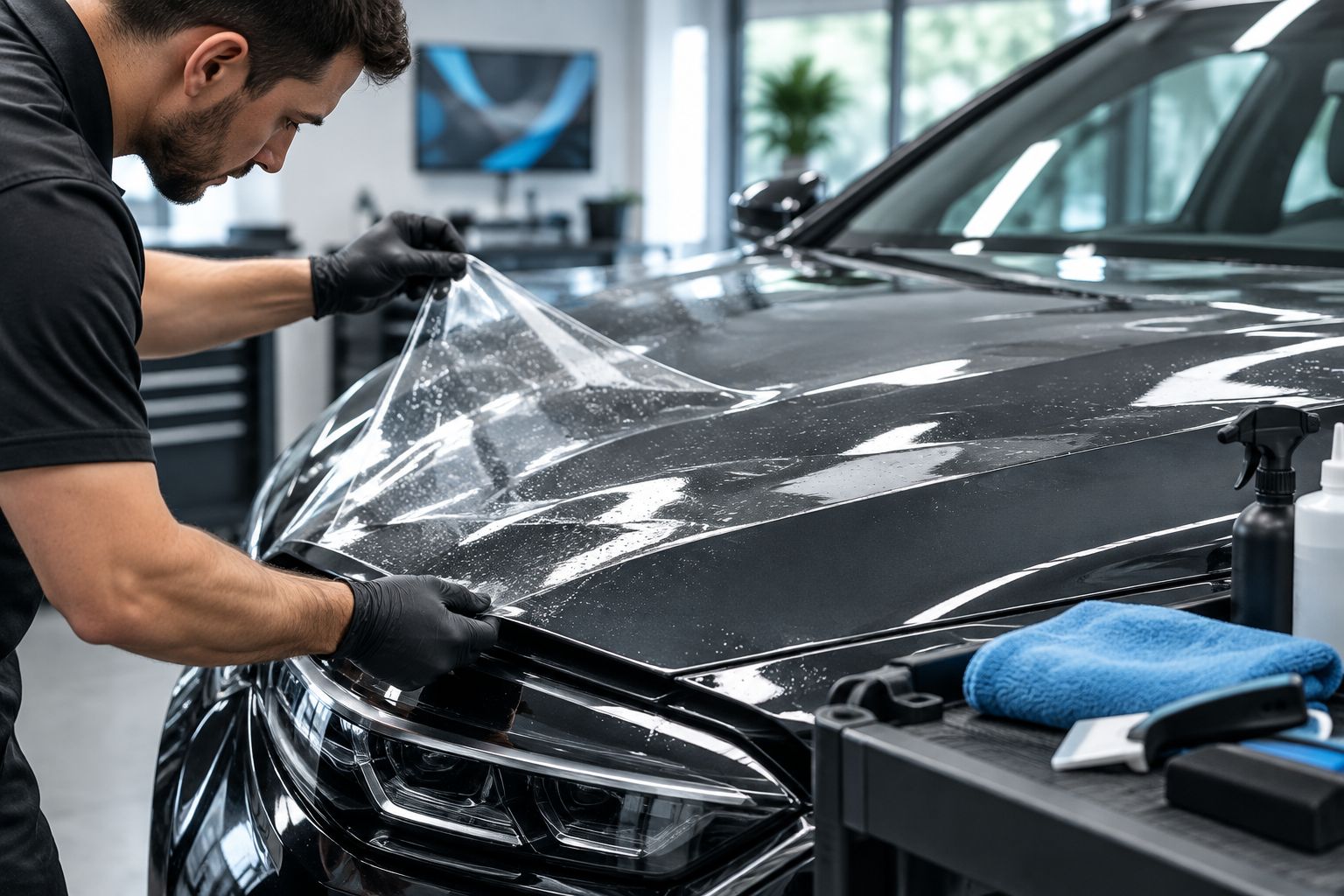
For road-impact concerns, the treatment matters more than the business name. Paint protection film adds a physical film layer over the covered paint; ceramic coating is not an equivalent impact barrier.
Start by identifying the panels you want protected. A proposal that says PPF without defining the covered areas leaves an important part of the purchase unresolved. Review the PPF coverage packages guide when deciding how to describe your coverage requirements.
Choose the installer whose written film scope matches your exposed panels and finish expectations. Ask how edges, panel transitions, badges, and complex shapes will be handled. Do not assume that every edge can be wrapped or that all film installations use the same approach.
Film also has limits. It does not make a vehicle immune to impacts, and exposed paint remains exposed. Product-specific self-healing claims concern eligible surface marks under stated conditions, not every scratch or damaged film section.
Both proposals need a clear cleaning and finish-care plan
Ceramic coating and detailing should be evaluated separately, even when they appear in the same proposal. Cleaning removes contamination; paint correction addresses suitable finish defects; coating adds a surface treatment with product-specific properties and care requirements.
A coating does not erase existing defects simply because it is applied over them. Ask what preparation is included and what finish condition the installer expects before application. Existing scratches, staining, or damaged paint need an assessment rather than a blanket promise.
For your 2026 booking, separate these requirements:
- Cleaning: Identify which exterior and interior areas are included.
- Preparation: Specify inspection, contamination removal, and any agreed correction.
- Protection: Name the treatment and the surfaces receiving it.
- Aftercare: Obtain washing, curing, and contamination-removal instructions.
Neither business earns a finish-care win from the label ceramic coating alone. The useful comparison is the preparation and care plan attached to the proposed treatment.
Tint and wraps matter only when they solve your problem
Window tint belongs in the decision when your concern is cabin sunlight, privacy, or glare. Evaluate the selected film's documented properties and the legal requirements for the particular vehicle and windows, rather than treating darkness as a complete performance specification.
A vinyl wrap belongs in a different conversation: appearance changes, surface condition, and installation details. Ask whether the existing paint is suitable, how damaged areas will be handled, and what removal expectations apply to the selected material.
The client's stated tint and wrap services are relevant only if you need those services. They are not reasons to choose a wider package for a vehicle that only needs detailing.
Keep the limitations explicit. Tint does not protect exterior paint, and a color-change wrap should not automatically be treated as equivalent to dedicated paint protection film. Each treatment needs its own specification and care instructions.
Surface compatibility is a tie until the vehicle is assessed
Cars, trucks, motorcycles, and boats do not present identical installation surfaces. Painted panels, textured plastics, glass, existing wraps, and marine surfaces require separate suitability decisions.
The client's stated customer range includes those vehicle types, but that does not make every coating or film suitable for every surface. A marine PPF service also does not establish the suitability of a particular automotive film for a boat.
Use 3 surface checks before approving either proposal:
- Condition: Identify damaged paint, corrosion, contamination, and previous repairs.
- Material: Identify the actual surface beneath the proposed treatment.
- Existing treatment: Disclose coatings, film, wraps, and other products already applied.
Salt exposure deserves a maintenance discussion, not an unsupported guarantee. Ask how to clean the treated surface after exposure and which products or methods to avoid. Neither a coating nor film repairs corrosion or removes the need to inspect the vehicle.
Installation quality is a tie until the scope proves otherwise
Craftsmanship becomes meaningful when the proposal states what will happen to your vehicle. Look for agreed preparation, installation boundaries, inspection criteria, and instructions for reporting concerns after collection.
Request 2 written proposals built around the same brief. If one includes paint correction and the other does not, you are comparing different work. If one specifies covered panels and the other only names a film package, resolve that difference before choosing.
For a 2026 installation, ask both businesses the same questions:
- What condition issues must be addressed before work begins?
- Which panels, glass areas, or other surfaces are included?
- What finish limitations should I expect on this vehicle?
- What care instructions apply immediately after collection?
- Which written terms apply to the selected product and installation?
Do not award a workmanship win based on confidence, photographs, or a service label alone. Those can inform your shortlist; the agreed standard and vehicle assessment define the purchase.
Pricing: compare defined work, not an assumed package model
Evaluate pricing through the structure of each written proposal. A defined package is easier to compare when its included work matches your brief; separately listed options make additions easier to accept or decline.
Neither structure is automatically better. A package with unclear preparation creates uncertainty, while an itemized proposal can still omit important work. Ask for the total scope, optional additions, and approval process before authorizing changes.
Create 2 separate lists: required work and optional work. Put the treatment that addresses your main concern in the required list, then consider appearance changes or additional surfaces separately.
For your 2026 decision, the better proposal is the one that makes the purchase understandable. Keep product warranty terms separate from installation obligations, and read exclusions and maintenance requirements before treating coverage as a deciding advantage.
Explore your protection options
Review automotive protection and detailing services before defining your vehicle’s installation scope.
Final verdict: choose the proposal that matches the job
Choose CoaterZ for a broader protection brief
Best for: Florida Gulf Coast owners considering paint protection plus related services. Choose CoaterZ when you want to discuss ceramic coating, car PPF, window tint, vinyl wraps, or marine PPF within its stated service range.
Make that choice conditional on the vehicle-specific details: suitable surfaces, preparation, coverage, care requirements, and written terms. Service breadth is useful only when the actual installation fits your needs.
Choose Pure Precision Detailing for a matched detailing brief
Best for: Owners whose needs are fully satisfied by a defined detailing proposal. Choose Pure Precision Detailing when its written scope addresses your desired cleaning and finish work without unnecessary protection additions.
Use the same inspection and aftercare standards. A focused job still needs clear expectations, especially when existing paint defects or previously treated surfaces are involved.
| Dimension | Winner |
|---|---|
| Broader protection-service brief | Client's stated service range |
| Detailing-only brief | Pure Precision Detailing, when its proposal fully matches the brief |
| Road-impact protection | The proposal specifying suitable PPF and required coverage |
| Cleaning and finish care | Tie until preparation and treatment are defined |
| Tint or wrap requirements | Client's stated service range, subject to the selected specification |
| Surface compatibility | Tie until the vehicle and surfaces are assessed |
| Installation and aftercare | Tie until written standards are compared |
| Pricing structure | The proposal separating required work from optional additions |
| Standout fit | Broad protection scope versus a tightly matched detailing scope |
FAQ
Is CoaterZ better than Pure Precision Detailing?
CoaterZ fits owners considering its stated range of paint protection, detailing, tint, wraps, and marine PPF. Choose Pure Precision Detailing when its written proposal fully meets a detailing-focused brief; judge installation quality through vehicle assessment and written scope.
Which should I choose if I only want my car detailed?
Choose the business whose written detailing proposal matches the cleaning and finish work you need. Pure Precision Detailing is the conditional choice when its proposal meets that brief without unnecessary protection additions.
Is ceramic coating enough to stop stone chips?
Ceramic coating is not a substitute for paint protection film against stone impacts. Ask for a film proposal identifying the panels you want covered, while recognizing that film does not make the vehicle damage-proof.
What should I compare before booking in 2026?
Compare preparation, treated surfaces, product identification, installation boundaries, aftercare, and written terms. Request proposals against the same vehicle-specific brief so that different amounts of work do not look like equivalent offers.
Does darker window tint always reject more heat?
Darkness alone does not establish a window film’s heat-rejection performance. Compare the selected film’s documented properties and confirm applicable legal requirements for your vehicle and windows.
Can the same protection treatment be used on cars and boats?
Do not assume the same treatment is suitable for cars and boats. Confirm compatibility with the actual surface, intended exposure, and selected product before approving application.
Will paint protection eliminate maintenance after salt exposure?
Paint protection does not eliminate maintenance after salt exposure. Follow the selected treatment’s cleaning instructions and inspect surfaces for contamination, damage, and corrosion.
One last thing
Describe the damage you want to prevent before naming a treatment. Stone impacts, difficult cleaning, cabin sunlight, and appearance changes are different briefs, even when they concern the same vehicle.
Bring that brief to your 2026 appointment and ask the installer to connect each proposed service to a specific need. That simple step makes both proposals easier to judge and keeps an impressive service list from becoming an unnecessary purchase.
Auto detailing at our CoaterZ locations
CoaterZ offers auto detailing at all three of our Florida shops. Choose the location closest to you: