

Ceramic Pro offers professionally installed ceramic coatings for owners who want easier paint maintenance, but a ceramic coating is not a substitute for a physical barrier against stone chips. The best Ceramic Pro alternative in 2026 is CoaterZ if you need a Florida Gulf Coast protection service; paint protection film is the better alternative if impact protection is your priority. This guide compares service choices and treatment types so you can match protection to your vehicle rather than choose by brand name alone.
- For ceramic pro alternatives, choose CoaterZ for local ceramic coating and paint protection film services on Florida’s Gulf Coast.
- Choose paint protection film for exposed panels when stone chips are your main concern.
- Choose a paint sealant or wax when you prefer protection you can renew yourself.
- Keep Ceramic Pro if the specified treatment, installer, maintenance requirements, and coverage match your needs.
Why this matters
A search for ceramic pro alternatives combines two different decisions: who should install your protection, and what should protect the surface. Replacing a ceramic coating brand does not turn the coating into impact protection. Switching to film changes the type of protection entirely.
For owners in Palm Harbor, Lutz, Sarasota, and the Florida Gulf Coast, the decision starts with exposure. Road debris affects painted front panels; salt residue needs removal; cabin heat calls for a separate window-tint decision. No paint treatment replaces washing, and no single service protects every vehicle surface in the same way.
Choose the protection category first, then compare the installer and the written scope. That order keeps a polished finish from becoming the only measure of a useful installation.
Ceramic Pro alternatives at a glance
This 2026 comparison separates a local service provider from individual treatment categories. They are alternatives for different needs, not interchangeable products.
| Option | Best for | Standout distinction | How it differs from Ceramic Pro |
|---|---|---|---|
| Ceramic Pro | Owners seeking its professional coating system | Professionally installed ceramic surface protection | The benchmark; judge the specific treatment and installation scope |
| CoaterZ | Gulf Coast owners comparing local protection services | Ceramic coating, PPF, window tint, and other automotive services | A service-provider choice rather than a named coating chemistry |
| Paint protection film | Drivers prioritizing stone-chip protection | A physical film over covered panels | Changes the protection category instead of just the coating brand |
| Paint sealant | Owners comfortable renewing protection themselves | An alternative surface-treatment approach | Suits a different application and maintenance routine |
| Car wax | Owners who prefer a hands-on finish-care routine | A renewable surface treatment | Prioritizes regular upkeep rather than a professional coating installation |
Do not compare these options through gloss photographs alone. Ask what surface is covered, what preparation happens first, and what maintenance the specified treatment requires. A good comparison uses the same vehicle condition and coverage scope on both sides.
1. CoaterZ: best for local protection-service planning
CoaterZ provides ceramic coating, paint protection film, vinyl wraps, window tint, and marine PPF services for Gulf Coast vehicle owners. Its relevance is the service choice: you can consider different protection categories instead of treating every problem as a reason to buy a coating. For a car, truck, motorcycle, or boat, start by identifying the surfaces and damage you want to address.
CoaterZ is a Ceramic Pro alternative for Gulf Coast owners choosing a local protection service, not a substitute coating formula. Compare the proposed work, not a company name against a product label.
Where CoaterZ shines
- Offers both ceramic coating and PPF services, allowing you to consider surface maintenance and physical panel protection separately.
- Offers window tint for a distinct glass-related need rather than presenting paint protection as a cabin-heat solution.
- Serves owners in the Tampa Bay and Florida Gulf Coast area.
Where CoaterZ falls short
- A service-provider name does not establish the chemistry, lifespan, or maintenance requirements of a particular coating.
- The local service model is not the same as buying a treatment to apply yourself.
- Selecting ceramic coating alone still leaves stone-chip protection as a separate decision.
| Decision | Local service approach | Ceramic Pro approach |
|---|---|---|
| What you select | Provider, service, and installation scope | Specified branded treatment and installer |
| Chip protection | Consider PPF separately | Do not treat ceramic coating as a chip barrier |
| Surface suitability | Confirm the treatment for each surface | Confirm the treatment for each surface |
| Maintenance | Follow the installed treatment’s instructions | Follow the installed treatment’s instructions |
Best for: Gulf Coast owners who want an installation plan tied to their vehicle and exposure.
Verdict: Buy the service only after the treatment, preparation, and coverage are specified.
2. Paint protection film: best for stone-chip protection
Paint protection film, or PPF, places a physical film over the panels you choose to cover. That makes it a different answer from ceramic coating when your main concern is debris striking the paint. Coverage matters: film on one panel does not protect an adjacent uncovered panel.
For a daily driver in 2026, distinguish impact exposure from cleaning difficulty. A coated hood can be easier to maintain without having the physical barrier that film provides. PPF and a compatible coating can also serve different roles on the same vehicle.
Where paint protection film shines
- Provides a physical barrier on covered panels against stone chips and other surface damage.
- Allows coverage to focus on exposed areas rather than assuming every panel has the same need.
- Can be paired with a compatible coating when the film manufacturer permits that treatment.
Where paint protection film falls short
- Does not make covered paint immune to every impact or scratch.
- Requires attention to film edges and the installed film’s cleaning instructions.
- Does not remove existing paint defects; preparation and paint condition remain separate considerations.
| Dimension | Paint protection film | Ceramic coating |
|---|---|---|
| Protection form | Physical film | Surface coating |
| Stone-chip priority | The relevant category to evaluate | Not a substitute for film |
| Coverage | Limited to film-covered areas | Limited to treated surfaces |
| Washing | Still required | Still required |
Do not assume every film is self-healing or every self-healing claim covers deep damage. Ask what the specified film actually does and under what conditions. Also ask how existing repaint work affects installation and eventual removal.
Best for: Owners prioritizing protection of exposed painted panels.
Verdict: Buy PPF for chip protection; do not buy it as an excuse to stop washing.
3. Paint sealant: best for owner-managed upkeep
A paint sealant is an alternative when you want a surface treatment you can maintain and renew yourself. Product instructions determine preparation, application, and surface compatibility. Treat the word sealant as a category, not a promise of one particular lifespan.
This route suits an owner who enjoys routine detailing and does not want the decision centered on a professional coating installation. It does not solve the impact-protection problem that calls for PPF.
Where paint sealant shines
- Gives you an owner-managed approach to surface protection.
- Fits a routine built around cleaning, inspecting, and renewing the finish.
- Lets you choose a product according to the surface and application instructions.
Where paint sealant falls short
- Requires renewal according to product instructions and actual surface condition.
- Does not provide a film barrier against road debris.
- Can produce disappointing results when applied over contamination or incompatible residues.
| Dimension | Paint sealant | Professional ceramic coating |
|---|---|---|
| Application choice | Owner application where instructions permit | Installed through a professional service |
| Maintenance approach | Clean, inspect, and renew | Follow the specified coating-care routine |
| Impact protection | No physical film barrier | No physical film barrier |
Best for: Owners willing to manage regular protection renewal.
Verdict: Buy a suitable sealant if hands-on upkeep is part of your plan.
4. Car wax: best for a regular detailing routine
Car wax remains an option for owners who enjoy washing and finish care. Choose the product for the actual surface: gloss paint, matte finishes, trim, and film do not automatically accept the same treatment. Follow its application instructions rather than assuming every wax belongs everywhere.
Where car wax shines
- Fits an owner-led cleaning and finish-care routine.
- Offers a renewable treatment without making a professional coating installation the starting point.
Where car wax falls short
- Needs renewal rather than being treated as permanent protection.
- Does not prevent stone chips or correct existing scratches.
- Requires product-specific compatibility checks on matte paint, wraps, and PPF.
Best for: Owners who value regular hands-on detailing.
Verdict: Buy wax for that maintenance routine; skip it as a substitute for impact protection.
Why people switch from Ceramic Pro
The useful reasons to compare alternatives in 2026 concern fit, not an unsupported claim that one brand always wins. Identify which of these decisions applies to your vehicle before requesting competing proposals.
- Chip protection: Your priority is a physical barrier on exposed panels, making PPF the category to assess.
- Owner-led upkeep: You prefer a sealant or wax routine you can manage yourself.
- Service selection: You want to compare ceramic coating, film, and tint as separate services.
- Installation scope: You want a different preparation or coverage proposal, regardless of the coating label.
Switching coating brands does not correct an incomplete scope. If one proposal includes paint correction and another does not, the visible finish is not a clean comparison of coating performance. Ask each installer to separate preparation from protection.
For Florida exposure, make maintenance part of that conversation. Salt residue still needs cleaning, and mineral deposits still deserve prompt attention. Water beading is a surface behavior, not proof that a vehicle cannot develop water spots.
How to compare an installation proposal
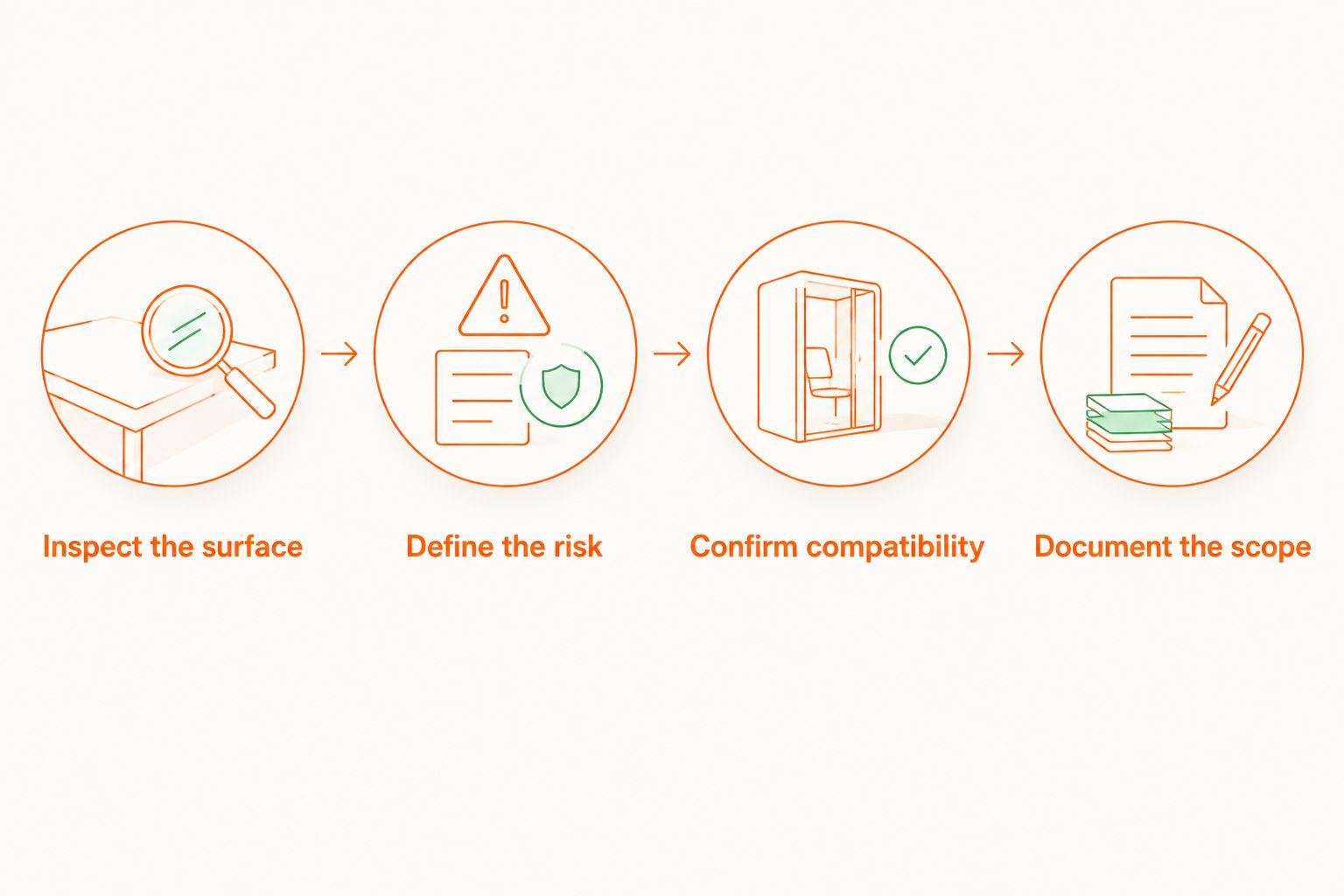
Use this sequence for a 2026 decision. It keeps the vehicle’s condition and your expectations ahead of product terminology.
- Inspect the surface. Identify existing scratches, contamination, repaint work, and the finish type before choosing a treatment.
- Define the risk. Separate stone chips, difficult cleaning, cabin heat, and appearance changes; they call for different services.
- Confirm compatibility. Ask which treatment is approved for paint, film, wraps, glass, trim, or marine surfaces involved.
- Document the scope. Record preparation, covered areas, aftercare, and any written warranty terms before authorizing work.
Be especially specific about surface compatibility. A treatment intended for automotive clear coat is not automatically appropriate for boat gelcoat, matte paint, vinyl, or an existing film. Do not transfer maintenance instructions between those surfaces without checking the specified product.
Ask for written warranty terms rather than a headline duration alone. Read what is covered, what maintenance is required, and what exclusions apply. A coating warranty should not be interpreted as insurance against every scratch, impact, or environmental mark.
Compare your protection options
Consider ceramic coating, paint protection film, and window tint for your vehicle’s specific needs.
When staying with Ceramic Pro is the right call
Stay with Ceramic Pro when the specified treatment matches your surfaces, the installer explains preparation clearly, and the maintenance requirements suit your routine. A recognizable alternative is not a reason to replace a well-matched installation plan.
If your current coating is performing as expected, ask about its care before arranging another treatment over it. Layering products without checking compatibility is not a reliable protection strategy. In 2026, the right decision is still the one tied to your vehicle’s condition and the proposed work.
FAQ
What’s the best Ceramic Pro alternative in 2026?
CoaterZ is a service alternative for Florida Gulf Coast owners comparing ceramic coating, PPF, and other protection services. Choose PPF instead of coating alone when your main priority is stone-chip protection.
Is paint protection film better than Ceramic Pro ceramic coating?
Paint protection film is the relevant choice for a physical barrier against stone chips; ceramic coating serves a different surface-protection role. Compare the specific film and coating rather than treating them as interchangeable.
Can I put ceramic coating over paint protection film?
Use ceramic coating over PPF only when the coating and film are compatible. Follow the specified products’ instructions and confirm that the combination meets the film’s care requirements.
Will ceramic coating stop salt from damaging my car?
Ceramic coating does not eliminate the need to remove salt residue. Keep washing the vehicle and address exposed or damaged surfaces separately; coated exterior paint is not the same as underbody protection.
Is wax a useful alternative to a professional ceramic coating?
Wax is useful when you prefer a regular owner-managed detailing routine. It needs renewal and does not provide a physical barrier against stone chips.
What should I ask a ceramic coating installer before booking?
Ask for the exact treatment, preparation steps, surface compatibility, coverage, and aftercare instructions. Read any written warranty terms separately so you understand the covered conditions and exclusions.
Can one coating protect my car, motorcycle, and boat?
Do not assume one coating is suitable for every vehicle and surface. Automotive clear coat, marine gelcoat, wraps, and film require their own compatibility checks.
One last thing
A ceramic coating does not hide poor paint preparation. If your vehicle already has swirl marks, separate the correction decision from the protection decision before booking. Otherwise, you risk comparing treatment names while overlooking the condition of the finish beneath them.
Ceramic coating at our CoaterZ locations
CoaterZ offers ceramic coating at all three of our Florida shops. Choose the location closest to you: