

You can drive after ceramic coating only when the installer confirms that the applied product has completed its required initial cure—not simply because application is finished. Permission to drive does not automatically mean the coating is ready for rain, washing, or unrestricted exposure; follow the product-specific aftercare instructions.
- Can you drive right after ceramic coating? Only after the installer releases the vehicle for driving.
- CoaterZ provides ceramic coating services for Florida Gulf Coast vehicle owners seeking professional paint protection.
- Driving clearance, water exposure, and the first wash are separate decisions during ceramic coating aftercare.
- Arrange sheltered parking and confirm rain precautions before collecting your freshly coated car.
Can you drive right after ceramic coating?
Drive only after your installer confirms the vehicle is ready for road use. Ceramic coating needs time to cure, and the instructions for the actual product—not a universal online countdown—determine when you can leave.
For your 2026 ceramic coating appointment, ask CoaterZ to distinguish the collection time from the water-exposure and washing instructions. These are separate milestones, even when you receive them together at handover.
| Activity | When to proceed | Benefit | Limitation |
|---|---|---|---|
| Drive home | After the installer releases the vehicle | Lets you return the car to your planned parking location | Road spray, debris, and weather remain exposure risks |
| Park under shelter | When the parking arrangement follows the aftercare instructions | Reduces direct exposure to rain and sprinklers | An open carport does not exclude wind-driven rain |
| Wash the car | After the specified no-wash period ends | Removes accumulated dirt using an approved method | Driving clearance alone does not authorize washing |
A glossy finish is not proof of a completed cure. Do not touch, rinse, or wipe a freshly coated panel to test whether it is ready.
Why this matters
For owners in Palm Harbor, Lutz, Sarasota, and the Florida Gulf Coast, collection planning includes more than the drive itself. Consider the weather along your route, the parking at your destination, and any exposure to irrigation or coastal spray.
Ceramic coating creates an easy-maintenance protective surface, but it does not eliminate the need for careful handling. During curing, the priority is following the coating manufacturer's exposure restrictions rather than testing its water repellency.
Plan the first journey around the coating's instructions, not your usual errands. A release for the trip home is not a reason to add an automatic wash, beach parking, or unnecessary stops near construction.
What must happen before you leave the installer?
Use this collection checklist for a 2026 appointment. Get clear answers before you arrange your return journey, especially if the vehicle is your daily driver.
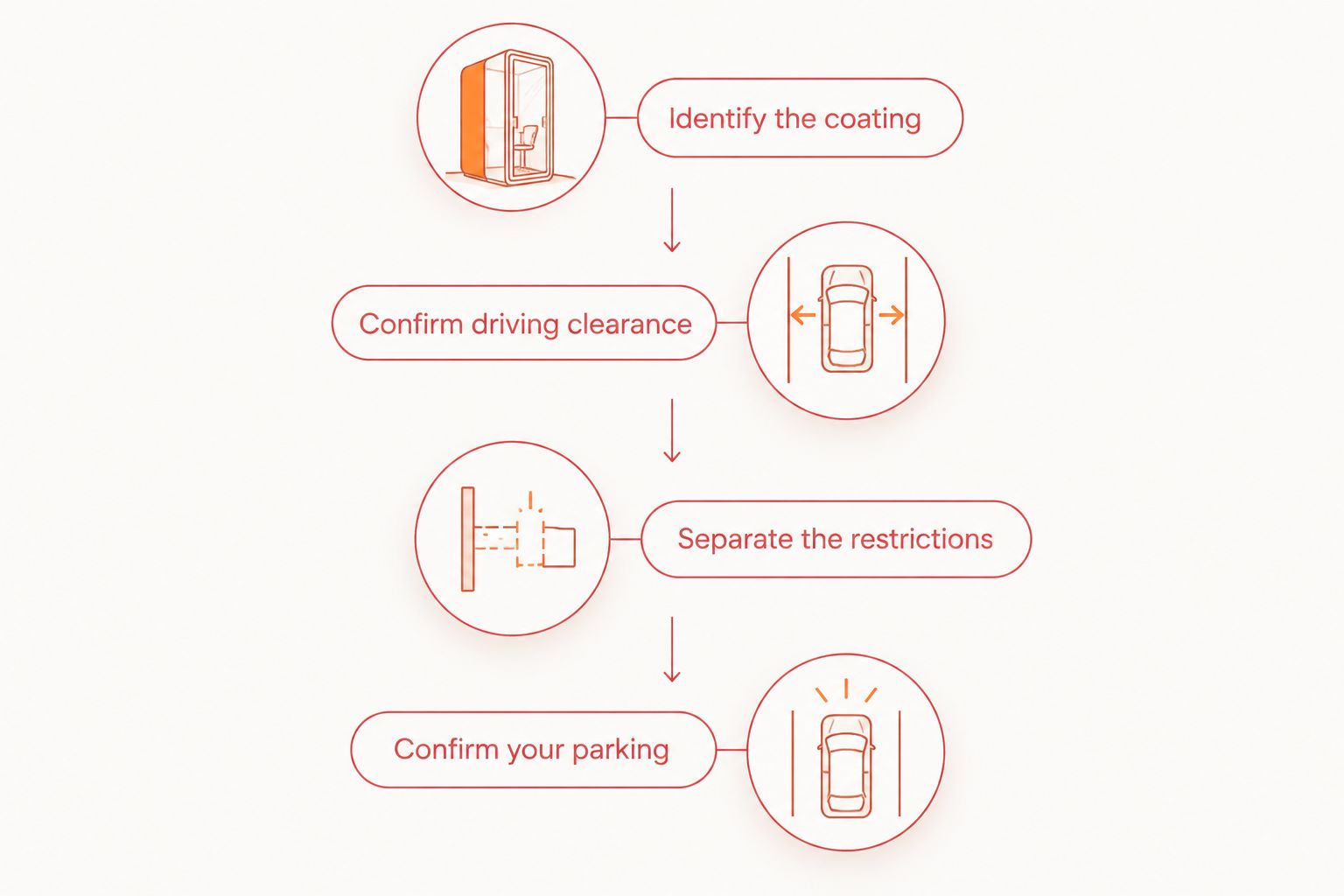
- Identify the coating. Ask for the exact product applied and its written care instructions. General advice about ceramic coatings cannot replace directions for that formulation.
- Confirm driving clearance. Ask whether the vehicle has completed the required initial cure for release. Do not infer readiness from the appearance of the paint or the end of the installation appointment.
- Separate the restrictions. Confirm when water exposure, washing, and maintenance chemicals are permitted. Ask whether any instructions differ between treated surfaces.
- Describe your journey. Tell the installer if you face highway spray, coastal roads, construction, or unavoidable outdoor parking. Explain the conditions rather than asking only whether you can drive.
- Confirm your parking plan. Identify where the car will remain after collection. Keep it away from sprinklers and other avoidable sources of water or contamination.
- Get an incident response. Ask what to do if rain, bird droppings, or another contaminant reaches the finish before the aftercare restrictions end.
Keep the instructions where you can retrieve them. A written handover is easier to follow than several remembered deadlines that all start at different points.
Driving clearance is not the same as full cure
Ceramic coatings develop their final properties through curing. A surface that is ready for a controlled journey can still have restrictions on water exposure or cleaning, depending on the product and application instructions.
That distinction matters because everyday driving involves more than moving air across the paint. You also encounter road spray, insects, dust, and whatever settles on the vehicle after you park.
Ask the installer to explain each milestone in practical terms: leaving the shop, parking outside, exposure to rain, and the first wash. Do not substitute a different coating's timetable because another owner received a shorter instruction.
What if the coating feels dry?
A dry-looking surface does not establish that the coating has reached every cure milestone. Avoid a fingertip test; touching the paint adds no reliable information about readiness.
Use the product instructions and installer release instead. Appearance, water beading, and elapsed time considered in isolation do not replace the full application requirements.
What if you need the car for work?
Tell the installer about your work schedule before booking. Include the commute, parking conditions, and any driving that exposes the vehicle to spray or heavy contamination.
If those requirements conflict with the aftercare instructions, change the collection arrangement or arrange other transport. A scheduling problem does not shorten a coating's cure requirements.
Why the safe driving time varies
There is no single release time that covers every ceramic coating appointment. Your instructions need to account for the product, the treated surfaces, and the conditions the vehicle will face.
- The coating formulation: Different products have different application and curing instructions. Use the directions for the coating actually installed.
- The treated surface: Paint, film, wraps, and other materials require compatible products and appropriate care. Do not transfer instructions automatically between them.
- The application conditions: Temperature and humidity affect coating application and curing. The installer must interpret the manufacturer's requirements for the actual conditions.
- The journey home: Rain, road spray, and debris create different exposure demands from a dry, direct trip to sheltered parking.
- The parking environment: A garage, open carport, and uncovered driveway expose the finish differently. Sprinklers also matter, even when no rain is forecast.
For a 2026 booking, give the installer your real transport and parking constraints before agreeing to collection. That makes the aftercare plan usable rather than something you discover you cannot follow.
Can you drive home if rain is forecast?
A forecast does not override the coating's water-exposure restrictions. Contact the installer before collection and ask whether the planned journey fits the product's current cure stage.
Describe the actual problem: rain on the route, wet roads, or no covered parking at home. These are different situations, and a dry departure does not guarantee a dry journey.
If the instructions require avoiding water, discuss changing the collection time or transport arrangement. Do not assume that a brief drive through rain is acceptable because the coating will eventually be water-repellent.
If unexpected rain reaches the car, follow the incident instructions supplied at handover. Avoid improvising with detergents, quick detailers, or aggressive wiping; ask the installer how to handle the exposure for that specific coating.
What changes if your car also has PPF or a wrap?
A ceramic coating appointment can involve more than painted body panels. If the vehicle also has paint protection film or a vinyl wrap, confirm which surfaces received coating and which installation instructions still apply.
Your 2026 aftercare plan should identify separate requirements for each treatment. Ceramic coating over a compatible film does not erase the film installer's washing restrictions, and coating instructions for painted panels do not automatically apply to wrapped panels.
The distinction is especially important when treatments happen together: washing after PPF installation involves the film's installation requirements as well as any restrictions associated with a coating applied over it. Use a care method that satisfies both sets of instructions rather than choosing whichever deadline ends first.
Ask about compatibility before applying a maintenance product to multiple surfaces. A cleaner or care product intended for coated paint is not automatically approved for every film, wrap, trim piece, or finish on the vehicle.
Ceramic coating and PPF also address different protection needs. A coating is not a substitute for the physical barrier of film against road debris, and neither treatment makes careless washing harmless.
When can you wash the car after driving it home?
Driving permission does not establish the first-wash date. Use the washing restriction specified for your coating, even if the vehicle collects dust before that period ends.
Before collection, clarify what the installer means by avoiding washing. Ask separately about rinsing, shampoo, waterless products, drying towels, and automatic washes rather than treating them as interchangeable.
The guide to washing a car after ceramic coating addresses that separate aftercare decision. Keep the coating's written instructions alongside your collection details so you do not confuse permission to drive with permission to clean.
When washing is permitted, use the approved method and compatible products. Ceramic coating does not prevent scratches caused by dragging dirt across the finish, so careful washing remains part of long-term paint protection.
Do not perform a hose test simply to see the beading. Water repellency is not a reason to introduce water before the coating's instructions allow it.
What should you do about bugs, droppings, or road spray?
Contamination creates a practical conflict: you do not want material sitting on the finish, but you also need to respect curing restrictions. The correct response depends on the coating and the contaminant.
Ask for a spot-cleaning procedure before you leave. Specify whether you should contact the installer, return for inspection, or use an approved product and method at home.
Never scrape dried material from freshly coated paint. Avoid household cleaners and unapproved solvents, and do not scrub a mark simply because it remains visible after a gentle attempt.
For Gulf Coast driving, include salt-containing spray in that conversation. A coating is not permission to leave coastal contamination indefinitely, but an immediate rinse is not automatically compatible with every cure stage either.
What should you ask before booking ceramic coating?
CoaterZ ceramic coating services suit Florida Gulf Coast owners seeking professional paint protection. The decision still needs an aftercare plan that fits your vehicle, driving needs, and parking environment.
For your 2026 appointment, ask these questions before committing to collection:
- Which coating will be applied, and to which surfaces?
- When will the installer confirm the car is ready to drive?
- What water-exposure and washing restrictions apply afterward?
- What should you do if the forecast changes?
- Which maintenance products and cleaning methods are compatible?
- Who should you contact about contamination during curing?
The benefit of ceramic coating is a protective surface that supports easier maintenance. The limitation is equally important: it still needs correct curing, careful cleaning, and realistic expectations about road wear.
FAQ
Can I drive my car immediately after ceramic coating?
Drive only after the installer confirms the coating has completed the initial cure required for release. Finished application and permission to drive are not the same milestone.
Does driving home mean my ceramic coating is fully cured?
Driving clearance does not automatically mean the ceramic coating is fully cured. Continue following the product-specific restrictions on water, washing, and maintenance chemicals.
Can I drive a freshly ceramic-coated car in the rain?
Drive in rain only when the coating’s water-exposure instructions permit it and the installer confirms the journey is appropriate. Discuss wet roads and parking conditions before collection.
Can I park outside after ceramic coating?
Park outside only when that exposure fits the coating’s aftercare instructions. Rain, wind-driven spray, sprinklers, and contamination all affect the parking plan.
Can I wash my car as soon as I drive it home?
Do not wash the car until the coating’s specified washing restriction ends. Permission to drive does not authorize shampooing, rinsing, or applying maintenance products.
What should I do if bird droppings land on a fresh ceramic coating?
Follow the installer’s product-specific contamination procedure and contact the installer if the instructions do not cover the incident. Do not scrape, scrub, or apply an unapproved cleaner to the finish.
One last thing
Check where your car will spend its first night before you collect it. A direct drive home solves little if the parking space sits beside an active sprinkler.
Move the vehicle's planned parking location or change the collection arrangement before the appointment. The best aftercare plan is one you can actually follow, from leaving the installer to completing the first approved wash.