

Yes, you can ceramic coat a car with paint damage when the remaining finish is sound, but coating will not repair scratches, stone chips, peeling clear coat, or rust. Light surface defects often need polishing first; missing paint and failing finishes need a repair decision before protection. Coat a stable finish you are prepared to keep—not damage you expect the coating to hide.
- Can you ceramic coat a car with paint damage? Yes, but only after assessing whether the finish is sound.
- Ceramic coating protects the prepared surface; paint correction improves defects within the existing finish.
- Peeling clear coat, exposed metal, and active rust require repair decisions before coating.
- Coaterz ceramic coating services suit Gulf Coast vehicle owners seeking professional paint protection, not a substitute for repainting.
Can you ceramic coat a car with existing paint damage?
Yes for stable paint with acceptable cosmetic defects; repair first for paint that is peeling, corroding, or losing adhesion. The deciding factor is the condition of the surface, not simply whether the vehicle has scratches.
For a 2026 coating appointment, separate appearance problems from structural finish failure. A swirl mark in intact clear coat presents a different problem from a chip exposing metal. Applying the same preparation to both ignores what each surface needs.
| Existing condition | Best for | Recommended route | Main limitation |
|---|---|---|---|
| Light swirls or wash marks | Owners seeking a cleaner-looking finish | Assess correction, then coat sound paint | Polishing removes some existing finish; correction must stay conservative |
| Deep scratches with stable surrounding paint | Owners willing to retain visible defects | Assess repair or accept the mark before coating | Coating does not replace missing color or clear coat |
| Stone chips | Owners addressing isolated impact damage | Inspect exposed layers and decide on touch-up or repair | Touch-up does not automatically produce an invisible repair |
| Peeling or flaking clear coat | Owners prioritizing finish stability | Repair the failing finish before coating | Coating cannot restore adhesion between failing paint layers |
| Rust or exposed metal | Owners addressing corrosion risk | Obtain a suitable repair assessment first | Coating is not a rust-removal or body-repair treatment |
Why this matters on the Florida Gulf Coast
Florida sun, salt exposure, and road debris make paint protection relevant, but they do not turn ceramic coating into a repair material. You still need sound paint underneath and a washing routine that removes contamination rather than grinding it into the finish.
For owners in Palm Harbor, Lutz, and Sarasota, Coaterz offers ceramic coating and other automotive protection services. Choose the service around the problem: easier surface maintenance, impact protection, and paint restoration are different objectives.
Your 2026 protection plan should identify existing damage before installation. That gives you a clear record of what will remain visible and prevents gloss improvement from being confused with scratch removal.
Light swirls: correction first, coating second
Fine wash marks often sit within the clear coat rather than extending through the color layer. Paint correction uses abrasives to refine that existing surface; ceramic coating goes onto the prepared finish afterward.
Best for: owners whose paint is intact but looks hazy or swirled under direct light. Ask for a test area before agreeing to correction across the vehicle. The result shows what improvement is achievable without treating every mark as something that must disappear.
The benefit is a more consistent appearance beneath the coating. The trade-off is that polishing removes material from a finite paint layer, so aggressive correction is not automatically better craftsmanship.
On black and other dark finishes, inspect the result under lighting that reveals swirls, not just lighting that makes the panel look glossy. Accepting a few deeper marks can be the better decision when removing them would require excessive abrasion.
Deep scratches and chips: decide what you can live with
A ceramic coating does not fill a stone chip with matching paint or rebuild a scratch that extends through the finish. A deeper defect can remain visible even when the surrounding panel looks glossier and sheds water more readily.
Best for: owners willing to distinguish cosmetic compromise from damage that needs repair. A stable scratch can remain as an accepted defect, while exposed metal or corrosion calls for a separate repair assessment.
Touch-up can address exposed areas, but color match, texture, and repair visibility still matter. Ask to see the repaired surface before coating rather than assuming the coating will blend the repair into the surrounding paint.
If highway impacts are your main concern, consider paint protection film as a separate protection option. Film provides a physical barrier, but it is not a reason to ignore loose paint, poor adhesion, or unresolved damage beneath it.
Peeling clear coat and rust: repair before protection
Peeling clear coat is a failure of the finish, not simply a dirty or dull surface. A coating applied over a failing layer cannot reattach that layer to the paint underneath.
Best for: owners prepared to resolve finish failure before paying for surface protection. Have flaking areas, lifting edges, blistering, and suspected corrosion assessed for repair. Avoid polishing a visibly failing finish as though it were ordinary oxidation.
Rust also needs its own diagnosis. Orange deposits sitting on top of paint are not the same as corrosion developing where the finish has been breached; a surface inspection must distinguish them before treatment.
Repair adds work before coating, but it addresses the underlying problem. Coating first leaves that problem unresolved and complicates the sequence when the panel later needs refinishing.
Repainted panels: follow the refinisher's instructions
A repainted panel is not automatically unsuitable for ceramic coating. Its readiness depends on the repair materials, their condition, and the refinisher's instructions for applying protective products.
Best for: owners coordinating bodywork and protection as separate stages. Tell the coating installer which panels were repaired, when the work occurred, and whether you received restrictions on washing, polishing, or sealing the finish.
Do not use a universal waiting period taken from an unrelated paint system. Ask the refinisher to confirm when the specific repair can receive the intended coating, and pass that information to the installer.
For a repair completed in 2026, keep the paintwork documentation with the coating instructions. That makes later maintenance decisions easier when different panels have different repair histories.
Why the right preparation varies
The correct preparation depends on the surface in front of the installer. These factors change the decision:
- Damage depth: a mark within clear coat needs a different response from missing paint or exposed metal.
- Finish stability: firmly attached paint and peeling paint are not interchangeable coating substrates.
- Previous correction: earlier sanding or polishing affects how much further correction is sensible.
- Repair history: repainting and touch-up introduce material-specific preparation and curing requirements.
- Your appearance standard: accepting a stable defect avoids chasing perfection at the expense of the remaining finish.
- Surface type: glossy paint, matte finishes, film, and vinyl require compatible products and preparation methods.
A paint-thickness reading can inform an assessment, but it does not make every scratch safe to remove. Readings require interpretation, and the instrument and substrate affect what is measured.
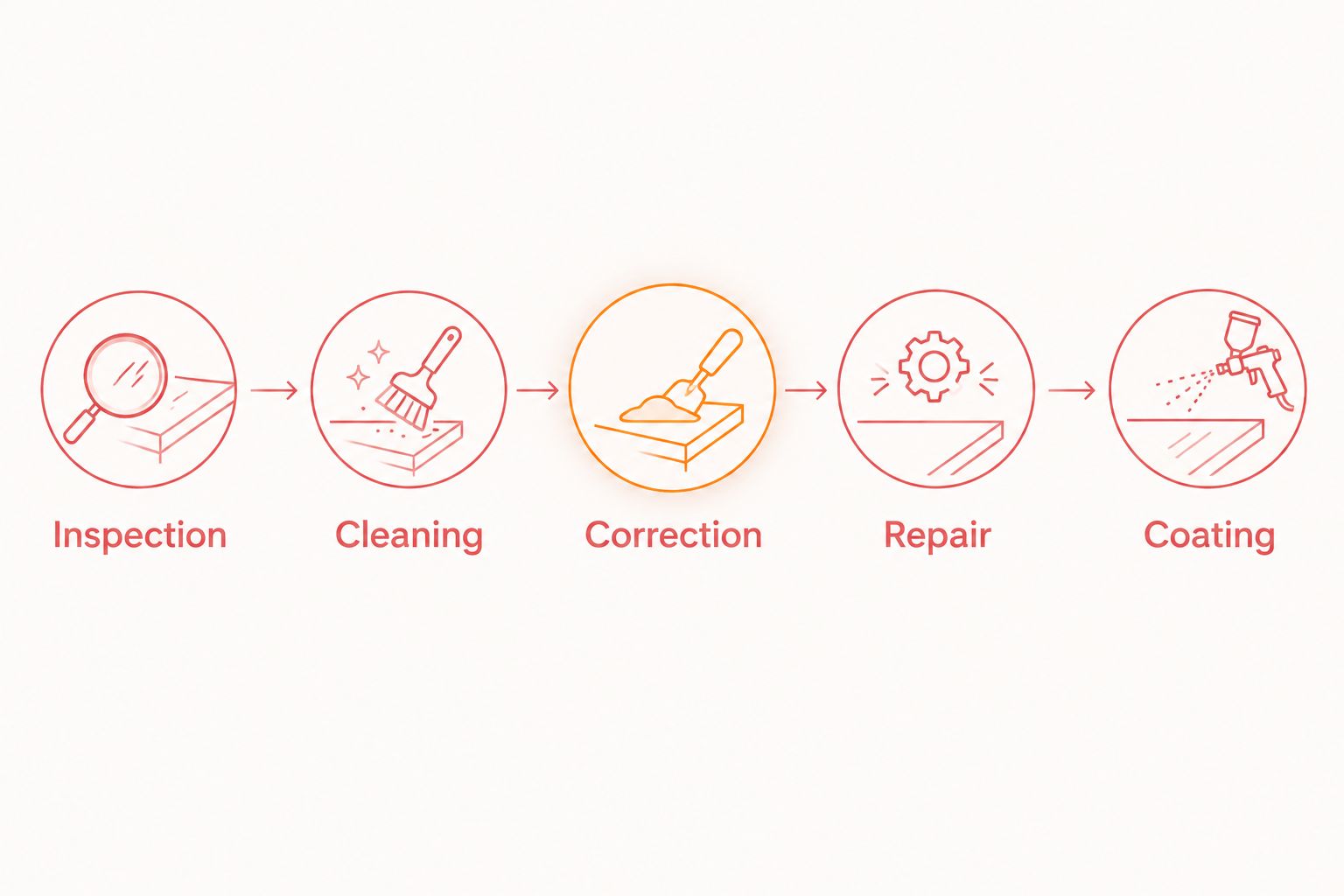
A practical inspection-to-coating workflow
Use these 5 steps to keep repair, appearance improvement, and protection separate. The goal is a documented decision, not an automatic recommendation to polish every panel.
- Inspection: examine clean paint under direct and diffuse light. Identify swirls, chips, peeling areas, prior repairs, and exposed substrate.
- Cleaning: remove surface contamination with methods appropriate to the finish. Reassess marks after cleaning because deposits and actual paint damage need different treatment.
- Correction: test an appropriate polishing approach on sound glossy paint. Agree on the defects that can remain rather than demanding complete removal.
- Repair: resolve damage that requires bodywork or refinishing. If repair is necessary, complete it before returning to final coating preparation.
- Coating: apply a compatible coating only after the surface is ready. Follow the selected system's application, curing, and maintenance instructions.
The repair step is a decision gate, not a requirement for every vehicle. If inspection identifies finish failure immediately, move to repair rather than trying correction first.
Ask for the agreed preparation scope in writing. It should distinguish polishing from paint repair and identify which defects will remain after installation.
What should you ask before approving the work?
For a 2026 estimate, ask the installer to describe the condition of each affected panel. A useful discussion covers what can be improved safely, what needs repair, and what will still be visible afterward.
Use these questions to keep that discussion concrete:
- Which scratches are in the clear coat, and which appear deeper?
- Are any areas peeling, lifting, or showing exposed substrate?
- What does the correction test area show?
- Which marks will remain, and why?
- Does any previous repair need approval from the refinisher?
- What washing and contamination-removal instructions apply to the chosen coating?
Judge the plan by its treatment of the damaged areas, not just its description of the finished gloss. A clear limitation is more useful than a promise that coating will make every panel look new.
Can ceramic coating hide scratches?
Ceramic coating does not reliably hide scratches or replace paint correction. Changes in gloss can change how a mark looks, but the underlying defect remains unless it is corrected or repaired.
If scratch visibility determines whether you will be satisfied, inspect the prepared paint before coating. Do not make the coating responsible for an appearance result that preparation has not achieved.
Can you coat only the undamaged panels?
You can consider coating sound panels while leaving a damaged panel for repair. Coordinate that plan with the repairer because later refinishing involves surface preparation and work around adjacent areas.
Document which panels receive protection and which do not. That keeps future washing, repair, and reapplication decisions tied to the actual condition of each panel.
Is paint protection film better for existing damage?
Paint protection film is better suited to providing a physical barrier against road impacts, but it does not repair existing paint damage. Coating serves a different role: surface protection and easier maintenance rather than impact cushioning.
Neither treatment makes loose or failing paint a suitable foundation. Choose the protection after deciding how the existing damage will be handled.
Maintenance still matters after coating
A ceramic-coated car still needs washing. Remove salt residue, bird droppings, insects, and other contamination with methods compatible with the selected coating rather than letting deposits accumulate.
Avoid dry-wiping dusty paint and using abrasive tools to chase a spot. Those habits can introduce fresh marks even when a protective coating is present.
Keep the 2026 care instructions supplied for your installation, including curing restrictions and approved cleaning methods. If water behavior changes, have the surface assessed before assuming the coating needs polishing or replacement.
FAQ
Can you ceramic coat a car with paint damage without fixing every scratch?
Yes, you can coat sound paint while accepting some scratches. Confirm that the remaining defects are stable and understand that coating will not remove them.
Will ceramic coating stop clear coat from peeling?
No, ceramic coating will not stop a failing clear-coat layer from peeling. Have the finish assessed for repair before applying protection.
Does my car need paint correction before ceramic coating?
Your car needs paint correction only when the surface condition and your appearance goals justify it. Inspection and a test area help establish a safe, realistic result.
Can ceramic coating go over touch-up paint?
Ceramic coating can be considered over touch-up paint once the repair is ready and compatible with the selected coating. Follow the repair material’s instructions rather than assuming it is ready because it feels dry.
Can I ceramic coat a matte-painted car with scratches?
Matte paint requires a coating approved for that finish, and conventional gloss-restoring polishing can alter its appearance. Have scratches assessed without treating the panel like glossy clear coat.
Will ceramic coating stop rock chips on Florida highways?
Ceramic coating is not a rock-chip barrier. Consider paint protection film for physical impact protection, with existing paint damage assessed before installation.
Can I ceramic coat a car immediately after repainting?
Do not coat a repainted panel until the refinisher confirms it is ready for the intended coating. Readiness depends on the repair system and its instructions, not a universal waiting period.
One last thing
The best finish is not always the finish with every scratch removed. On previously polished or repaired paint, preserving sound material can matter more than eliminating the last visible mark.
Before approving work, identify the defect that bothers you most and ask whether removing it is sensible. That single discussion can separate a realistic protection plan from unnecessary correction.