

Yes, you can ceramic coat a wrapped car when the coating is explicitly compatible with the installed vinyl and its finish. The wrap must be clean, firmly bonded, and free of deterioration before application. A ceramic coating can make routine cleaning easier, but it does not repair failing vinyl, prevent stone chips, or eliminate washing.
- Can you ceramic coat a wrapped car? Yes, with a coating approved for that vinyl and finish.
- CoaterZ provides ceramic coating and vinyl wrap services for Florida Gulf Coast vehicle owners.
- Matte and satin wraps need finish-compatible products; test before treating visible panels.
- Repair lifting edges and damaged vinyl before coating. Ceramic coating is not a repair layer.
Can you ceramic coat a car that already has a vinyl wrap?
An existing wrap can accept a ceramic coating; its condition and product compatibility decide whether it should. An older installation is not automatically unsuitable, and a new installation is not automatically ready. Follow the wrap manufacturer's instructions and the coating manufacturer's application requirements together.
CoaterZ provides both ceramic coating and vinyl wrap services for Gulf Coast vehicle owners. For your 2026 protection plan, identify the actual film before choosing a coating rather than treating every wrapped panel like painted metal.
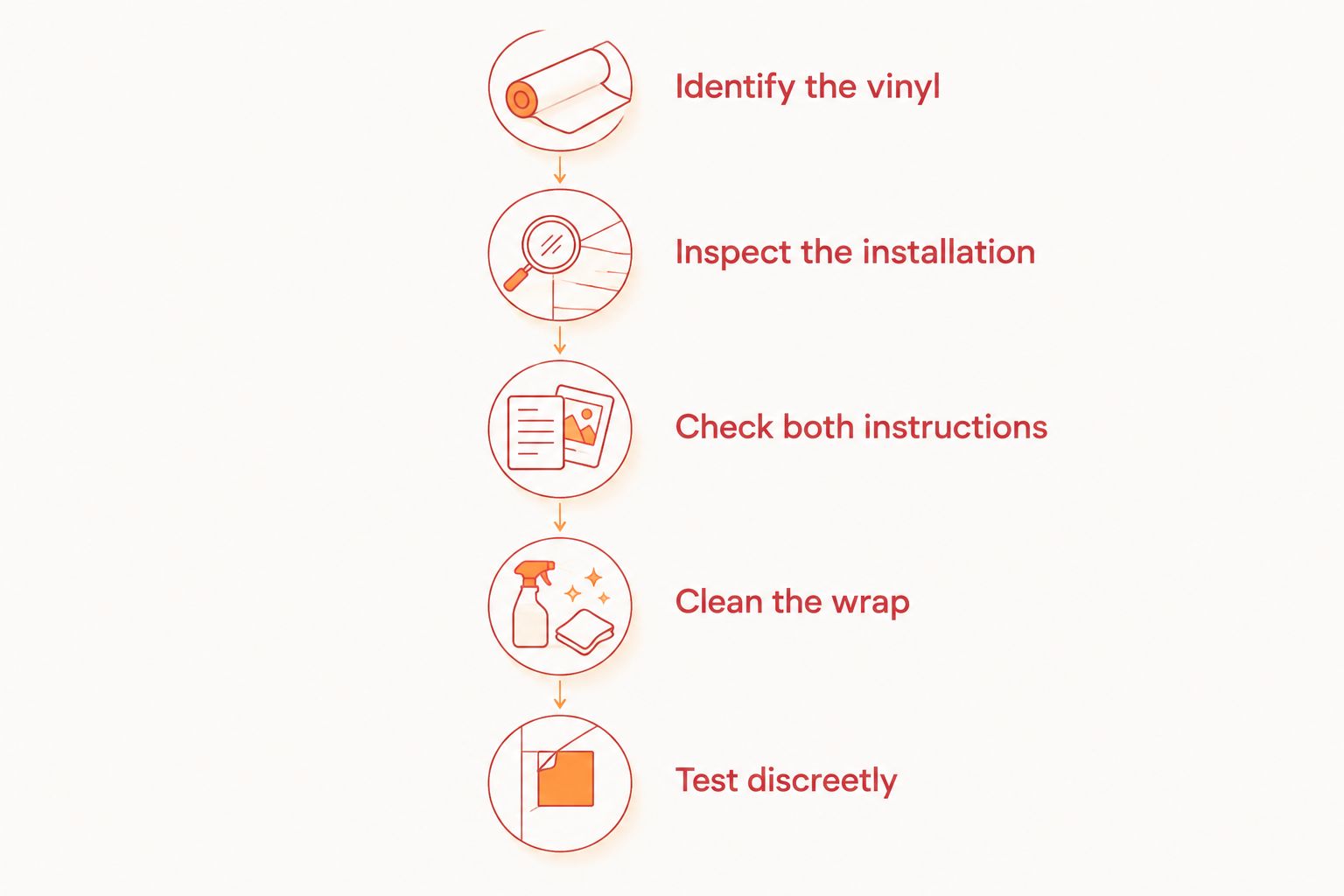
Use this sequence before approving the work:
- Identify the vinyl. Find the manufacturer, film series, finish, and installation records where available. A color description alone does not establish compatibility.
- Inspect the installation. Look for lifting edges, open seams, cracking, discoloration, and damaged sections. Resolve installation or material problems before adding another surface treatment.
- Check both sets of instructions. Confirm that the coating is intended for the specific vinyl surface. Check preparation, application, curing, and aftercare requirements rather than relying on a general ceramic label.
- Clean without changing the finish. Remove contamination using products and methods approved for the wrap. Do not assume a paint-correction process is suitable for vinyl.
- Test a discreet area. Assess the appearance under suitable lighting before proceeding across visible panels. Continue only when the test and manufacturer guidance support the application.
The coating goes on the exposed wrap surface, not directly onto the paint underneath. That distinction matters: the application needs to suit the vinyl, while the original paint remains beneath the film and adhesive.
Why this matters for Florida vehicle owners
Florida Gulf Coast driving exposes vehicles to strong sunlight, rain, road debris, and coastal salt. Those are different problems, not a single protection requirement. Easier cleaning does not equal impact protection, and water beading does not prove that a wrap is protected from every form of weathering.
For owners in Palm Harbor, Lutz, and Sarasota, the practical goal is a finish you can maintain without damaging the film. Choose a compatible coating to support cleaning, not to compensate for neglected washing or deteriorating vinyl.
A sound 2026 decision separates appearance, maintenance, and physical protection. Ask which benefit the proposed treatment actually provides and which benefits depend on the underlying wrap, its installation, and your care routine.
Gloss vinyl wraps: preserve clarity without assuming paint compatibility
A gloss wrap already has its own surface appearance. A compatible coating can add water-repellent behavior and support easier contaminant removal, but the result depends on the film and coating combination. Do not promise yourself a particular gloss increase before a test application.
Best for: owners who want to maintain a gloss wrap and simplify routine cleaning. The limitation is that coating does not remove scratches, restore damaged film, or straighten distorted vinyl.
Preparation deserves particular attention. Paint correction removes material from a painted surface; vinyl does not give you permission to use the same abrasive process. Avoid machine polishing unless the film manufacturer explicitly permits the proposed method.
If a gloss wrap looks cloudy, first determine whether the cause is removable contamination or damage to the film. Covering an unresolved appearance problem with a coating is not a correction strategy.
Matte and satin wraps: protect the intended finish
Matte and satin vinyl need products approved for their appearance, not merely products described as suitable for vehicles. A cleaner, polish, or coating that changes reflectivity can undermine the finish you selected. Inspect the test area from different angles before treating an entire panel.
Best for: owners committed to preserving a low-sheen appearance with finish-specific care. The trade-off is that appearance correction is constrained; ordinary polishing is not a safe default for a matte or satin surface.
| Wrap finish | Best for | Coating decision | Main limitation |
|---|---|---|---|
| Gloss vinyl | Owners maintaining a reflective finish | Use a vinyl-compatible coating and assess the test area | Coating does not repair scratches or cloudy, damaged film |
| Matte vinyl | Owners preserving a non-gloss appearance | Confirm explicit matte-film compatibility | An unsuitable treatment can change the appearance |
| Satin vinyl | Owners preserving a controlled sheen | Confirm compatibility with the specific satin film | Uneven application can make appearance differences conspicuous |
Gloss, matte, and satin are appearance categories, not complete compatibility specifications. Your vinyl wrap selection should account for the manufacturer's care requirements before you choose additional treatments.
Why coating suitability varies between wrapped cars
The same coating recommendation does not fit every installation. These factors determine whether to proceed, change the preparation, or repair the wrap first:
- Film identity. The manufacturer and film series establish the relevant technical and care instructions. An unknown wrap needs identification rather than a guessed approval.
- Surface finish. Gloss, matte, satin, and textured surfaces require appearance-specific checks. A successful application on one finish does not establish suitability for another.
- Existing condition. Lifting edges, brittleness, cracking, and discoloration are reasons to assess the film itself. Coating is not a substitute for replacing a failed section.
- Previous treatments. Wax, sealant, dressing, or an earlier coating can complicate preparation. Identify what is present before adding another product.
- Installation readiness. A newly installed film must meet its manufacturer's requirements before additional treatment. Do not substitute a universal waiting period for the actual instructions.
- Application environment. Surface temperature, moisture, and curing conditions must meet the coating instructions. Florida weather does not override those requirements.
For a 2026 appointment, bring whatever installation paperwork and care information you have. Useful records reduce guesswork about the surface being treated and help keep the preparation appropriate to that film.
What does ceramic coating do for a vinyl wrap?
A compatible ceramic coating creates a treated surface that can repel water and make some contamination easier to remove. Hydrophobic means water-repellent; it does not mean dirt-proof, stain-proof, or maintenance-free. You still need to wash and dry the vehicle correctly.
The strongest reason to coat sound vinyl is easier maintenance, not an expectation of damage-proof bodywork. Bird droppings, insect residue, and other contamination still require prompt, wrap-safe cleaning. Do not leave deposits in place because water beads around them.
| Protection approach | Best for | Main benefit | Important limitation |
|---|---|---|---|
| Vinyl wrap alone | Owners primarily changing vehicle appearance | Changes the visible color or finish | Still requires film-specific cleaning and care |
| Ceramic coating over compatible vinyl | Owners prioritizing easier wrap maintenance | Adds a water-repellent treated surface | Does not stop stone chips or repair vinyl damage |
| Paint protection film | Owners prioritizing a physical protective film | Provides a film barrier against road wear and minor impacts | Is a different material category, with its own installation and care requirements |
Do not treat ceramic coating and paint protection film as interchangeable. If highway debris is your main concern, discuss the physical protection requirement separately rather than asking a thin surface treatment to perform the job of protective film.
Should you coat a wrap with lifting edges or faded panels?
No—assess and resolve damaged vinyl before coating it. A ceramic coating does not rebond lifting adhesive, close seams, or restore a deteriorated film surface. Applying it over a defect leaves the underlying problem in place.
Ask the installer to distinguish contamination from material failure. A dirty panel needs an appropriate cleaning assessment; a cracked or failing panel needs a repair or replacement decision. Those are different scopes of work.
For a mixed-condition vehicle, document which sections remain sound and which need attention. Do not approve whole-car coating simply because most panels look acceptable from a distance.
How should you maintain a ceramic-coated wrap in 2026?
Wash a ceramic-coated wrap using methods approved by both the vinyl manufacturer and the coating manufacturer. Start with gentle cleaning rather than stronger chemicals or more aggressive tools. A coating changes the treated surface; it does not remove the wrap's underlying care restrictions.
Build your 2026 maintenance routine around these habits:
- Rinse loose contamination first. Avoid dragging grit across the film with a wash mitt or drying towel.
- Use compatible wash products. Do not assume a cleaner approved for bare paint is approved for your wrap and coating combination.
- Treat edges carefully. Keep concentrated pressure-washer spray away from seams and lifting areas. Follow the film manufacturer's equipment guidance.
- Remove deposits promptly. Use an approved method for insects, bird droppings, and salt residue instead of aggressive scrubbing.
- Dry the surface. Water repellency does not prevent mineral deposits when water evaporates on the vehicle.
- Inspect while cleaning. Look for edge movement, staining, uneven appearance, and damage rather than checking water beading alone.
Shade and a cool surface make it easier to control cleaning-product behavior. Follow the stated application conditions, especially when direct Florida sun heats body panels.
If water behavior changes, ask for a surface assessment before buying another treatment. Contamination and coating condition need to be distinguished; reduced beading alone does not identify the cause.
What should you ask before booking professional application?
Ask the shop to explain the preparation and compatibility decision in plain language. You should understand what will touch the wrap, what appearance changes are acceptable, and how to care for the finished surface. A product name alone does not answer those questions.
CoaterZ is best for Florida Gulf Coast vehicle owners seeking professional ceramic coating and vinyl wrap services. For an already-wrapped vehicle, the decision still starts with film identification and condition—not an assumed lifespan or universal treatment package.
Use these questions to define the work:
- Which film and finish are installed, and how will compatibility be confirmed?
- What cleaning and preparation methods will be used on the vinyl?
- Where will the appearance test be performed?
- Which damaged areas need attention before application?
- What curing and washing instructions apply to the selected coating?
- What limitations or written coverage terms apply to this specific installation?
Keep the written aftercare instructions with your 2026 vehicle records. If you later change a wrapped panel, share those records before further treatment so the installer can assess the new surface separately.
FAQ
Can you ceramic coat a wrapped car that was wrapped a while ago?
Yes, an existing wrap can be coated if its condition and the coating’s compatibility support application. Inspect for deterioration and identify previous surface treatments before preparation.
Will ceramic coating make my matte wrap shiny?
An unsuitable coating can change a matte wrap’s appearance. Use a product explicitly approved for the film and finish, then test a discreet area before full application.
Can ceramic coating fix scratches in a vinyl wrap?
No, ceramic coating does not repair scratches in vinyl. Have the film assessed before attempting polishing or other correction methods that could change its finish.
Does ceramic coating stop stone chips on a wrapped car?
No, ceramic coating is not stone-chip protection. If impact resistance is the priority, discuss paint protection film as a separate protection requirement.
Can I pressure wash a ceramic-coated vinyl wrap?
Follow the vinyl manufacturer’s pressure-washing instructions and the coating’s care guidance. Keep concentrated spray away from edges and seams, and do not pressure wash lifting film.
How long should I wait after wrapping before applying ceramic coating?
Use the waiting and application requirements specified for the installed film and selected coating. There is no universal interval that establishes compatibility for every combination.
Can CoaterZ help with ceramic coating and vinyl wraps?
CoaterZ provides ceramic coating and vinyl wrap services for vehicle owners in the Tampa Bay and Florida Gulf Coast area. For an existing wrap, establish the film identity, finish, and condition before choosing treatment.
One last thing
The appearance test is a decision point, not a formality. A treatment that looks acceptable straight on can reveal a sheen difference from another angle, especially on matte or satin vinyl. Inspect the test before approving visible panels; it is easier to reject an unsuitable combination before the whole vehicle is treated.