

Do not apply spray on bedliner over rust that is loose, flaking, or weakening the truck bed; remove corrosion and prepare sound metal before coating. A rust converter or primer is acceptable only when the selected bedliner system explicitly permits it. Bedliner protects a properly prepared surface—it does not restore metal lost to corrosion.
- Spray on bedliner over rust is not a repair: remove loose corrosion and inspect the metal first.
- CoaterZ offers professional bedliner services for Florida Gulf Coast vehicle owners.
- Rust converters and primers must be compatible with the selected spray-on bedliner system.
- Perforated or weakened truck-bed metal needs repair before protective coating.
Why this matters
A textured finish can hide corrosion without fixing it. If the material beneath the liner separates from the steel, the coating loses its foundation, even when the visible surface initially looks intact.
For Palm Harbor, Lutz, Sarasota, and Florida Gulf Coast owners planning protection in 2026, the priority is the condition beneath the finish. Salt contamination, trapped moisture, cargo abrasion, and damaged paint all deserve attention before application. CoaterZ offers bedliner and undercoating services, but those treatments serve different surfaces and should not be treated as interchangeable.
Choose preparation and surface compatibility before choosing texture or appearance. A clean-looking bed is not proof that the underlying steel is ready for coating.
Can spray-on bedliner be applied over existing rust?
Not directly over loose or active corrosion. The correct route depends on whether rust is superficial, has left deeper pits, or has weakened the panel. The bedliner manufacturer's preparation instructions determine the acceptable substrate, primer, and application conditions.
Use this condition-based comparison when discussing a 2026 installation:
| Existing condition | Recommended approach | Best for | Benefit | Limitation |
|---|---|---|---|---|
| Light surface rust on sound steel | Remove corrosion and prepare the substrate as specified | Structurally sound beds with localized oxidation | Creates a sound foundation for coating | Cleaning alone does not remove rust |
| Pitted steel without perforation | Remove corrosion from pits and assess remaining metal | Beds needing closer inspection before coating | Exposes the actual surface condition | Pits can retain corrosion and contamination |
| Flaking scale or lifting paint | Strip unstable material and inspect underneath | Beds with visible coating breakdown | Removes material that cannot support adhesion | Hidden damage can extend beyond the visible patch |
| Holes, weakened seams, or substantial metal loss | Repair the affected metal before coating | Beds with deterioration beyond a surface problem | Addresses damage that bedliner cannot repair | Coating must wait until repairs are suitable |
| Rust-treated or primed metal | Confirm compatibility before applying bedliner | Sound metal prepared with an approved system | Allows a specified treatment sequence | Not every converter or primer is an acceptable base |
Orange staining does not establish how much metal remains. Conversely, a small visible patch does not establish that the underside or adjoining seam is sound. Inspection must extend beyond the discoloration.
Surface rust: remove corrosion before coating
Surface rust is oxidation on the exposed steel. Where the metal remains sound, preparation normally involves removing corrosion and creating the surface profile required by the coating manufacturer—the fine texture that helps the coating grip.
Do not confuse degreasing with rust removal. Cleaner removes compatible contaminants; it does not turn rust into sound steel. Likewise, scuffing nearby paint does not prepare corrosion hidden inside a pit or beneath a lifting paint edge.
Ask the installer to distinguish between retained factory paint and exposed metal. Each substrate needs its own approved preparation, and the transition between them must be stable. A liner applied across a weak paint edge is still attached to a weak layer.
Pitted metal: inspect before hiding the surface
Pitting leaves recesses after corrosion has consumed part of the steel. A bed can look cleaner after abrasion while retaining rust in those recesses, particularly around ribs, seams, and damaged mounting areas.
The decision is not simply whether the coating will cover the pits. It is whether corrosion has been removed or treated as the system requires, and whether enough sound metal remains for the bed's intended use.
Avoid cosmetic filling as a substitute for assessment. Any filler, sealer, or repair material beneath the liner needs explicit compatibility with the coating system. Its appearance after sanding does not establish suitability.
Perforated metal: repair comes before bedliner
Holes, crumbling edges, and weakened seams are repair issues, not coating issues. Spray-on bedliner does not replace missing steel or restore the load-bearing capacity of a deteriorated panel.
A qualified repair professional should assess affected panels, seams, and attachment areas before coating proceeds. If repair involves welding, replacement panels, or refinishing, the completed repair must meet the liner system's substrate and preparation requirements.
Do not use a continuous-looking liner as evidence of a structurally sound bed. The coating can conceal the very areas you need to inspect, making repair-first documentation especially useful.
What should happen before a rusty truck bed is coated?
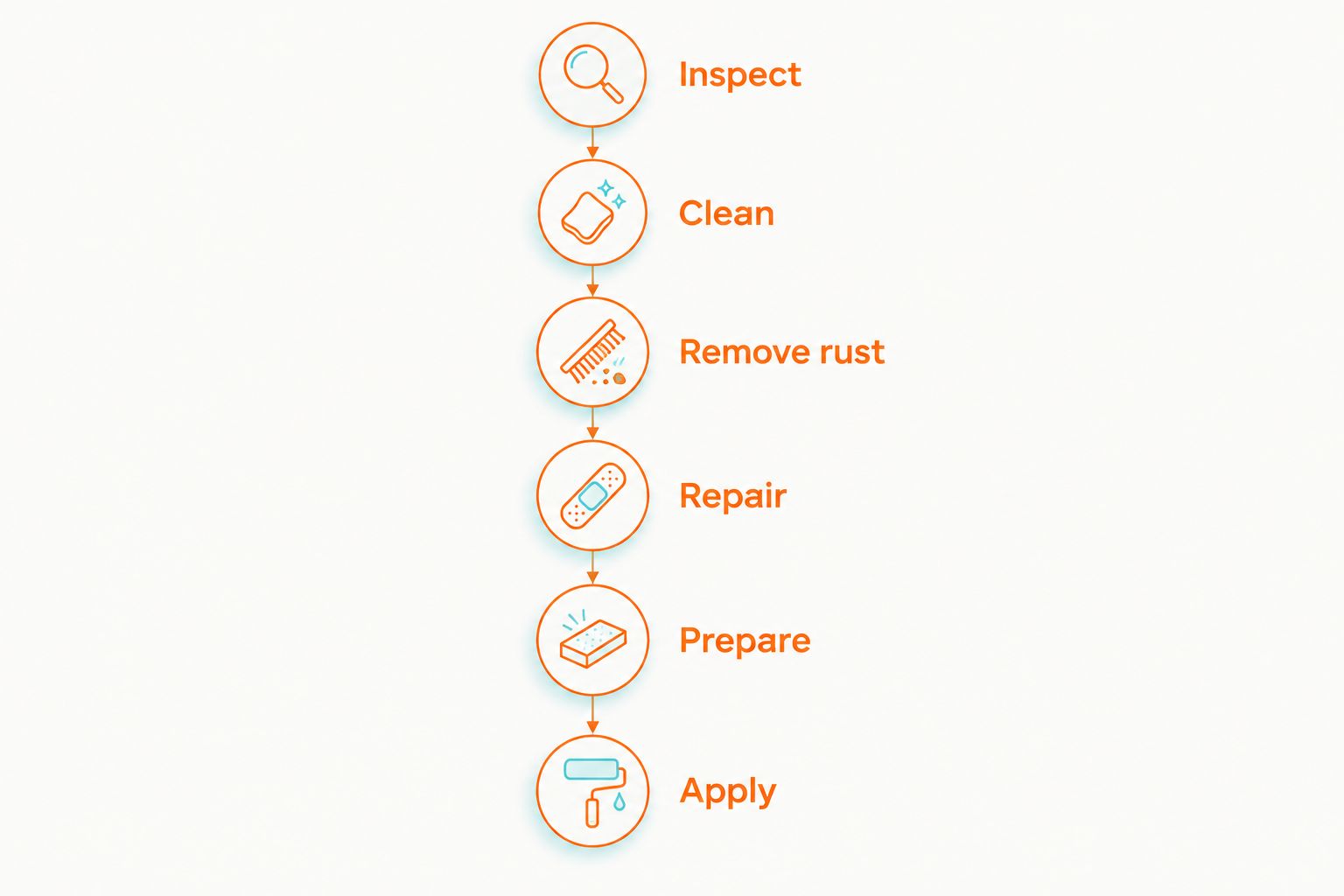
A sound 2026 installation plan follows the substrate, not a universal shortcut. The exact abrasives, cleaners, primers, and timing must come from the selected system's technical instructions.
- Inspect. Examine the bed floor, ribs, seams, edges, and accessible underside. Identify loose paint, existing liner damage, corrosion, and signs that metal repair is necessary.
- Clean. Remove cargo debris and contamination using the specified cleaning process. Address salt residue rather than assuming sanding or a solvent wipe removes every contaminant.
- Remove rust. Remove unstable paint, loose scale, and corrosion using the approved preparation method. Reassess exposed areas because cleaning can reveal deeper damage.
- Repair. Complete necessary metal repairs before coating. Confirm that repair materials and surrounding finishes are acceptable beneath the chosen liner.
- Prepare. Create the required surface profile, apply any specified primer, and follow the product's cleanliness, dryness, and application requirements.
- Apply. Install the liner under the required conditions, then observe the specified cure and return-to-service instructions before carrying cargo.
This sequence separates damage assessment from finishing. If inspection reveals weakened steel, the correct next step is repair—not a heavier coating application.
Why rust-preparation requirements vary
The same spray-on finish does not make every truck bed the same preparation job. These factors determine what must happen underneath:
- Corrosion depth: Surface oxidation and metal loss require different responses. The visible color alone cannot establish severity.
- Existing finish: Factory paint, refinished paint, and an older liner have different compatibility and adhesion questions.
- Panel condition: Pits, holes, damaged seams, and previous repairs change whether preparation alone is sufficient.
- Contamination: Oil, grease, salt residue, and trapped debris must be addressed through the appropriate cleaning process.
- Coating chemistry: The selected system determines acceptable primers, rust treatments, surface profiles, and application conditions.
- Exposure and use: Wet equipment, abrasive cargo, and coastal contamination affect inspection and maintenance priorities after installation.
These factors explain why a photo is not a complete substrate assessment. Ask what the installer must inspect in person before confirming the preparation scope.
Can you put bedliner over a rust converter?
A rust converter is acceptable beneath bedliner only when the liner system explicitly allows that product and preparation sequence. Conversion is not permission to leave loose scale, weakened metal, or contamination in place.
Ask for compatibility information covering the converter, any primer, and the liner together. For your 2026 project, use the current technical instructions rather than treating a general claim about paintability as approval for every coating.
Will bedliner stop rust from spreading underneath?
Bedliner does not reliably stop existing rust simply by covering it. A properly prepared coating acts as a barrier, but remaining corrosion, poor adhesion, and moisture entering through damage can undermine that barrier.
The practical distinction is prevention versus repair. Protect sound, correctly prepared metal; do not expect a protective finish to reverse corrosion damage.
Is bedliner the same as undercoating?
Bedliner and undercoating are not interchangeable treatments. Bedliner addresses the cargo-bed surface, while undercoating products target designated underside surfaces according to their specific application requirements.
If rust appears beneath the truck as well as inside the bed, separate those assessments. The undercoating guide for contractor work trucks addresses that different exposure area; neither treatment should conceal unrepaired deterioration.
What should you ask a professional installer?
CoaterZ is best for Florida Gulf Coast owners seeking professional bedliner services rather than a do-it-yourself application. The useful conversation starts with the truck's condition and intended use, not an assumed lifespan or a promise that any rusty bed can be coated.
Before authorizing work, ask:
- Which areas have surface corrosion, and which require metal repair?
- What existing paint or liner will remain, and how will its adhesion be assessed?
- Which preparation and primer requirements apply to the selected bedliner?
- Is any proposed rust treatment explicitly compatible with that system?
- Can the repaired and prepared substrate be documented before it is covered?
- What curing, cleaning, inspection, and damage-repair instructions apply afterward?
Professional installation reduces your need to perform preparation yourself; it does not remove the need to understand the agreed scope. A bedliner service is not automatically a structural rust-repair service. Confirm how any necessary repair will be handled before coating begins.
Discuss your truck bed protection
Ask CoaterZ about bedliner services and the preparation your truck’s existing surface requires.
How should you maintain a lined bed near the Gulf Coast?
For a 2026 maintenance plan, follow the installed system's care instructions and inspect the areas cargo repeatedly contacts. Do not substitute a generic cleaning schedule for the product's requirements or the truck's actual exposure.
Remove wet debris rather than leaving it packed against seams and corners. After salt exposure, clean accessible affected surfaces as directed, and allow drainage rather than trapping moisture under stored equipment.
Inspect cuts, lifted edges, exposed metal, and damaged transitions. Address damage through the liner's approved repair process instead of spraying another layer over an unknown failure. The benefit of a protective barrier depends on keeping that barrier attached and intact.
FAQ
Can I spray bedliner directly onto rusty metal?
Do not spray bedliner directly onto loose, flaking, or structurally damaging rust. Remove corrosion, assess the remaining metal, and follow the selected system’s substrate requirements before application.
Do I have to remove every trace of rust before applying bedliner?
Follow the bedliner manufacturer’s specified rust-removal and substrate requirements. Do not assume remaining rust is acceptable unless the system explicitly permits the proposed treatment and preparation sequence.
Is a rust converter enough preparation for spray-on bedliner?
A rust converter alone does not establish that a truck bed is ready for bedliner. Loose material, contamination, weakened metal, and compatibility with the liner still need attention.
Can spray-on bedliner cover holes in a truck bed?
Bedliner is not a repair for holes or missing metal. Have perforated or weakened areas assessed and repaired before applying a protective finish.
Can a new bedliner go over an old bedliner?
A new bedliner can go over an existing liner only when the selected system permits that substrate and its condition is suitable. Loose edges, hidden rust, contamination, and incompatible materials must be addressed first.
Will a lined truck bed still need rust inspections in Florida?
A lined truck bed still needs inspection for damage, lifted edges, and exposed metal. Coastal contamination and wet cargo make cleaning and drainage important alongside the installed system’s care instructions.
Does a thicker bedliner fix poor preparation?
A thicker bedliner does not fix poor preparation. Additional material cannot make loose rust, unstable paint, or weakened steel into a sound substrate.
One last thing
Ask to see the substrate before the texture hides it. Photographs taken after corrosion removal and necessary repairs are more useful for understanding the job than a finished-bed photograph alone.
Keep that record with the installed product's care instructions. If an edge later lifts or a damaged area exposes metal, you have a clearer starting point for discussing the affected surface and the appropriate repair—not simply another layer of coating.