

Yes, ceramic coating on matte paint is safe when the coating is approved for that finish and the application follows the paint and coating manufacturers’ instructions. The main risk is changing the sheen through an incompatible product, abrasive preparation, or uneven application. For your 2026 protection plan, require documented compatibility and a discreet test area before treating visible panels.
- Ceramic coating on matte paint requires finish-specific compatibility; a ceramic label alone does not establish safety.
- Do not polish matte paint to prepare it for ceramic coating; abrasion can permanently change its sheen.
- CoaterZ provides automotive protection services for Florida Gulf Coast owners; discuss the exact surface before selecting a treatment.
- Ceramic coating helps with maintenance but does not replace paint protection film for road-impact protection.
Can ceramic coating be applied to matte paint safely?
Yes—but compatibility must cover the exact surface, not simply the word matte. Factory matte paint, matte vinyl, and matte paint protection film are different materials. A product suitable for one is not automatically suitable for the others.
Start by identifying what covers the panel. Then check the vehicle or surface manufacturer’s care instructions alongside the proposed coating’s technical guidance. If those instructions conflict, stop rather than treating an installer’s general experience as permission.
| Surface | Best for | Potential benefit of a compatible coating | Main limitation |
|---|---|---|---|
| Factory matte paint | Owners keeping the original painted finish | Easier routine cleaning and water shedding | Abrasive preparation can permanently change sheen |
| Matte vinyl wrap | Owners protecting an existing matte color-change wrap | Easier cleaning when the wrap manufacturer permits it | Paint compatibility does not establish vinyl compatibility |
| Matte paint protection film | Owners maintaining an installed protective film | Easier surface maintenance when approved for the film | Film care and coating requirements must both be followed |
CoaterZ provides automotive paint protection and detailing services for Florida Gulf Coast vehicle owners. CoaterZ is a service option for owners seeking professional automotive protection rather than a coating-only purchase. Ask about your exact finish before deciding on ceramic coating, film, or another treatment.
Why this matters
Matte paint gets its appearance from a surface that scatters light rather than reflecting it like a polished gloss finish. Changing that surface changes what you see. A glossy patch is not just leftover dirt that another polishing pass will fix.
That distinction matters for drivers in Palm Harbor, Lutz, Sarasota, and across the Florida Gulf Coast. Sun exposure, coastal salt deposits, road grime, and frequent washing make maintenance important, but protection should not come at the expense of the original finish.
In 2026, judge a matte coating proposal by its preparation method and written compatibility—not by a generic promise of shine. The goal is a protected matte finish, not a shinier one.
Factory matte paint: preserve the original sheen
For factory matte paint, the vehicle manufacturer’s finish-care guidance comes first. Give the installer the vehicle details and identify any repainted panels. A repaired panel requires its own assessment rather than an assumption that every surface behaves identically.
A matte-compatible ceramic coating can make routine cleaning easier, but it cannot repair scratches, chips, or uneven paint. It also does not make the finish maintenance-free. Water and contamination still need to be removed using approved methods.
Best for: owners with sound matte paint who want easier upkeep without intentionally changing the appearance. The limitation is preparation: an installer cannot use a normal gloss-paint correction process simply because that process precedes other ceramic installations.
Ask what happens if the test area shows darkening, streaks, or increased sheen. An acceptable process includes a stopping point before the rest of the vehicle is coated.
Matte vinyl and matte PPF: check the material separately
A matte-looking panel is not necessarily matte paint. Vinyl wrap is an applied decorative covering; paint protection film is a protective film. Both need care instructions specific to the material and its manufacturer.
A compatible coating can help keep these surfaces easier to clean, but compatibility must include the film or wrap—not just automotive paint. Cleaning chemicals, application conditions, and removal methods also need to respect the underlying material.
Best for: owners who already have a matte wrap or matte PPF and want a permitted maintenance treatment. The drawback is another compatibility requirement: the coating instructions and the surface instructions must agree.
Do not treat coating as a repair for lifted edges, damaged film, or deteriorated vinyl. Resolve those defects first. Adding another surface treatment does not restore the adhesive bond or repair damaged material.
How should matte paint be prepared for ceramic coating?
A safe preparation process removes contamination without trying to increase gloss. For a 2026 installation, ask the installer to explain each stage in plain language before authorizing the work.
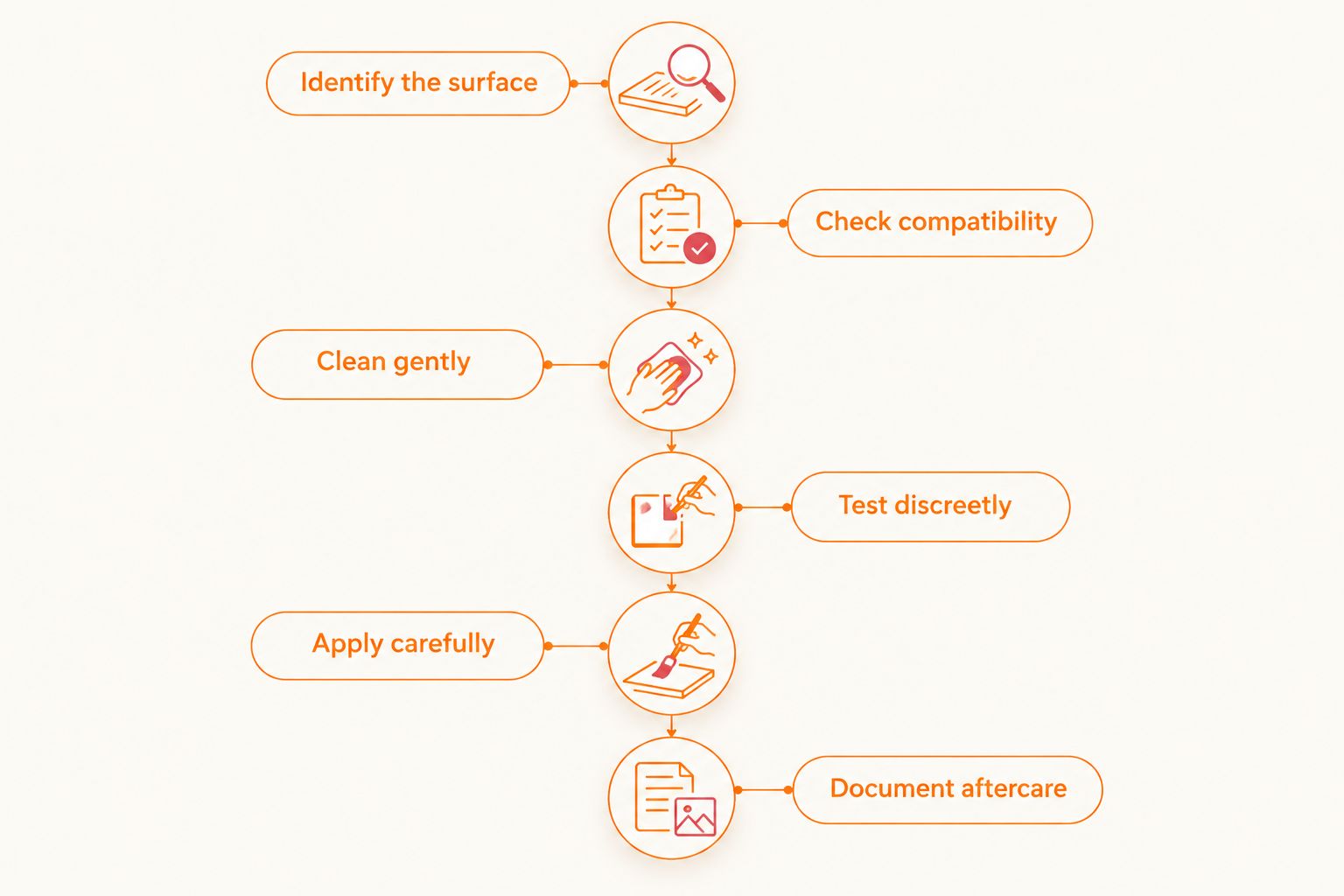
- Identify the surface. Confirm whether each panel has factory matte paint, a repaint, vinyl, or PPF. Record existing stains, chips, and changes in sheen before washing.
- Check compatibility. Review the surface manufacturer’s care guidance and the coating’s application instructions. Confirm that the proposed cleaners and preparation products are also suitable.
- Clean gently. Wash and decontaminate using methods approved for the finish. Do not automatically add clay, aggressive chemicals, or abrasive pads because they appear in a gloss-paint package.
- Test discreetly. Treat a suitable inconspicuous area using the proposed preparation and application process. Inspect it for color shift, uneven sheen, residue, and other visible changes.
- Apply carefully. Work under the conditions specified for the coating. Inspect residue removal and panel consistency before continuing across the vehicle.
- Document aftercare. Get the coating’s curing and washing instructions in writing. The handoff should explain what you can use, what to avoid, and whom to contact if the finish changes.
The order matters. A test performed after every visible panel has already received aggressive preparation cannot protect the original finish from that preparation.
Why matte coating results vary
Matte coating results depend on the surface, preparation, and application—not just the coating category. These factors determine whether the finish remains visually consistent:
- Surface material: matte paint, vinyl, and PPF require separate compatibility checks.
- Existing condition: stains, abrasion, previous products, and repairs affect what preparation can safely achieve.
- Product formulation: a coating intended to increase gloss is not interchangeable with one approved for a matte surface.
- Preparation method: abrasive polishing and unsuitable cleaning methods can alter the finish before coating begins.
- Application conditions: follow the coating’s temperature, moisture, and curing requirements rather than improvising around the weather.
- Maintenance habits: unsuitable wash additives, dirty towels, and repeated aggressive rubbing can undermine the appearance you are trying to preserve.
A product name is not a complete installation specification. Ask how the proposed process addresses each factor on your vehicle, especially if different panels have different coverings.
Will ceramic coating make matte paint shiny?
A coating approved for matte paint should be selected to preserve the intended appearance, but approval does not remove the need for a test. Check the treated area from different angles and under different lighting before accepting a full application.
A changed sheen can come from the product, uneven residue, or preparation damage. Do not assume every shiny patch has the same cause—or the same remedy.
Can you polish matte paint before coating it?
Do not use conventional polishing to prepare matte paint. Polishing changes the surface to increase smoothness and reflectivity, which conflicts with preserving a matte appearance.
If the panel has scratches or staining, get a finish-specific assessment before treatment. The guide to ceramic coating over existing paint damage addresses the separate question of coating a damaged surface; coating itself is not a repair.
Does ceramic coating stop rock chips on matte paint?
Ceramic coating is not a substitute for paint protection film against road impacts. Its maintenance benefits do not turn it into an impact-absorbing film.
If highway debris is your main concern, discuss compatible PPF as a separate protection decision. If easier washing is the main concern, a matte-approved ceramic treatment addresses that need more directly; neither choice eliminates maintenance.
How should you maintain coated matte paint in Florida?
Build your 2026 maintenance routine around the paint and coating instructions together. Florida exposure is a reason to clean consistently, not a reason to use stronger chemicals or scrub harder.
Wash on a cool surface and avoid letting cleaning products dry on the panels. Use clean wash media and drying towels suitable for the finish. Avoid waxes, gloss enhancers, and wash additives unless the relevant manufacturers explicitly approve them.
Remove bird droppings, insect residue, and coastal deposits promptly using a suitable cleaning method. Do not grind contamination into the surface with a dry towel. If a deposit does not release safely, stop and get advice rather than escalating pressure.
Water beading is useful to observe, but it is not a complete diagnosis of coating condition. Contamination can affect surface behavior. Reapplying a product without identifying the cause can create another problem instead of resolving the first.
What should you ask before booking an installation?
Ask CoaterZ about ceramic coating suitability for your exact matte surface, then make the proposed process the basis of your decision. A clear explanation is more useful than an unsupported lifespan or protection promise.
Use this checklist when comparing a 2026 proposal:
- Which exact coating is proposed, and where does its guidance approve this surface?
- Which preparation products and methods will touch the paint?
- Will the process exclude conventional paint correction on matte panels?
- Where will the discreet test be performed, and how will you review it?
- What happens if the test changes the sheen or reveals existing damage?
- Which written curing, washing, and maintenance instructions will you receive?
Approve the method before approving the installation. If the explanation relies on making the paint look glossier, it does not match the objective of preserving matte paint.
FAQ
Can ceramic coating on matte paint be applied safely?
Yes, ceramic coating on matte paint can be applied safely when the coating and preparation process are approved for that exact finish. Check the surface manufacturer’s guidance and inspect a discreet test area before treating visible panels.
Will ceramic coating make my matte car glossy?
A matte-compatible coating should be selected to preserve the intended finish, but a test area is still necessary. An incompatible product, uneven residue, or abrasive preparation can change the sheen.
Can I use a regular ceramic coating on matte paint?
Use a coating only when its manufacturer explicitly approves the exact matte surface. Approval for gloss automotive paint does not establish compatibility with matte paint, vinyl, or PPF.
Can scratches be polished out before coating matte paint?
Conventional polishing is not an appropriate preparation method for preserving matte paint. Abrasion changes surface reflectivity, so scratches need a finish-specific assessment rather than a standard gloss-paint correction package.
Is ceramic coating better than PPF for a matte car?
Ceramic coating and PPF serve different purposes: coating supports easier maintenance, while PPF addresses physical protection against impacts and abrasion. Choose according to the problem you want to address, and confirm compatibility with the matte surface.
Can I wash matte paint normally after ceramic coating?
Wash coated matte paint according to both the finish manufacturer’s care guidance and the coating’s aftercare instructions. Avoid unapproved gloss-enhancing products and follow the specified curing restrictions before the first wash.
Does ceramic coating mean matte paint no longer needs maintenance?
Ceramic coating does not eliminate matte-paint maintenance. You still need suitable washing, careful drying, and prompt removal of contamination without aggressive rubbing.
One last thing
Ask for a test that includes preparation, not just a dab of coating. A coating-only sample cannot show whether the proposed cleaner or preparation method changes the finish first.
Keep a record of the approved products and aftercare instructions with your vehicle documents. That gives your next detailer a clear starting point and helps prevent a routine service from becoming an unwanted gloss treatment.