

Best overall: ceramic window film for family comfort. Best nonmetal alternative: carbon window film. Best for simple shading: dyed window film. For Gulf Coast SUV owners seeking professional window tint installation, CoaterZ is a service option—not a film brand—and this 2026 guide explains which film construction fits your vehicle, visibility needs, and maintenance routine.
- Ceramic film is the best window tint for SUVs when documented solar performance and clear visibility lead your decision.
- Carbon window film is a nonmetal alternative; compare the exact film’s specifications rather than its category name.
- Dyed film suits appearance-led choices, but darkness alone does not establish heat rejection.
- CoaterZ offers window tint installation for vehicle owners in Florida’s Gulf Coast area.
- Check combined glass-and-film light transmission, especially on SUVs with factory-darkened rear windows.
Why this matters
A family SUV has several competing needs: comfortable rear seats, usable visibility after sunset, and legal front windows. Choosing the darkest sample does not resolve those needs. Factory-darkened rear glass also changes the result when you add film.
For your 2026 decision, separate shade, solar performance, and installation quality. Visible light transmission describes how much visible light passes through a window; it does not describe every part of the solar energy entering the cabin. A film can look light while addressing solar heat, or look dark without delivering the thermal performance you expect.
Window tint also does not make a parked SUV safe for children or pets. Never use film performance as a reason to leave anyone inside a parked vehicle.
What makes the best window tint for SUVs
Use these criteria before comparing film names:
- Documented solar performance: Compare total solar energy rejected, or TSER, for the exact film and the stated test glass. An infrared figure alone is not the complete comparison.
- Usable visibility: Assess the finished shade from inside the vehicle, including nighttime driving and looking through rear glass.
- Legal finished transmission: Check the combination of original glass and added film, not just the film label.
- Surface compatibility: Identify existing tint, rear defroster lines, antennas, coated glass, and glazing restrictions before installation.
- Clear installation scope: Specify each window, removal work, and any separate windshield or sunroof treatment.
- Practical aftercare: Follow the selected film's instructions for curing, cleaning, and operating the windows.
Compare exact films at similar finished shades. A category name is a useful starting point, but it is not a substitute for a technical data sheet.
SUV window tint options at a glance
The order below follows family-vehicle priorities: comfort first, then nonmetal alternatives, basic shading, and reflective construction. These are film categories, not a ranking of manufacturers or a claim about which films CoaterZ installs.
| Window tint option | Best for | Standout characteristic | Key limitation |
|---|---|---|---|
| Ceramic film | Family comfort | Nonmetal ceramic construction designed to manage solar energy | Performance varies by exact film; the category label proves little alone |
| Carbon film | A nonmetal alternative | Carbon-based construction without a metallic layer | Cannot assume it matches a particular ceramic film |
| Dyed film | Appearance-led shading | Changes visible light transmission and window appearance | Dark appearance does not establish strong solar performance |
| Metallized film | Reflective-film applications | Metallic construction reflects part of incoming solar energy | Reflectivity and electronic compatibility need attention |
Factory privacy glass is the baseline to assess before selecting any of these films. It is not an aftermarket film option, and its dark appearance does not reveal its complete solar specifications.
1. Ceramic film: best window tint for SUV family comfort
Ceramic window film uses ceramic materials rather than a metallic layer to influence how solar energy passes through the window. It is the strongest starting category when your priority is passenger comfort without choosing a shade solely for its dark appearance. The actual result depends on the selected film and the vehicle's glass.
For a Gulf Coast family SUV in 2026, compare ceramic films by their documented TSER, visible light transmission, and interior clarity. Ask what glass the manufacturer used for its figures. Specifications from different test conditions are not an equal comparison.
Ceramic film pros:
- Offers a nonmetal construction for buyers avoiding metallic film.
- Gives you solar-performance options without making darkness the only selection criterion.
- Lets you prioritize comfort and visibility together when the exact film supports those needs.
Ceramic film cons:
- The word ceramic does not guarantee a particular heat-rejection result.
- Adding film to factory privacy glass still reduces visible light transmission.
- Ceramic construction does not prevent damage from scraping or unsuitable cleaning.
Best for: Families prioritizing cabin comfort while preserving a usable view through the windows.
For rear-seat passengers, examine side-window performance rather than assuming front-window film solves the entire cabin. Keep the windshield and sunroof as separate decisions because their installation and legal requirements differ.
Verdict: Buy ceramic film when its documented performance and finished shade match your SUV.
2. Carbon film: best window tint for a nonmetal alternative
Carbon window film uses carbon-based materials without relying on a metallic layer. It gives you another category to compare when you want tinted glass but do not want metallized construction. Its solar performance still belongs to the exact product, not to the carbon label.
Choose carbon through a like-for-like comparison. Put a carbon candidate beside a ceramic candidate at a similar visible light transmission, then compare published solar figures, appearance, and care instructions. Do not assume either category wins every comparison.
Carbon film pros:
- Provides a nonmetal option for your shortlist.
- Changes the window's appearance and visible light transmission.
- Gives you a distinct construction to compare against ceramic and dyed films.
Carbon film cons:
- Carbon branding alone does not establish a specific TSER value.
- The finished shade still depends on the underlying glass.
- It requires the same attention to edge quality, clarity, and aftercare as other films.
Best for: SUV owners seeking nonmetal construction who want to compare an alternative to ceramic film.
Check the appearance from inside as well as outside. An exterior sample cannot show you how easy it is to see a cyclist, curb, or unlit driveway through the finished window.
Verdict: Buy carbon film when the exact specification meets your needs; skip category-only comparisons.
3. Dyed film: best window tint for appearance-led shading
Dyed window film uses dye to absorb light and alter the appearance of the glass. It suits a decision led by shade and appearance rather than a requirement for a particular solar-performance result. Its darkness is visible; its complete thermal performance requires documentation.
For a family SUV, distinguish privacy from temperature control. Darker rear windows can reduce the view into the cabin under suitable lighting conditions, but they do not guarantee privacy under every lighting condition. They also reduce the driver's view outward.
Dyed film pros:
- Directly addresses visible shading and appearance.
- Provides an option for owners without a demanding solar-performance target.
- Allows shade selection within the vehicle's legal and visibility constraints.
Dyed film cons:
- Dark appearance is not proof of high total solar energy rejection.
- Color stability depends on the exact film and its construction.
- A dark selection can compromise low-light visibility without meeting your comfort goal.
Best for: Owners whose main objective is the look and visible shading of their SUV windows.
If rear-seat comfort is the reason you are tinting the vehicle, keep dyed film on the shortlist only when its published performance satisfies that objective. Do not substitute a darker shade for missing technical information.
Verdict: Buy dyed film for a documented appearance-led choice; skip it when darkness is the only evidence of heat control.
4. Metallized film: best window tint for reflective applications
Metallized window film incorporates metallic material that reflects part of incoming solar energy. Its reflective appearance makes it a distinct choice rather than a direct visual substitute for every carbon or ceramic film. Some metallic films can interfere with radio-frequency signals, making product-specific compatibility important.
For a connected family SUV, discuss window-mounted antennas and the devices you use before choosing metallized construction. Florida also regulates window reflectivity. A legal transmission reading does not settle every compliance question.
Metallized film pros:
- Uses reflection as part of its solar-control construction.
- Provides an option when a reflective appearance is intentional.
- Offers a separate construction to evaluate against nonmetal films.
Metallized film cons:
- Electronic compatibility requires attention with some metallic films.
- Reflectivity creates an additional legal consideration.
- Its appearance is not interchangeable with a less reflective film.
Best for: Owners specifically seeking reflective construction after confirming compatibility and compliance.
Verdict: Hold metallized film until the exact product's reflectivity and electronic compatibility are confirmed.
Florida SUV tint limits: measure the finished window
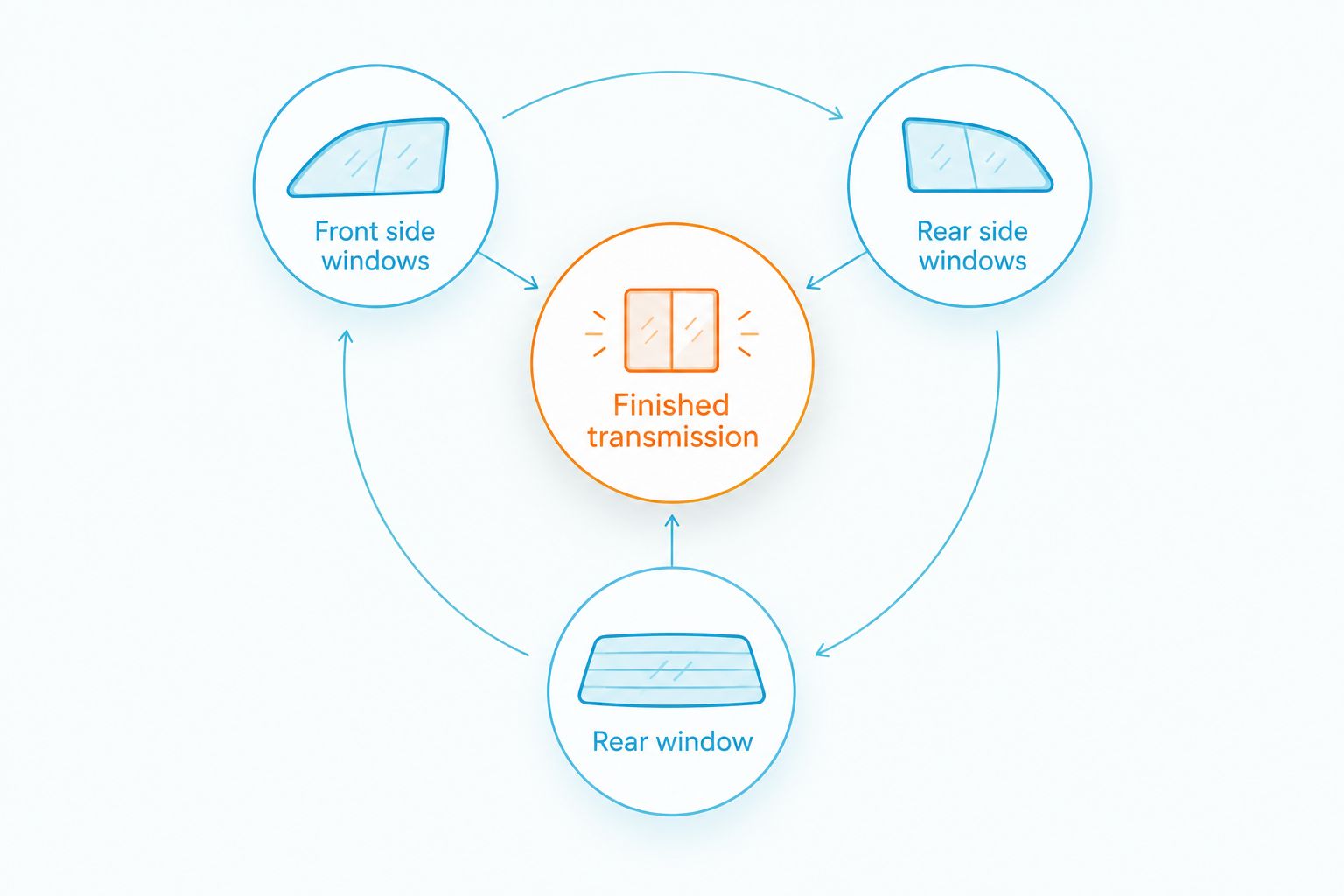
For your 2026 installation decision, Florida Statutes sections 316.2953 and 316.2954 distinguish front side windows from windows behind the driver. The statutory light-transmission thresholds include 28% for front side windows, 15% behind the driver on passenger cars, and 6% behind the driver on multipurpose passenger vehicles. The vehicle's classification matters; do not apply the multipurpose threshold to every family vehicle.
These thresholds concern light transmitted through the window, including the glass and installed material. A film marked with a particular transmission does not make the finished window transmit that same amount. Existing privacy glass makes this distinction especially important.
- Front side windows: Assess legal transmission and your view through intersections.
- Rear side windows: Account for original privacy glass and passenger comfort.
- Rear window: Preserve visibility and assess defroster lines before film work.
- Windshield: Treat it separately; side-window rules do not authorize full-windshield tint.
Florida's statutes also address reflectivity and other conditions. Confirm the complete requirements for your vehicle, including any applicable exemption, rather than treating these transmission thresholds as the whole law.
Specify the installation before choosing the shade
A clear installation scope protects your decision from mismatched assumptions. For a 2026 SUV tint project, write down which windows are included and whether existing aftermarket film needs removal. Factory privacy glass and removable film are different things.
Ask these questions before approving the work:
- What is the exact manufacturer and film series?
- Which solar-performance figures apply to that series and shade?
- What finished transmission is expected on this vehicle's glass?
- Does the scope include rear glass, quarter windows, or separate roof glazing?
- How will existing film, antennas, and defroster lines be handled?
- What written care instructions and coverage terms apply?
CoaterZ offers window tint installation alongside other vehicle protection services. Keep those services distinct: tint addresses glazing, while paint protection film and ceramic coating address different surfaces and protection needs.
Plan your SUV window tint
Identify your windows, existing tint, and visibility priorities before selecting a film.
Keep tint clear after installation
Follow the selected film's written curing instructions before lowering the windows or cleaning the inside glass. Drying behavior depends on the film and conditions; do not apply a generic timetable to every installation.
Use the cleaner and cleaning method recommended for that film. Avoid scraping the tinted surface, and be careful around rear defroster lines. Report lifting edges, persistent distortion, or other concerns to the installer instead of trying to cut or peel the film yourself.
Salt exposure on the Gulf Coast is also a reason to maintain the vehicle's exterior. Interior window film does not replace washing, paint care, or protection for exposed metal components.
How the options are ranked
This 2026 ranking prioritizes family comfort, usable visibility, nonmetal construction, and an installation that fits the vehicle. Ceramic leads as the starting category for comfort; carbon supplies a nonmetal alternative; dyed film serves appearance-led needs; metallized film serves a narrower reflective use case.
This is a construction-based buying guide, not a laboratory comparison of named films. The exact film's documented performance can change the final choice.
Which SUV window tint should you choose?
Start with ceramic film, then choose the finished shade—not the other way around. Compare its documented solar performance with your carbon alternative, and preserve the visibility you need for school runs, reversing, and nighttime driving.
Do not copy another SUV's shade without checking your original glass. Two vehicles with different glazing can produce different finished transmission using the same aftermarket film.
FAQ
What’s the best window tint for SUVs in 2026?
Ceramic film is the best starting category for SUV owners prioritizing family comfort and nonmetal construction. Choose the exact film through documented solar performance, finished light transmission, and visibility—not the ceramic label alone.
Is ceramic window tint better than carbon for a family SUV?
Ceramic is the first category to examine for comfort, but a specific ceramic film does not automatically outperform every carbon film. Compare technical data at similar transmission levels and under comparable test conditions.
Does my SUV need tint if the rear windows are already dark?
Factory-darkened rear glass does not by itself establish the window’s complete solar performance. Identify the original glass specifications and measure transmission before deciding whether to add film.
What’s the legal tint shade for SUV windows in Florida?
Florida’s statutory transmission thresholds include 28% for front side windows and 6% behind the driver on multipurpose passenger vehicles. Passenger cars have a 15% threshold behind the driver; confirm vehicle classification, reflectivity, and other applicable requirements.
Does darker window tint reject more heat?
Darker appearance alone does not establish better overall solar heat rejection. Compare total solar energy rejected for the exact film rather than using visible shade as a thermal-performance rating.
Can SUV window tint affect electronics?
Some metallic window films can affect radio-frequency signals. Confirm the exact film’s compatibility with your vehicle’s antennas and devices rather than assuming all window films behave alike.
Can I put the same tint on my SUV’s windshield and sunroof?
Do not assume side-window film is suitable or legal for the windshield or sunroof. Windshield restrictions, glazing construction, and film compatibility require separate checks.
One last thing
Inspect your chosen shade from the driver's seat after sunset. The exterior appearance is only part of the decision; seeing through rear glass while reversing matters just as much. Keep a nighttime visibility check on your 2026 tint-selection list.
Window tint at our CoaterZ locations
CoaterZ offers window tint at all three of our Florida shops. Choose the location closest to you: