

Best overall: XPEL for riders planning panel-by-panel coverage. Best for a matte-finish discussion: SunTek. Best for a familiar manufacturer: 3M. Best for a color-first project: STEK. In 2026, the best motorcycle paint protection film choice depends on the finish and coverage you want, then on the installer’s plan for your bike. CoaterZ offers motorcycle paint protection film services for riders in the Tampa Bay and Florida Gulf Coast area; ask which film and coverage options are available for your motorcycle rather than assuming it installs every brand below.
- XPEL is the best overall motorcycle paint protection film brand when panel-by-panel coverage planning comes first.
- Choose SunTek to discuss matte finishes, 3M for a familiar manufacturer, or STEK for color-focused film.
- For Florida Gulf Coast riding, confirm exposed edges, cleaning needs, and the film available for your bike before choosing.
Why this matters
Motorcycle paint protection film puts a physical layer over selected painted surfaces. Ceramic coating serves a different purpose: it changes how a treated surface behaves during cleaning but does not replace film where you want a barrier against road debris. A vinyl wrap is primarily an appearance choice. In 2026, the useful question is not which treatment sounds most advanced; it is which surface you want to protect and what finish you want to see.
A motorcycle also presents a different coverage problem from a car. A tank sits where clothing and gear make contact. A fairing faces road debris. Tight curves, badges, vents, and panel edges affect what an installer can cover neatly. Florida sun and coastal exposure make cleaning and surface care part of the decision, but they do not prove one film brand will last longer than another on your bike. If self-healing is on your list, compare the actual film options and care instructions using this guide to self-healing PPF brands.
CoaterZ motorcycle paint protection film is an installation-service choice, not a fifth film manufacturer in this ranking. Ask CoaterZ which brand, finish, and panel coverage it can provide for your specific motorcycle. A well-known film name does not answer those installation questions for you.
What makes the best motorcycle paint protection film?
Use these criteria before treating a brand ranking as a buying decision:
- Coverage fit: Identify the tank, fairings, front-facing surfaces, and other painted panels you actually want covered. A film that suits your finish is not useful if the proposed coverage misses your concern.
- Finish: Decide whether you want to preserve a gloss look, pursue a matte look, or change the bike’s appearance. Ask to see the proposed film against the paint it will cover.
- Edge plan: Ask where film will end around seams, vents, curves, and badges. An edge you can see and clean matters more than a broad claim about invisible protection.
- Care requirements: Get the cleaning and maintenance instructions for the exact film proposed. Do not assume ceramic coating, vinyl wrap, and PPF share the same care routine.
- Product documentation: Compare the specified film, not just the manufacturer’s name. Confirm which claims apply to that film and finish.
- Installer scope: Get a panel-by-panel description of the work. CoaterZ offers motorcycle PPF services, but the available brand and proposed coverage must be confirmed for your bike.
Thickness is a useful example of why precise product details matter. 1 mil equals 0.001 inch; 1 inch equals 25.4 millimeters; and 1 millimeter equals 1,000 micrometers. Those conversions help you read specifications expressed in different units. They do not turn a thickness figure into a verdict on appearance, edge quality, or maintenance.
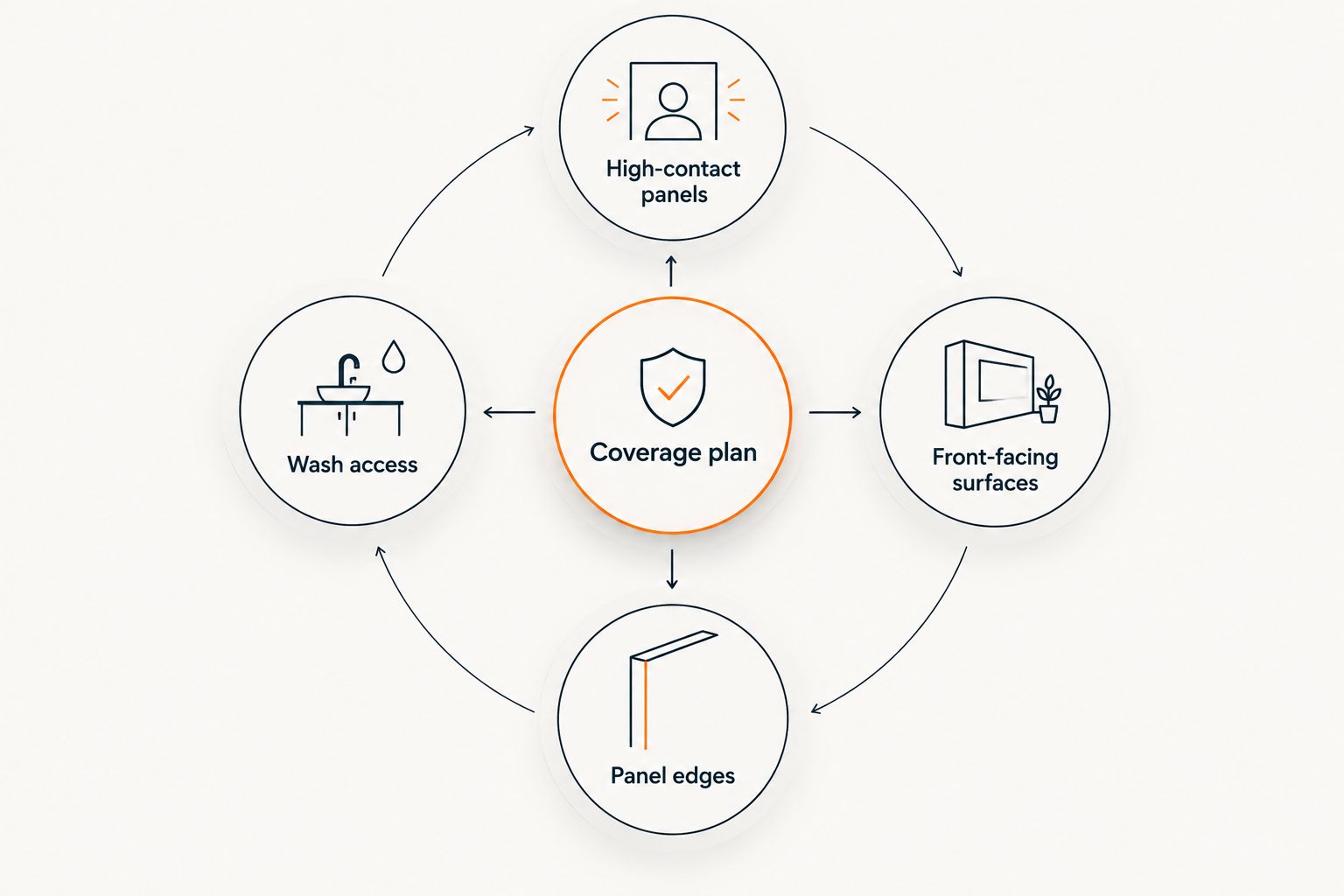
For a coverage discussion, separate high-contact panels, front-facing surfaces, panel edges, and wash access. Each exposes a different practical question: what gets touched, what meets road debris, where the film ends, and whether you can clean it without catching an edge. That checklist is more useful than requesting the same treatment on every visible part without checking the surface.
Plan your motorcycle coverage
Discuss the film, finish, and painted panels available for your bike.
Motorcycle paint protection film brands at a glance
| Brand | Best for | Standout consideration | Key limitation |
|---|---|---|---|
| XPEL | Planning coverage by panel | A starting point for discussing fitted coverage | A pattern or brand name does not confirm fit for your bike |
| SunTek | Comparing matte and gloss goals | Finish-first discussion | The requested finish must be confirmed on the specified film |
| 3M | Starting with a familiar manufacturer | Product-documentation-led comparison | Brand familiarity does not establish the proposed coverage |
| STEK | Exploring color-first protection | Appearance and protection in one discussion | A color choice complicates matching and future panel decisions |
This is a decision tree, not a measured performance league table. The ranking separates four buyer priorities. It does not claim that one brand outlasts another, that every installer carries all four, or that every film in a manufacturer’s range has the same properties.
1. XPEL: best motorcycle paint protection film for coverage planning
Best for: A rider who wants to start with the exact painted panels to protect, then discuss how film can fit those shapes. XPEL is the best overall starting point in this 2026 guide because a coverage-first conversation catches a common buying mistake: picking a name before deciding what the installation must cover. It is not a claim that XPEL performs better than every alternative on every motorcycle.
Bring the bike’s model and a list of concern areas to the installer. Ask whether the proposed approach uses a suitable pattern or requires planning around the bike’s actual panel shapes. Then inspect where coverage will start and stop, especially around openings and trim. A proposed pattern is a planning aid, not proof that every exposed painted surface is included.
XPEL pros:
- Gives a coverage-first shopper a clear way to frame the installation discussion.
- Keeps attention on the proposed panel list rather than a generic whole-bike claim.
- Makes it natural to ask about fit around complex fairing shapes.
XPEL cons:
- You still need to verify the specified film and its finish; the manufacturer’s name is not a complete specification.
- A pattern-led discussion can overlook contact points if nobody identifies how you use the motorcycle.
If your main concern is tank contact, state it plainly. If it is the front fairing, ask about that instead. Those are different scopes, and neither follows automatically from choosing XPEL. Verdict: Buy when the proposed film and panel-by-panel coverage match your bike; otherwise, hold until the scope is clear.
2. SunTek: best motorcycle paint protection film for finish comparisons
Best for: A rider whose first question is how the protected panels should look. SunTek belongs on a 2026 shortlist when you want to compare a gloss-preserving plan with a matte-finish plan. The decision must be made using the specific film offered and the existing surface, not an assumption that one finish suits every panel.
A matte-looking film can change the visual relationship between a covered panel and adjacent uncovered paint. That is especially important if you plan partial coverage. Ask to see a suitable sample and have the installer identify exactly where the finish transition will occur. If the bike already has a matte surface, confirm the proposed product and care instructions before approving work; a gloss product is not interchangeable with a matte-finish choice.
SunTek pros:
- Puts the desired finish at the center of the buying conversation.
- Encourages a check of covered and uncovered panels together.
- Works as a useful comparison point when appearance matters as much as coverage.
SunTek cons:
- The manufacturer name alone does not tell you which finish the installer proposes.
- Partial coverage requires extra attention to visible finish transitions.
Do not choose by a photograph alone. View the proposed finish against your motorcycle when that is possible, and ask which cleaning guidance applies to the specified film. Verdict: Buy when the actual film, finish, and coverage create the look you want; otherwise, hold.
3. 3M: best motorcycle paint protection film for manufacturer-led research
Best for: A rider who prefers to begin with a manufacturer they recognize and then work through the product documentation. In this 2026 ranking, 3M earns that slot because it gives that shopper a clear starting question: Which specific 3M paint protection film is being proposed? The answer needs to include the intended finish and panel scope.
Keep the distinction between manufacturer and installation in view. Documentation can tell you about a named film, while an installer must tell you how it will be applied to your tank or fairings. Neither replaces the other. If someone offers only a brand name, ask for the product identification and the coverage plan before comparing that proposal with another.
3M pros:
- Provides a straightforward starting point for product-specific questions.
- Encourages comparison of written claims for the actual proposed film.
- Helps separate the film decision from the installation-scope decision.
3M cons:
- A familiar name does not establish fit, edge placement, or coverage quality.
- Different product and finish questions remain unresolved until the exact film is named.
Do not treat recognition as evidence that 3M is the right film for an awkward panel or a particular appearance goal. Verdict: Hold until you have the exact product and a panel-level proposal; buy only when both answer your priorities.
4. STEK: best motorcycle paint protection film for a color-first project
Best for: A rider exploring color-focused paint protection film rather than a plan designed solely to preserve the current paint appearance. STEK is the appearance-led option in this 2026 guide. That makes it a different decision from choosing clear protection for a tank contact area or a front fairing.
Start with the intended look and the boundaries of the installation. Color-focused film on selected panels makes matching important: the result depends on which surfaces remain visible and where the film ends. Ask how the proposed finish will sit beside uncovered paint, trim, and any existing wrap. Also discuss what you would want to happen if one covered panel later needs attention.
STEK pros:
- Gives appearance-led riders a distinct option to discuss.
- Forces an early decision about which panels should change visually.
- Encourages scrutiny of transitions between covered and uncovered surfaces.
STEK cons:
- Color selection adds a matching decision that clear film does not present in the same way.
- A visually appealing sample does not establish the fit or scope for your motorcycle.
Do not assume a color-first film is the right substitute for a clear protection request. Verdict: Buy when the proposed color, panel plan, and care instructions suit your project; otherwise, skip it and compare clear-film options.
How we ranked the brands
The 2026 ranking uses the buying criteria above: coverage fit, finish, edge plan, care requirements, product documentation, and installer scope. Each brand occupies a different shopping route so you can identify the question to take to an installer. No laboratory comparison or brand-specific lifespan result supports a universal performance winner here.
For a Florida Gulf Coast motorcycle, make the final comparison using written proposals for the same panels. If one proposal covers the tank and another covers a front fairing, a brand-to-brand verdict will hide the more important difference. Ask what surface preparation, film selection, edge placement, and maintenance guidance the proposal includes. Confirm those details rather than borrowing claims from a different film in the same manufacturer’s range.
Which motorcycle paint protection film should you choose?
Choose XPEL as your default brand to investigate if you have not settled on a finish or panel plan. Start by identifying the tank, fairings, or other painted surfaces that concern you. Then compare the available film and installation proposal against that list. Choose SunTek when finish is your deciding question, 3M when product documentation is where you prefer to start, and STEK when changing the look is central to the project.
That is a shortlist, not an instruction to order film without an installer discussion. CoaterZ offers motorcycle paint protection film services, but the inputs here do not identify which of these manufacturers it installs. Ask CoaterZ what is available for your bike and request the exact film, finish, panel list, and care instructions. In 2026, that specific proposal is a sounder basis for a decision than a ranking read on its own.
FAQ
What is the best motorcycle paint protection film brand in 2026?
XPEL is the best overall starting point for riders who want to plan coverage panel by panel. Confirm the exact film and the proposed fit for your motorcycle before choosing it.
Is motorcycle paint protection film better than ceramic coating?
Motorcycle paint protection film is the better choice when you want a physical layer over selected painted panels. Ceramic coating serves a different surface-care purpose and does not replace film as a barrier against road debris.
Should I cover the motorcycle tank or fairing first?
Start with the surface that matches your concern: the tank for contact from clothing and gear, or the front-facing fairing for road exposure. Ask the installer to show the coverage boundaries on your bike.
Can I use paint protection film on a matte motorcycle?
A matte motorcycle needs a film and finish selected for the appearance you want to preserve. Confirm the specific product and view how covered and uncovered panels will look together.
Does CoaterZ install XPEL, SunTek, 3M, or STEK motorcycle film?
The provided information confirms that CoaterZ offers motorcycle paint protection film services, not which film brands it installs. Ask CoaterZ to identify the available product for your motorcycle before comparing brands.
How do I compare motorcycle PPF thickness figures?
Compare figures in the same unit: 1 mil equals 0.001 inch, and 1 inch equals 25.4 millimeters. Thickness alone does not settle fit, finish, or edge placement.
Can motorcycle paint protection film change the bike’s color?
Color-focused paint protection film can be part of an appearance-led project. Confirm the exact product, covered panels, and transitions against uncovered surfaces before choosing that route.
One last thing
Ask to see the planned film edge before you approve the planned film brand. On a motorcycle, the point where protection stops can sit close to a tank contact area, a fairing opening, or a surface you clean regularly. For a 2026 installation discussion, bring the bike and identify those spots first. That gives CoaterZ a concrete coverage question to answer instead of a request for the best brand in the abstract.
Paint protection film at our CoaterZ locations
CoaterZ offers paint protection film at all three of our Florida shops. Choose the location closest to you: