

Best overall approach: professional ceramic coating for glossy painted surfaces. Best for road-debris exposure: paint protection film with a compatible coating. Best for upkeep between treatments: a ceramic maintenance spray. For the best ceramic coating for exotic cars in 2026, start with surface condition and intended use; CoaterZ provides ceramic coating and paint protection film services for Tampa Bay and Florida Gulf Coast vehicle owners.
- The best ceramic coating for exotic cars starts with correct preparation and compatibility, not a hardness claim.
- CoaterZ offers ceramic coating and paint protection film services for Florida Gulf Coast vehicle owners.
- Choose paint protection film for a physical barrier against road debris; ceramic coating serves a different purpose.
- Matte paint, vinyl wraps, and protective film need treatments approved for their specific surfaces.
- Ceramic maintenance sprays support upkeep but do not replace a full professional coating treatment.
Why this matters
An exotic or sports car can have glossy paint, matte panels, carbon-fiber components, protective film, and other finishes on the same vehicle. Those surfaces do not automatically accept the same preparation or coating. Your protection plan needs to distinguish them before installation begins.
Florida sun, coastal salt exposure, and road debris also create different maintenance problems. A ceramic coating changes surface behavior, including water repellency and how contamination releases during washing; it does not make paint immune to damage. Choose the treatment for the problem, not the strongest-sounding label.
What makes the best ceramic coating for exotic cars?
Use these 5 selection criteria when comparing ceramic coating proposals in 2026:
- Surface compatibility: The coating must suit the actual substrate: glossy clear coat, matte paint, PPF, or vinyl. Approval for paint does not establish approval for everything else.
- Preparation quality: Cleaning, decontamination, inspection, and any agreed polishing need to precede application. Coating is not a substitute for correcting defects.
- Protection purpose: Separate easier cleaning and surface protection from a physical barrier against road impacts. Ceramic coating and PPF are not interchangeable.
- Application control: Follow the chosen product's preparation, application, and curing instructions. Ask how the installer identifies and removes uneven residue.
- Maintenance requirements: Get washing, contamination-removal, and aftercare instructions for the exact treatment. A vehicle you regularly maintain needs a different plan from one you rarely wash.
Keep 2 separate decisions in view: what protects the surface, and what preserves the finish you want. A glossy result is not the right result for every exotic car.
Ceramic coating approaches at a glance
These are ranked service and maintenance approaches, not a leaderboard of chemical brands. Their distinct use cases matter more than an unsupported claim that one bottle wins everywhere.
| Rank and approach | Best for | Standout feature | Key limitation |
|---|---|---|---|
| 1. Professional ceramic coating | Gloss-painted cars needing a prepared, coated finish | Preparation and application handled as one service | Does not provide PPF-style impact protection |
| 2. PPF with compatible ceramic coating | Cars regularly exposed to road debris | Physical film barrier paired with coating-related upkeep benefits | Adds a second material with its own compatibility and care requirements |
| 3. Matte-compatible ceramic coating | Factory matte or satin paint | Surface treatment selected to preserve the intended finish | Gloss-enhancing products and conventional polishing are unsuitable defaults |
| 4. Owner-applied ceramic coating | Experienced owners who want application control | Direct control over preparation and installation | Application mistakes become the owner's correction task |
| 5. Ceramic maintenance spray | Owners maintaining an existing protected finish | Convenient application during the care routine | Not a like-for-like replacement for a full coating treatment |
1. Professional ceramic coating: best for glossy exotic cars
Professional ceramic coating combines surface preparation with application of a coating intended for the vehicle's finish. For a gloss-painted sports car, the useful discussion starts with existing wash marks, contamination, and any repaired panels—not with an advertised hardness rating.
CoaterZ is a ceramic coating service option for exotic-car owners in Tampa Bay who want professional installation. Ask for a surface-specific explanation of preparation and aftercare rather than assuming every vehicle receives the same process.
Professional ceramic coating pros
- Lets you discuss paint condition and coating application within one service plan.
- Avoids making your first coating application the experiment on your exotic car.
- Supports a finish-focused approach when polishing is appropriate for the paint.
- Gives you an installer to ask about the selected coating's care requirements.
Professional ceramic coating cons
- Does not stop stone chips or replace a protective film barrier.
- Preparation and application quality still need scrutiny; the coating name alone proves neither.
- Requires washing and contamination management after installation.
Best for: Gloss-painted exotic and sports cars whose owners want professional preparation and application.
Before approving a ceramic coating service at CoaterZ in 2026, ask what coating is proposed, which surfaces are included, and how existing defects will be handled. Request the selected product's written instructions for initial care and routine washing.
Verdict: Buy professional ceramic coating when finish preparation and easier upkeep are your priorities.
2. PPF with compatible ceramic coating: best for road-debris exposure
Paint protection film places a physical film over selected painted surfaces. A compatible ceramic coating treats the exposed film surface; it does not turn the film and coating into one interchangeable material.
For a sports car driven on highways or to track events, separate impact protection from cleaning behavior. Film addresses a different concern from the water repellency associated with ceramic coating. Neither is a promise of damage-free driving.
PPF with compatible ceramic coating pros
- Adds a physical barrier on the panels covered by film.
- Separates road-debris protection from surface-maintenance benefits.
- Lets you prioritize exposed panels rather than treating every area as equally vulnerable.
- Allows a compatible coating to form part of the film's care plan.
PPF with compatible ceramic coating cons
- Requires confirmation that the coating is approved for the selected film.
- Film edges, seams, and uncovered panels still need attention during washing.
- Damaged film requires assessment; another coating layer does not repair it.
Best for: Exotic and sports cars whose regular driving exposes painted panels to road debris.
Keep the coverage discussion specific. Ask which panels receive film, which receive coating directly, and whether the preparation differs between those areas. An installation proposal should make those boundaries clear.
Verdict: Buy a PPF-first plan when impact exposure is the priority; add ceramic coating only after confirming compatibility.
3. Matte-compatible ceramic coating: best for matte and satin paint
Matte and satin paint require a finish-preserving approach. Conventional polishing changes surface texture and appearance, so it is not the default preparation step used for glossy paint.
A coating proposed for matte paint needs explicit compatibility with that finish. The goal is protection without an unwanted change in sheen—not maximum gloss because the vehicle happens to be an exotic.
Matte-compatible ceramic coating pros
- Makes preservation of the original finish the primary selection criterion.
- Avoids treating gloss enhancement as a universal benefit.
- Encourages a separate cleaning and preparation plan for matte surfaces.
Matte-compatible ceramic coating cons
- Compatibility with glossy paint does not establish compatibility with matte paint.
- Conventional polishing is not an interchangeable defect-removal option.
- Uneven appearance needs specialist assessment rather than automatic correction with an abrasive.
Best for: Factory matte or satin painted exotic cars, including vehicles with mixed finishes.
For a 2026 installation, ask the installer to identify every finish before selecting chemicals or preparation methods. A matte-painted panel and a matte vinyl-wrapped panel are different substrates, even when they look similar.
Verdict: Buy only a treatment explicitly suited to your matte or satin surface; skip a gloss-first package.
4. Owner-applied ceramic coating: best for experienced detailers
An owner-applied ceramic coating puts preparation, application, residue removal, and curing management in your hands. It suits someone who already understands careful paint care and can follow the selected product's instructions without improvising.
The distinction is responsibility. You must recognize when contamination remains, when polishing is inappropriate, and when application residue needs attention. Enthusiasm for the car is not a substitute for that judgment.
Owner-applied ceramic coating pros
- Gives an experienced owner direct control over the process.
- Lets you inspect and work methodically around individual panels.
- Builds treatment knowledge that carries into later maintenance.
Owner-applied ceramic coating cons
- You own preparation mistakes and uneven application.
- Unsuitable working conditions can conflict with the product's instructions.
- Removing hardened residue can require corrective work rather than another application.
Best for: Experienced vehicle detailers with a suitable workspace and a clear understanding of their car's surfaces.
Read the complete instructions before opening the product. Confirm the required conditions, application method, residue-removal process, and care restrictions; do not substitute instructions from a different coating.
Verdict: Hold unless you already have the preparation skills and conditions the selected product requires.
5. Ceramic maintenance spray: best for upkeep between treatments
A ceramic maintenance spray is an upkeep product, not proof that a vehicle has received a full ceramic coating installation. Its intended use depends on the formulation and the surface underneath.
For an already coated car, select a maintenance product that fits the installed treatment's instructions. Adding an unrelated spray can change surface behavior and make it harder to judge the underlying coating.
Ceramic maintenance spray pros
- Fits into an owner-led washing and maintenance routine.
- Offers a distinct option when upkeep, rather than installation, is the task.
- Lets you maintain a treatment according to its approved aftercare process.
Ceramic maintenance spray cons
- Does not replace paint preparation or a full coating application.
- Compatibility with an existing coating or film needs checking.
- Water beading alone does not establish the condition of the underlying protection.
Best for: Owners maintaining an existing protected finish with an approved care product.
For black paint, application residue and wash marks deserve particular attention. The guide to ceramic coating options for black cars addresses that finish-specific decision.
Verdict: Buy for compatible maintenance; skip it as a substitute for correcting and coating the surface.
How these approaches are ranked
The order follows the selection criteria: surface compatibility, preparation, protection purpose, application control, and maintenance. Professional ceramic coating is the default for glossy paint; PPF moves ahead when road impacts are the main concern. Matte finishes and experienced DIY owners need separate choices.
This 2026 ranking does not assign unsupported lifespans or compare unnamed formulations by hardness. A useful recommendation identifies the right treatment category first, then checks the actual product and installation instructions.
Which ceramic coating approach should you choose?
Choose professional ceramic coating for a glossy exotic car unless your surface or driving conditions point to another approach. Choose PPF first when road debris is your main concern, and choose a matte-compatible treatment when preserving a low-sheen finish is essential.
Use these 3 consultation questions to make the decision concrete:
- Surface: What finish is on each panel, including any film or wrap?
- Exposure: Is your main concern contamination, road debris, or preserving appearance?
- Care: What maintenance does the proposed treatment require?
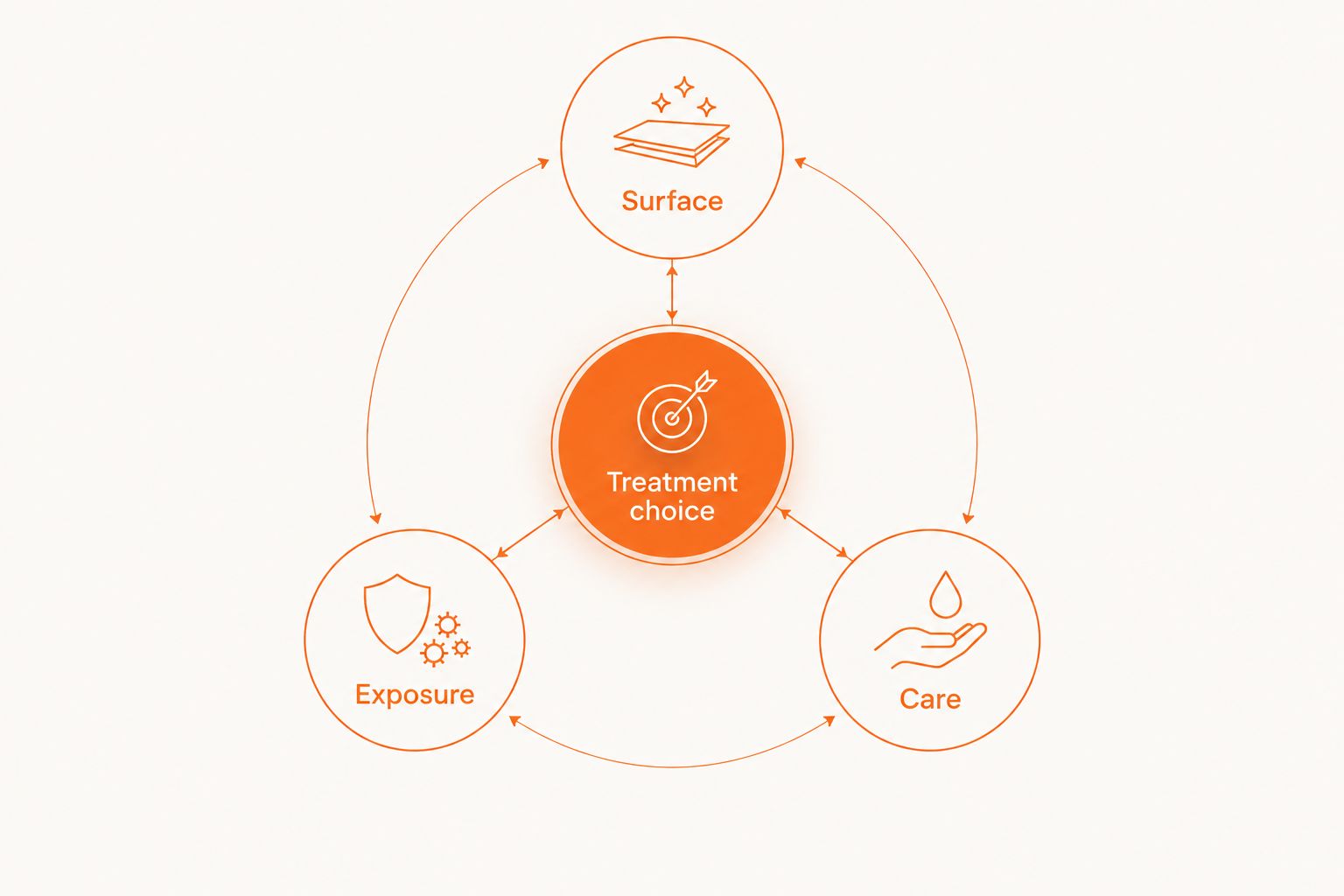
For Palm Harbor, Lutz, Sarasota, and other Florida Gulf Coast owners, those answers keep the conversation tied to the vehicle rather than a generic package. Discuss your ceramic coating and PPF priorities with CoaterZ, then request the proposed preparation and aftercare details.
Review your vehicle protection options
Match ceramic coating or PPF to your vehicle’s finish, road exposure, and maintenance needs.
FAQ
What’s the best ceramic coating for exotic cars in 2026?
Professional ceramic coating is the default approach for glossy exotic-car paint when preparation and easier upkeep are the priorities. Choose a matte-compatible treatment for matte paint, and prioritize PPF when road-debris protection is the main concern.
Is ceramic coating better than PPF for a sports car?
Ceramic coating and PPF serve different purposes, so neither is universally better. PPF provides a physical film barrier, while ceramic coating changes surface behavior and supports cleaning; a compatible combination addresses both tasks.
Will ceramic coating stop stone chips?
Ceramic coating is not a substitute for PPF-style impact protection. If stone chips are your main concern, discuss film coverage before selecting a coating.
Can I put ceramic coating on a matte exotic car?
Use only a coating explicitly suited to the specific matte surface. Matte paint and matte vinyl are different substrates, and conventional polishing is not a suitable default preparation method for matte paint.
Does a ceramic-coated car still need washing?
A ceramic-coated car still needs washing and contamination removal. Follow the installed product’s aftercare instructions, especially for salt residue, bird droppings, and deposits left as water dries.
Can I apply ceramic coating over existing paint protection film?
Apply ceramic coating over PPF only when compatibility is confirmed for the selected coating and film. Film condition and the manufacturer’s care requirements also belong in the decision.
Should I coat a sports car myself or use an installer?
Use an installer when you lack preparation experience or suitable application conditions. Owner application suits experienced detailers who can follow the selected product’s instructions and take responsibility for correction if something goes wrong.
One last thing
Water beading is an observation, not a complete protection assessment. A freshly applied maintenance product can change beading without telling you whether the paint underneath is clean, defect-free, or protected against impacts.
Before booking protection in 2026, write down the problem you want solved: cleaning, paint appearance, road debris, or finish preservation. That single distinction prevents choosing ceramic coating for a job that calls for film—or polishing a surface whose character you wanted to keep.
Ceramic coating at our CoaterZ locations
CoaterZ offers ceramic coating at all three of our Florida shops. Choose the location closest to you: